

By Lanre Ogundipe
The recent audience granted by President Bola Ahmed Tinubu to senior Catholic bishops has generated public interest far beyond the meeting itself. Reactions have ranged from commendation to criticism. Some have welcomed the engagement as an example of constructive national dialogue. Others have questioned whether the Church spoke with sufficient prophetic clarity.
Both responses, however, may have overlooked a more fundamental question.
The issue is not merely what was said inside the Presidential Villa. It is this: When the Church speaks to political power, who is actually speaking?
Is it the Body of Christ? Is it an ecclesiastical institution? Is it denominational leadership? Or is it the prophetic voice of God?
These concepts are frequently treated as though they were interchangeable. They are not. The distinction is neither semantic nor merely ecclesiastical. It is profoundly theological and lies at the heart of the Church’s public witness.
The New Testament presents the Church first as a spiritual reality before it presents it as an earthly institution. The Church is the redeemed community of all who belong to Christ through faith. It is neither confined to one denomination nor exhausted by any ecclesiastical structure.
Paul writes: “And hath put all things under his feet, and gave him to be the head over all things to the church, which is his body.” (Ephesians 1:22–23). Again: “Now ye are the body of Christ, and members in particular.” (1 Corinthians 12:27).
This is the biblical point of departure.
The Church is the Body of Christ. Christ alone is its Head. Within that Body are bishops, pastors, elders, teachers and other ministers. Their offices are indispensable to the life and order of the Church, yet they do not constitute the Church itself. They serve the Church under the authority of Christ and in obedience to His Word.
The Church therefore possesses no independent prophetic authority. Its witness is derivative because it is grounded in Christ, who alone perfectly fulfils the offices of Prophet, Priest and King. Whenever the Church speaks faithfully under His Lordship, it speaks with borrowed authority. Whenever it substitutes institutional prestige, political influence or ecclesiastical status for obedience to Christ, it may still command public attention, but it no longer speaks with prophetic authority.
This distinction becomes especially important whenever church leaders engage political authority. When bishops visit a president, it is entirely correct to say that church leaders have met the Head of State. It is equally correct to say that denominational representatives have engaged government. It is, however, a far weightier theological claim to conclude that the Body of Christ has spoken.
The Body of Christ is larger than any episcopal conference. It is larger than any denomination. It is larger than every ecclesiastical hierarchy because it belongs to Christ alone.
Its authority is therefore measured neither by office nor influence, but by fidelity to the One who is its Head.
Scripture consistently reinforces this principle.
Whenever God’s servants appeared before kings, they came primarily as messengers of God rather than advisers to rulers. Moses stood before Pharaoh. Nathan confronted David. Elijah challenged Ahab. Isaiah counselled Hezekiah. Daniel bore witness before Nebuchadnezzar. John the Baptist rebuked Herod.
The pattern continues in the New Testament. Peter and the apostles stood before the Sanhedrin and declared, “We ought to obey God rather than men.” Paul reasoned before Felix, Festus and Agrippa, proclaiming righteousness, self-control and the coming judgment. Their encounters with rulers were never exercises in political accommodation. They were acts of faithful witness.
Above them all stands Christ Himself. Before Pontius Pilate He neither sought political favour nor embraced political rebellion. He bore witness to the truth while reminding earthly authority that its power was neither absolute nor self-generated. In Christ the Church finds its perfect model for engaging political power: truthful without hostility, courageous without arrogance, uncompromising without partisanship.
This is the enduring biblical pattern. Prophetic witness is neither political activism nor political compliance. It neither baptises government nor demonises it. It subjects every exercise of power to the searching light of God’s Word.
Nathan did not preserve his relationship with David by softening divine judgment after the king’s adultery and the murder of Uriah. He declared, “Thou art the man.”
John the Baptist refused to sanctify Herod’s immorality with religious respectability. His faithfulness cost him his life.
Daniel served with distinction within a pagan government without surrendering his allegiance to God.
Jeremiah endured imprisonment. Stephen was stoned. Paul repeatedly suffered imprisonment and persecution.
The lesson is unmistakable. Throughout Scripture, prophetic ministry is authenticated less by proximity to power than by fidelity to truth despite the personal cost.
For that reason Scripture speaks with unusual severity about those who claim divine authority for words that God has not spoken.
The Lord declared through Jeremiah: “I have not sent these prophets, yet they ran: I have not spoken to them, yet they prophesied.” (Jeremiah 23:21).
Again: “They speak a vision of their own heart, and not out of the mouth of the LORD.” (Jeremiah 23:16).
The warning reaches every generation.
Religious sincerity is not enough. Ecclesiastical office is not enough. Good intentions are not enough.
The decisive question remains whether the Church speaks the revealed truth of God.
That responsibility belongs to every communion, every bishop, every pastor and every Christian leader.
The Church cannot withdraw from public life. Government exists under God’s moral authority, and the Church cannot remain silent while injustice, corruption, oppression or moral decay flourish.
Neither, however, may engagement become accommodation.
Influence must never replace witness.
Political access must never weaken prophetic clarity.
The Church has not been commissioned to become the government’s public relations office. Neither has it been called to function as a permanent political opposition. Its vocation is higher. It is called to proclaim truth, defend justice, protect the dignity of human life and summon rulers and citizens alike to repentance and accountability before God.
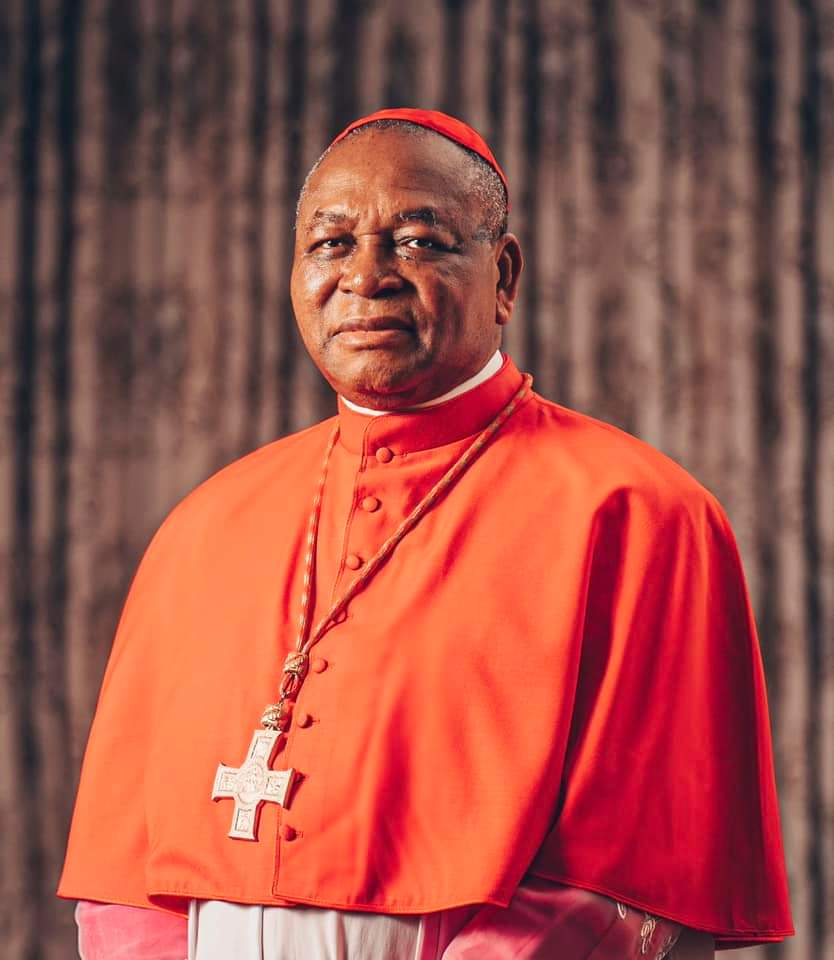
This principle is not merely theoretical. It finds practical expression whenever church leaders speak on issues affecting the nation’s moral health. Recent public reflections by Cardinal John Onaiyekan on the importance of public confidence in the electoral process illustrate that responsibility.
Whether one agrees with every aspect of his assessment is secondary. The larger point remains that the Church serves society best when it addresses the moral foundations of public life rather than aligning itself with partisan interests. Electoral integrity, justice, corruption, insecurity and the protection of human dignity are moral concerns before they become political debates.
Whenever the Church exchanges its prophetic vocation for political calculation, it may preserve its visibility, but it steadily diminishes the moral authority that has distinguished God’s servants throughout history.
The true measure of the Church’s witness is therefore not how often it enters the palace, but whether, having entered, it still speaks with the unmistakable authority of Scripture.
That is the question every generation must answer.
The enduring issue is not whether bishops should meet presidents. They should. Nor is it whether presidents should listen to church leaders. They should.
The deeper question is whether political power, having received the Church, has truly encountered the truth of Christ.
History seldom remembers those who merely enjoyed access to kings.
It remembers those who stood before kings bearing the message of heaven.
The Church is at its noblest when it stands between the altar and the throne carrying neither partisan slogans nor denominational interests, but the eternal Word of God. When it speaks under the Lordship of Christ, it does more than address governments.
It awakens the conscience of a nation and reminds rulers and citizens alike that every earthly authority is temporary, and that above every throne stands the throne of the King of kings, before whom every ruler, every institution and every soul shall one day give account.
Ogundipe, Public Affairs Analyst, former President of the Nigeria Union of Journalists and Africa Union of Journalists, writes from Abuja.
