

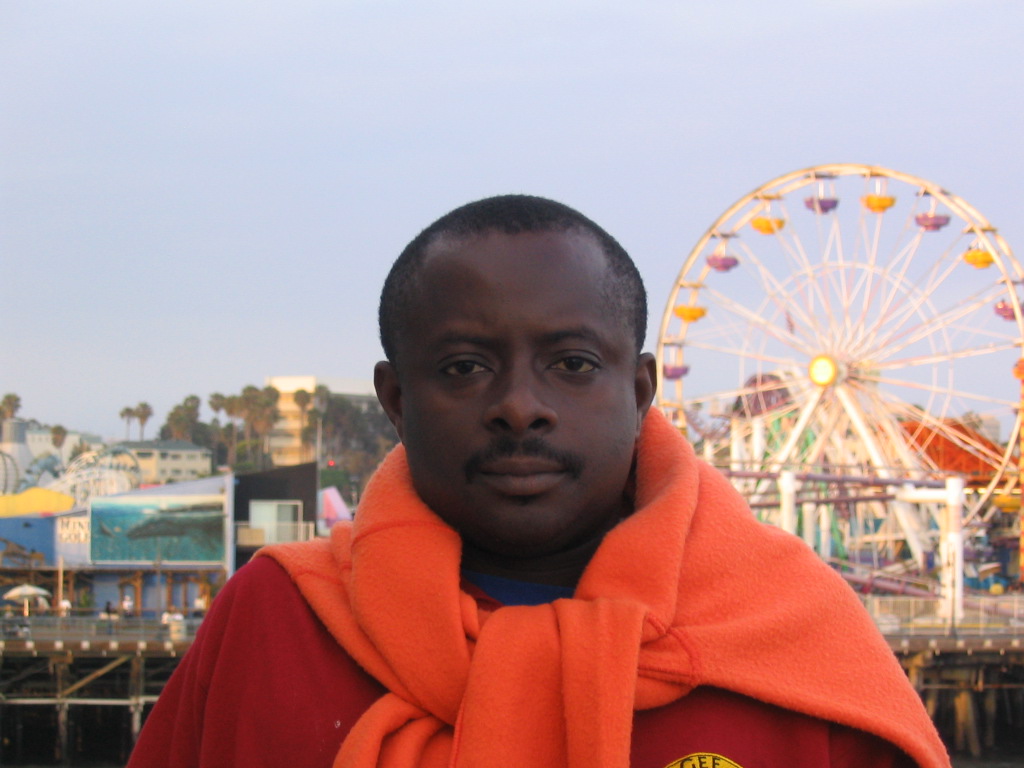
By Gbenga Osinaike
October 5 2026 marks exactly 20 years since Omololu Falobi, the Executive Director of Journalists Against AIDS (JAIDS), passed on. It was a Thursday.
I was still at The Punch when news of his death reached us in the newsroom, causing an immediate stop-press moment. It could not have been Omololu.
Those of us who had worked with him and knew him so well almost immediately ran out of the newsroom confused, making desperate calls to verify the authenticity of the news.
But alas, the nightmare was real. Omololu Falobi had passed on. He was reportedly caught in a tragic crossfire between armed robbers and the police right around the street of his residence in Lagos as he was about to drive into his premises from work. He was just 35 with a great life ahead of him.
The news of his sudden transition was not only hurting; it was devastating, leaving many of us wondering at how cruel death could be. There is nobody who met Omololu that would not attest to his ingenuity and brilliance. He was young, but he lived many years ahead of his peers.
I had known him long before the newsroom, at Obafemi Awolowo University, where he was two years ahead of me in the same department.
By the time I graduated and got employed with The Punch Newspapers in 1993 he was already there. He turned out to be my immediate boss, though under another great journalist, Peter Adebolu.
We were all under Adebolu. But when The Punch was proscribed by the late maximum ruler, General Sani Abacha, and the proscription was later lifted, Adebolu did not return. Almost immediately, The Punch management appointed Lolu as the Features Editor.
Even before then, he had demonstrated an uncanny trait that endeared him to the management. He was an excellent journalist who had a penchant for precision writing and abhorred verbosity.
Lolu was the young man you would love to like, even when he bombarded you with piles of assignments. There was no time to waste with him, and he was not given to idle talk. His age notwithstanding, he had the managerial carriage that made things work in a news environment.
For the many years that we worked together at The Punch, Lolu exemplified good character and diligence. When we first met at The Punch, he asked about my vision for life, how long I intended to work there, and what my plans were.
He was quick to give me guidance and warned me against procrastination when I told him I would love to go into publishing. That was the extent of our closeness.
Though my boss, he was more of a counselor and a teacher who put you through the job. I used to think I was a great writer, having specialized in playwriting at the Department of Dramatic Arts at OAU, until I met Lolu, who put me through scientific writing.
He believed a writer should not be given to verbosity. He made me realize that every sentence and word a writer uses matters and should be supported with facts. He was not one to be carried away by sentiment and emotion.
I remember going to do a story at Snake Island in Apapa,Lagos and coming back with a feature article. I had done the piece and hoped that it would pass. By the time he handled it, he sliced it down to almost one-quarter of its original length. I was taken aback. But then he identified some key issues in the story and asked me to rewrite it. I took his advice, rewrote the piece, and came out with a great story that he titled, “There is No Snake in Snake Island.”
That was when the then Director-General of the Naval Dockyard was having issues on Snake Island in Apapa. I can’t remember all the details of the story, but the point is that Lolu was too outstanding and too brilliant a journalist to have been mauled by a stray bullet.
While at The Punch, he worked his bones out. Back then, there was only one desktop in a room at The Punch that had internet facility. If you needed to send an email, you had to take turns. For Lolu, that place became his sleeping room, so to speak. While we had all gone home, he would stay back and explore the internet overnight.
That was when he was cooking up JAIDS. He was making international contacts and setting up a structure for the organization. It was during a time when the deadly HIV was ravaging nations. Lolu thought of an awareness approach to the menace, establishing Journalists Against AIDS—an NGO that turned out to become a phenomenon.
At that time, while still at The Punch, Lolu was slipping in and out of the country, attending seminars and training on the platform of JAIDS. It was not much of a surprise to me when he submitted his resignation after serving The Punch for nine years to face the NGO fully.
In those days at The Punch, staff turnover was quite high, and only a few staff members crossed the 10-year mark. Many prayed to at least hit 10 years because of the largesse that followed in case you were asked to leave. But such a pursuit was no longer relevant to Lolu. He had gotten hold of a life goal that would later put his name on the global map.
By the time he left The Punch, it was easy for him to unravel the great potential buried in his petite body. We had done a few things together on the platform of JAIDS, and he felt it would be great if I quit The Punch to join him in the organization, but I declined because I knew I did not have his kind of courage.
Now, it is 20 years since he passed, and it seems like yesterday. I can still see Lolu. I can still feel his impact. I still see him even in my writing because he influenced me a lot when it comes to precision writing. I still hear his counsel ring in my ears. He is gone, but his memory is hard to erase. It is gladdening that the NGO he started decades ago is still alive and blossoming. Not many organizations have that grace.
