

By Dayo Emmanuel
Christian media professionals have called for stronger commitment to women empowerment, mentorship and value-driven leadership in the media, stressing that giving selflessly remains a pathway to lasting impact in society.
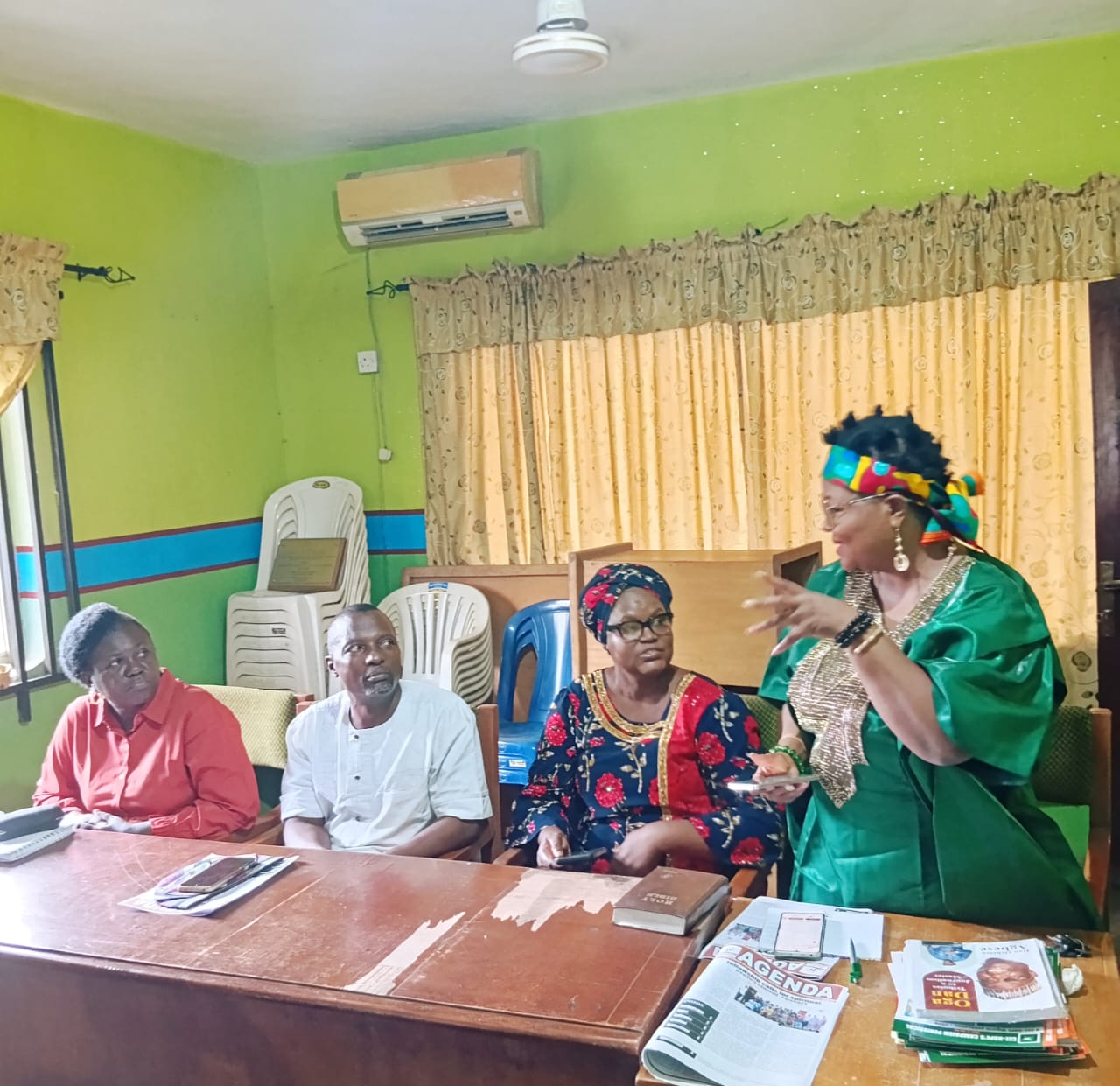
This formed the thrust of discussions at the March fellowship of Journalists For Christ (JFC), held in Lagos, with the theme, “Give to Gain,” in commemoration of the International Women’s Day.
Welcoming participants, President of the 28-year-old organisation, Lekan Otufodunrin, said the fellowship was dedicated to celebrating women and their contributions to society.
“The world celebrates women every year on the 8th of March, tagged International Women’s Day, and we have decided to dedicate this month’s fellowship to celebrate women for their important roles in society,” he said, praying for “strength and wisdom for women all over the world to build their homes and continue to provide necessary support.”
Setting the tone for the panel session, moderator and Publisher of Church Times Nigeria, Gbenga Osinaike, emphasised the need for deliberate empowerment of women within and outside the media space.
“When women are empowered, there is a lot to the influence they can wield to support their homes and society at large,” he said.
Speaking on mentorship and leadership in the newsroom, Assistant Editor-in-Chief at the News Agency of Nigeria, Yinka Fadare, drew lessons from the biblical story of Naomi and Ruth, likening their relationship to that of a media manager and a mentee.
“I want to take an analogy from Naomi as a media manager and Ruth as a mentee or an employee—a loyalist,” she said.
Fadare described Naomi as “an uncelebrated mother and mentor who gave a gift to humanity,” noting that her influence shaped Ruth’s destiny.
“When we think about Naomi, we think about Ruth getting a rich husband, but she didn’t only get a rich husband; she became one of the forebearers of Jesus Christ and grandmother of King David,” she said.
She stressed that Naomi’s life, rather than mere words, inspired Ruth’s loyalty and commitment.
“Naomi didn’t only profess what she was; she lived a life that Ruth could emulate, to the point of saying, ‘your people shall be my people, and your God shall be my God.’ What will people say about you? Can people follow your God because of you?” she asked.
Drawing parallels with the media, Fadare said organisations shape public perception through the conduct of their reporters.
“The media organisation makes the rules, controls the styles, and gets the glory from the foot soldiers—the reporters and editors—because it is how they are represented outside that determines how the organisation is perceived,” she said.
According to her, leadership and identity are intertwined, warning that poor leadership can diminish both institutional and individual credibility.
“A media organisation that wants to be respected must be mindful of how the foot soldiers are treated. They must mentor, support and ensure welfare,” she said.
Fadare also stressed the importance of values such as loyalty, humility and service among journalists.
“In journalism, the foot soldiers must not feel too big to serve the public. They must not put money first. Our pens are powerful; they can turn the lives of society around. We should not limit everything to what we can gain,” she added.
On the spiritual dimension of giving, educator and school proprietress, Amina Hassan, said true giving is rooted in God’s example.
“The greatest giver is God. He gave His only Son to humanity. That is the greatest gift anybody can give,” she said.
Hassan urged participants to give selflessly without expecting immediate returns.
“There is nothing we give today that is not God-given. We must glorify God with our gifts and not give because of what we want to gain,” she said.
Speaking from her experience in missionary work, she highlighted the sacrifices involved in service.
“Most times, when people go to the mission field, for years they may not get a single soul converted. Many of them have struggles; some have been rejected by their families, yet they continue,” she said.
Quoting the Bible, she added, “Some may not see results immediately, but they are preparing the ground. ‘I have planted, Apollos has watered, and it is God that gives the increase.’”
She encouraged persistence despite challenges.
“Don’t be discouraged. Keep giving your best. The gain will not come overnight, but it will surely come,” she said.
Also speaking, Executive Director of CEE-HOPE, Betty Abah, called for urgent and deliberate efforts to bridge the gender gap in Nigeria, particularly in the media.
“There is a need to speak to gender issues, especially in a nation that faces persistent challenges. It may take up to 100 years to close the gender gap between men and women if deliberate steps are not taken,” she said.
Abah decried the underrepresentation of women in decision-making roles.
“Even in the media, women are underreported and hardly in decision-making positions. Men are often placed in leadership roles, but I do not believe women’s brains are smaller,” she said.
She criticised entrenched stereotypes in newsroom assignments.
“Most of the fashion pages are assigned to women, while beats considered important, like politics, are reserved for men. This reflects the patriarchal tendencies in our society,” she noted.
Abah stressed that empowering women has far-reaching benefits for families and society.
“When you empower a woman, she will not only uplift herself but also her family and entire community. Many of those who have made Nigeria proud are women,” she said.
She called for intentional policies and actions to promote gender inclusion.
“We need to be deliberate. Women must be deliberately empowered and given opportunities in decision-making spaces,” she said.
Highlighting the societal value of women, Abah noted their roles in family care and community stability.
“If you want to live long, it is often your daughters who will take care of you. Empowering girls and women ultimately makes the world a better place,” she said.
Participants took turns to contribute to the discussion before the fellowship was concluded with a renewed call for media professionals to embrace mentorship, uphold ethical values, and use their platforms to promote equity and positive societal change.
