

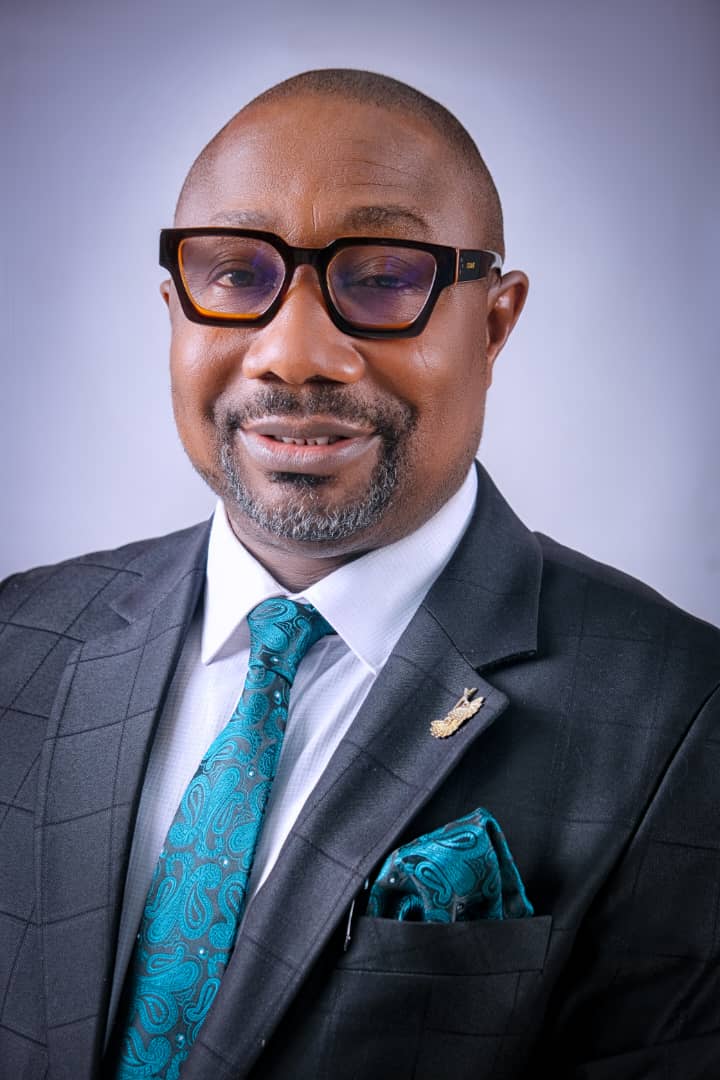
Dr Okey Okoro Udo, economist, minister of the gospel and Action Democratic Party (ADP) candidate for the Abia North Senatorial District, speaks with Isaac Ngumah on the coming elections, the judiciary, the Renewed Hope agenda, restructuring, and the place of the church in Nigeria’s public life.
Some Nigerians say that in the coming elections their votes may not count. Is this fear justified ?
Let me be honest with you, I understand that fear completely, because I have lived it. I have stood at polling units and watched what the people did, and then heard a different result announced on television. I have sat with party agents who were chased away before collation, and I have seen result sheets that looked nothing like what was counted under the mango tree. So nobody should tell Nigerians that their fear is imaginary. It is based on previous experiences.
But here is what I want every Nigerian to hear clearly. The day you decide your vote will not count is the day you hand your future to the very people you are complaining about. That is exactly what they want. The rigger’s best friend is the voter who stays at home. It often said that if you do not know where you are going, any road will take you there, and the voter who abandons the polling unit has surrendered the road to whoever is left standing.
Your vote counts the moment you cast it, protect it, and refuse to leave until it is recorded and uploaded. We now have BVAS, we have electronic transmission, we have a phone in every hand that can photograph a result sheet. The tools are there. What we need is the resolve to use them, in every ward of Abia North and across this country.
On the judiciary, I will say this plainly. The courts do not pick up evidence from the street; they rule on what is placed before them. Too many of our cases have failed not because the judges were bought but because the case was poorly prepared, the agents did not collect results, and the lawyers argued emotion instead of facts. So my message is practical. Vote, stay, document, keep your result sheets. Then if anyone cheats you, you go to court with a case that cannot be thrown out. And to our judges I say, the only thing holding this democracy together is the belief that there is somewhere to run to. Guard that belief, because once it dies, no judgment you deliver will be respected, even the honest ones.
What can you say about the role of the judiciary in determining electoral outcomes in Nigeria?
The judiciary is supposed to be the referee, not the striker. In a normal democracy, the people vote, the umpire counts, and the court only steps in when someone cries foul. That is a healthy role and we need it; no serious democracy survives without a place where disputes can be settled peacefully. What has gone wrong in Nigeria is that the referee has started scoring goals. When a man loses at the polling unit and wins in the courtroom, and this happens over and over, the ordinary Nigerian starts asking a very dangerous question: why did I bother to vote? And when enough people ask that question, democracy is already dying, even if the elections continue on the calendar.
So what is the way out? Not to tie the hands of the courts, but to shrink the space for them to decide. Give us elections that are so transparent, with results uploaded in real time and collation open to everybody, that there is almost nothing left to litigate. The Electoral Act has given us much of that framework already; the problem is the will to apply it. And where cases do get to court, let the judges ask the one question that matters: who did the people actually choose? Not whether a form was filed one day late or a signature was in the wrong box. A judgment built on technicality instead of truth leaves a wound in the land that never heals, and that wound is what feeds the apathy we see today. The ballot box must decide; the courtroom should only confirm it or correct an obvious wrong.
What is your view on the President’s decision to limit his participation in campaign rallies?
Nigeria has suffered too long from leaders who abandon the office for months to dance on campaign stages while the country burns. If the President truly stays at his desk and uses that time to fix the economy, secure our roads and villages and bring down the price of food, then let him be judged by results rather than by crowd size. That is how it should be, and I will not criticise a man for choosing work over noise.
But let me add a caution, because this is where I part ways with those who are applauding without thinking. A campaign is not just a party. It is the one season in four years when a leader must stand before the people and account for what he has done with their mandate. It is the people’s audit. If the President will not come to the rallies, then he must come to the people another way: face the journalists, sit for debates, hold town halls, answer the woman in the market who wants to know why a bag of rice costs what it costs, and the graduate who wants to know why he is still at home three years after NYSC. Fewer rallies, fine. Fewer answers, no. The people are not asking for a dance; they are asking for an explanation, and a leader who respects the people owes them one.
Some people say that under the Renewed Hope agenda the President is building a system that will stand the test of time, and that Nigerians should expect an abundance in the future. What is your take?
I am an economist, so let me speak like one and not like a politician. Some of what this government has done was necessary and overdue. Removing the fuel subsidy, unifying the exchange rate, rewriting the tax laws: these are things every previous government knew had to be done and ran away from. I give credit where it is due, and I will not pretend otherwise just because I belong to a different party. Those are structural decisions, and structural decisions can outlive the people who made them.
But here is the test, and it is a simple one. Go to any market in Umuahia or Ohafia or Garki tonight and ask the trader whether her life is better than it was three years ago. That is the only scorecard that matters. A system is not what is written in a policy document in Abuja; a system is whether a father can feed his children, whether a mother can afford the clinic, and whether a graduate can find work. Reform that brings pain is only justified if the gain reaches ordinary homes in a reasonable time, and if the trillions saved from subsidy are visibly reinvested in the people and not swallowed by the same old waste, the same convoys, the same bloated cost of government.
Nigerians have been promised a better life since 1999. We are no longer impressed by promises; we have a drawer full of them. Show us the numbers in the kitchen, not the numbers in the speech. If this government can do that, I will be the first to say so. Until then, the jury is still out, and the jury is the Nigerian people.
Some analysts have said it is too late to restructure Nigeria. What can you say on restructuring the country, and on the question of state police?
Whoever says it is too late to fix a house should tell us the alternative: live in it until it collapses on our heads? It is never too late to fix a foundation; it only gets more expensive the longer you wait. Nigeria’s problem is simple to describe. We have put too much power and too much money in Abuja, and that is why every election is a war to the detriment of the centre. Restructuring is not a dirty word and it is not about breaking Nigeria. It means moving responsibility and resources closer to where people actually live, so that an Abia community does not have to wait for a file to travel to Abuja before its road is fixed or its school roof is replaced. It means letting states compete on how well they govern, not on how loudly they lobby. Some of this is already creeping in through local government autonomy and the new fiscal arrangements under the tax reforms. Good. Now let us do it deliberately and completely instead of in frightened little pieces.
On state police, I will not hedge. The debate about whether is over; the only honest debate left is how. Over two hundred million people cannot be policed by one force commanded from Abuja. The bandit is local, the kidnapper is local, the informant is local, and the response has to be local. A policeman posted from another zone who does not speak the language and does not know the terrain cannot protect a village he cannot find on the map. People worry that governors will turn state police into private armies. I share that worry, but it is a design problem, not an excuse for doing nothing while our people are slaughtered on farms and highways. Write the safeguards into the Constitution, put in independent oversight, cap political control, insist on professional recruitment, and state police will work here as it works in every serious federation in the world.
The Christian Association of Nigeria (CAN) has advised churches to strengthen their advocacy against insecurity, corruption and poor governance. What is your take?
CAN is right, and I would go further. This is not a new assignment for the church; it is the original one. Read your Bible. Nathan walked into the palace and told David to his face, you are the man. Elijah confronted Ahab. John the Baptist lost his head for telling a king the truth. The prophets were not quiet men who waited for the government to invite them to a prayer breakfast. A church that preaches prosperity on Sunday and says nothing on Monday about the looting that creates the poverty around it has quietly abandoned half of its calling.
But let me add one thing, because advocacy without credibility is just noise. The church cannot condemn corruption in Abuja while nobody knows where the offering goes in its own house. It cannot demand good governance from a politician on Monday and roll out the red carpet for him on the altar on Sunday because of his donation. It cannot preach against tribalism and then run its own leadership on tribal arithmetic. So if we are going to speak, and we must, let the cleaning start at home. A clean church speaking to a dirty system carries moral authority. A compromised church only carries opinions, and Nigeria has enough opinions already..
What can you say about the church’s contribution to nation building in Nigeria?
The church has done far more for this country than it is ever given credit for. Ask yourself who built the first schools and the first hospitals in most of our communities. It was the missions, long before government arrived. Many of the people who run this country today, in government, in business, in the professions, learnt to read in a mission classroom. Today churches still run universities, clinics, scholarship schemes and feeding programmes that reach people the state has never reached. Go to the villages where there is no government presence at all, and you will find that the only institution that is standing, functioning and trusted is the church. That is nation building, whether or not it appears in any budget.
But the church’s greatest contribution is not buildings; it is character. A country where millions of people are taught every week to be honest, to work hard, to forgive and to serve others has a moral reserve that no amount of oil money can buy. Where we have fallen short is in turning that reserve into civic action. We have taught people to pray for the nation but not to vote for it, to serve in church but not to serve honestly in public office, to give tithes faithfully but to look away when public funds are stolen. That is the next frontier, and it is exactly why I am where I am today. The pew must produce people for the public square.
Why are men of God silent at this time of prevailing challenges in the country.
First, let me defend the ones who are not silent, because there are ministers who speak every week and pay a real price for it, in threats, in lost friendships, in congregations that walk away. But I will not hide behind them. The collective voice of the church has been far too quiet for the hour we are in, and I think there are three reasons. One, some of us have become too close to power and cannot bite the hand that feeds us. Two, some of us are simply afraid, because speaking out in Nigeria today can cost you your safety and your ministry. Three, some of us have shrunk the gospel down to personal breakthrough and no longer see the nation as our business, as if God were interested in your visa and not in your village.
I reject all three. Silence in the face of injustice is not neutrality; it is a message, and the people are hearing it loud and clear. My appeal to my colleagues is simple. Speak. Speak with facts, speak without partisanship, speak with the same courage you demand from the people in your congregation. The church is not an opposition party and should not become one. But it is meant to be the conscience of the nation, and a conscience that says nothing has stopped doing its job.
How many years have you been in the ministry, and how did you start?
About thirty years now. I started in the mid-1990s as a campus pastor under the Church of God Mission, in what we called Christian Fellowship International, CFI, serving as a prayer leader and teacher. Those were years of all-night prayer meetings and teaching young people who had very little but faith, and they shaped everything I later became. When I went for NYSC, I did not drop the work; I continued as a youth leader, and from there God opened doors for me to travel to other nations for evangelism and church planting.
So ministry is not a badge I picked up when it became convenient. It has run through every season of my life, from the lecture hall to the boardroom to the political arena. Whether I am teaching a class, auditing a company or addressing a rally, I am still that campus pastor trying to help people see clearly and live rightly. It is the thread that holds everything else together, and it is the reason I do what I do today.
Tell us about your focus in the ministry.
My focus is simple to state: take the faith from the pews into the public square. I believe with everything in me that religion and education are social goods. They are meant to bless the whole society, not just the people inside the church or the classroom. That conviction is what carried me into politics. I did not leave ministry to enter public life; I entered public life to extend ministry, bringing my training as an economist and my experience as a believer into the place where policies that affect millions are made. That is why I contested for the governorship of Abia State, why I stood as a vice presidential candidate in 2023, and why today, under the Action Democratic Party, ADP, I am asking the people of Abia North to send me to the Senate.
At the heart of it is one belief: the righteous can make a difference in the public space. Proverbs says that when the righteous are in authority, the people rejoice. We cannot keep lamenting bad governance from the pulpit while the people of God refuse to go where governance is decided. If good people stay out of politics, we should not be surprised at who is left to run it. So my ministry today is about raising and modelling that kind of leadership: through teaching, through the daily devotional I write, through the scholarships our foundations give to children who would otherwise never see a university gate, through mentoring young people, and through proving with my own life that a person can carry integrity, scholarship and faith into politics without leaving any of them at the door. That is my message to Abia North and to Nigeria.
