

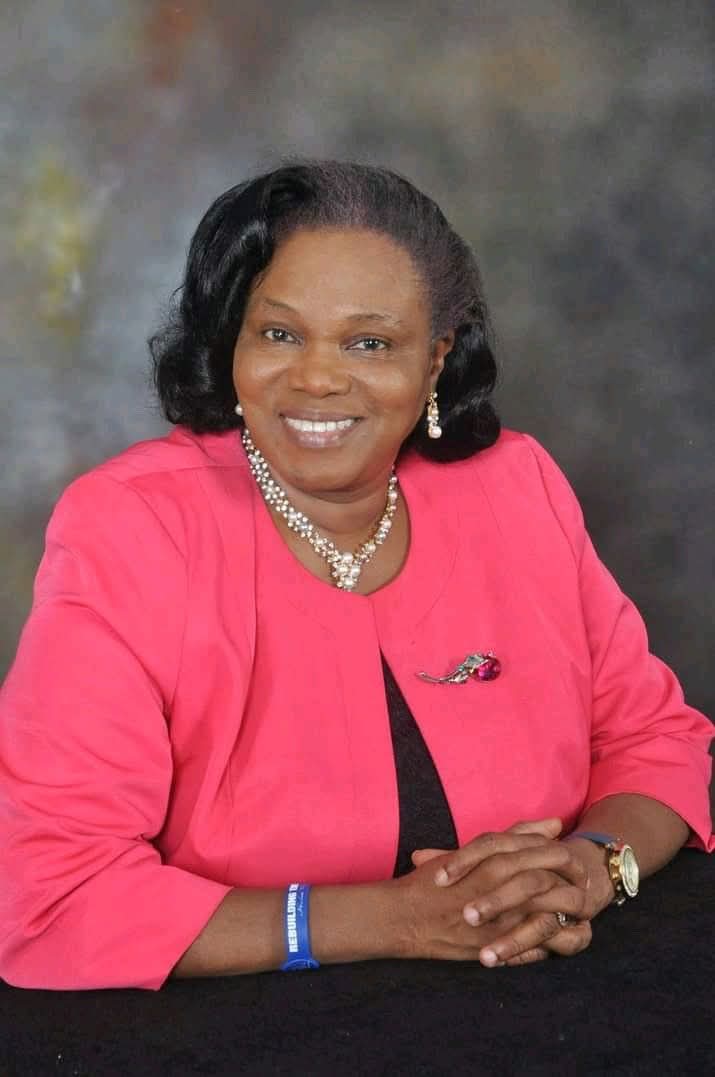
The death of Toun Soetan, one of Nigeria’s outstanding gospel music ministers on March 13 this year came to many as a shock. But only a few know of the incredible circumstances that shaped her upbringing and her ministry.
Early years and struggle for identity
Known as Alimotu Sadia in her younger days, Soetan had the early misfortune of an absentee father and a mother who was a victim of misogyny.
Her mother was first married to a one-time king of Iwo. She had five children for the king—all females. That became a problem. She was maltreated because she could not give birth to a male child. The unfriendly situation in the palace made her become desperate for a male child. She came to Lagos to meet a medical doctor who tried to help. But in the course of helping, she fell in love with the medical doctor and had another baby girl for him.
Incidentally, the doctor also wanted a male child. Toun’s mother stayed back and got pregnant again. This time, the doctor warned that if the child was a girl, she should not bother coming back to the house. But his fear was confirmed when the pregnancy produced another baby girl, who turned out to be Toun Soetan. True to the threat of the doctor, he refused to take responsibility for the new baby.
Return to Ibadan and the bastard tag
But his younger brother stepped in. He took both mother and child and cared for them. With time, both Toun and her mother found their way back to Ibadan. Her mother reconciled with the Iwo monarch and went back to the palace with Toun.
That was to be the beginning of another time of shaming. She was treated as a bastard in the palace and was not given breathing space. Her mother had two more children for the king. This time, they were boys. But Toun Soetan could not wash off the tag of a bastard. That was where she earned the name Alimotu Sadia, since her father could not be traced. She was ridiculed, and at a point, she had to leave the palace to stay with her aunt who took care of her.
Brush with death
She also had cause to go to Kano with her mother at a point in her life. It was while in Kano she suffered ill health. And the unthinkable happened. She died—or so they thought. She was put inside a bowl and placed outside of the house. A message was sent to her aunt that she had died. Instead of mourning, she boarded the next available train to Kano and vowed that if it was true her niece had died, she would take the corpse to the medical doctor who denied he was her father.
But by the time she got to the place where her body was placed, she found that her legs were moving. She was overwhelmed. She raised the alarm, urging people to come and see the miracle. She seized the child and took her back to Ibadan where she was nurtured.
Escape from Kidnappers
She continued taking care of her. “At a point, my mother and her younger sister had a dispute on who to take care of me. My aunt insisted she was still going to continue in that role. I took my aunt as my mother. I was very close to her and only saw my mother once in a while.”
After staying for a while with her aunt, she had a hunch and had to go back to her mother. But her mother later made her go and serve as a home help with another family. There she suffered ill treatment and ran back to her mother. Rather than take her in, her mother flogged her and insisted she had to go back to where she was serving as home help. She made her enter a cab back to where she was coming from. Unknown to her mother, those in the cab were kidnappers.
As she entered the vehicle, they pretended they were going to her destination. After about five minutes into the journey, they veered off the road and wanted to go and slaughter her for ritual purposes. But the kidnappers, who spoke the Ijebu dialect according to Toun Soetan, said she was a “bad market”—that her star was not compatible with the money ritual they wanted to do. They dropped her off in motion. She later found her way back home to her mother.
Confrontation with her father
All this while, she had not set her eyes on her father. She only heard tales that her father was a medical doctor. It got to the point she began to have a compelling urge to see her father. She would pester her mother, asking to see her dad. “When they refused to take me to my father, I began to fall sick. I was fainting anyhow. Some imaginary fainting, some real,” she recalled.
When her mother could no longer bear her tantrums, she took her to Lagos in search of her father. “We got to this hospital and sat at the reception. We were told my father was in the operating theatre and that we should wait. We waited. Not long after, he came out to meet us. Immediately I saw him, I knew he was my father.”
The absentee father looked at Toun’s mother with disdain and spoke with some arrogance. “So you finally brought her. Who asked you to bring her?” he said to Toun’s mother.
”Rather than respond verbally to what my father said, my mother descended on him with a slap. She slapped him twice. But I went to embrace him and held him tightly. I refused to leave him.”
That day, Toun Soetan said she refused to go back to Ibadan with her mother. She stayed back with her medical doctor father who had another wife at home. The woman had no child for him as of then. Toun Soetan lived there and saw another phase of life. The man was in the business of sleeping with different women. He eventually had about 28 children altogether by different women.
Back to Ibadan and the turning point
Circumstances forced her to return to Beere in Ibadan, where she grew up, to continue her education. She had her primary school and secondary school education, attended a teacher training college, and then went to the University of Ibadan where she pursued a degree in Education.
It was while working as a teacher that she got an invitation from a friend to Oritamefa Baptist Church in Ibadan, where she surrendered her life to Jesus. But according to her, it was not the preacher’s message that night that brought her to Christ. “It was the music. The choir that night sang a song that touched my soul. The song was titled, ‘He Touched Me and Now I Am Whole.’ That song made a lasting impact on her. As soon as the lyrics of the song hit her, she burst into tears and cried endlessly. She was inconsolable. At a point, the ushers had to bring her out of the church to calm her down.
She returned to the church after she had been stabilized and responded to the altar call. “That was a major turning point in my life. That was how I became a member of the church,” she informed.
Soetan, who had always had a passion for music right from her school days and was known for promoting popular secular songs, had a change of direction in life. She joined the choir of the church and served in the choir for 16 years before starting her music ministry.
Meeting with Idahosa
She recalled many outstanding encounters she had with God. One of them was the day she was baptized in the Holy Spirit and how God commissioned her into the music ministry. She also recalled how the late Archbishop Benson Idahosa took to her. “I ministered at the Holy Ghost convention which was hosted by Bishop Wale Oke. He had not started a church then. He was running a ministry and Archbishop Idahosa took to me. He insisted I should sing that day because he wanted to dance, which I did. After the programme, he asked me to come to Benin.”
She later went to Benin to see the late Archbishop alongside Bishop Wale Oke, who was her mentor. Idahosa warned her never to raise funds and beg for money—that God would always supply her needs. He brought out some good money and gave it to her. He told her God was going to use her mightily in the music ministry.
Since that encounter with Archbishop Idahosa, Toun Soetan became a known name in the music ministry. Her husband, according to her, has been very supportive, though he does not sing. But three of her four children, according to her, have also taken to gospel music. Though two of them are lawyers, they still lead the choir of their different churches.
In the video biography, which has since been circulated since her passing, Soetan recounted a series of encounters including when Dr. Benny Hinn came to preach at the CAC Agbala Itura in Ibadan and how many top men of God fell under the power of God.
Before her death on March 13 at the age of 73 she had established a music school affiliated with the Ajayi Crowther University, Oyo. She was famous for composing Darling Jesus”:” which she recorded and released in 1987.. Her music ministry spanned over 40 years, and she was a pioneer of Yoruba gospel music. Beyond her most famous hit, she was known for songs like “Ke Pe Jesu” and “Cast Your Burdens.”
Story by Gbenga Osinaike
