

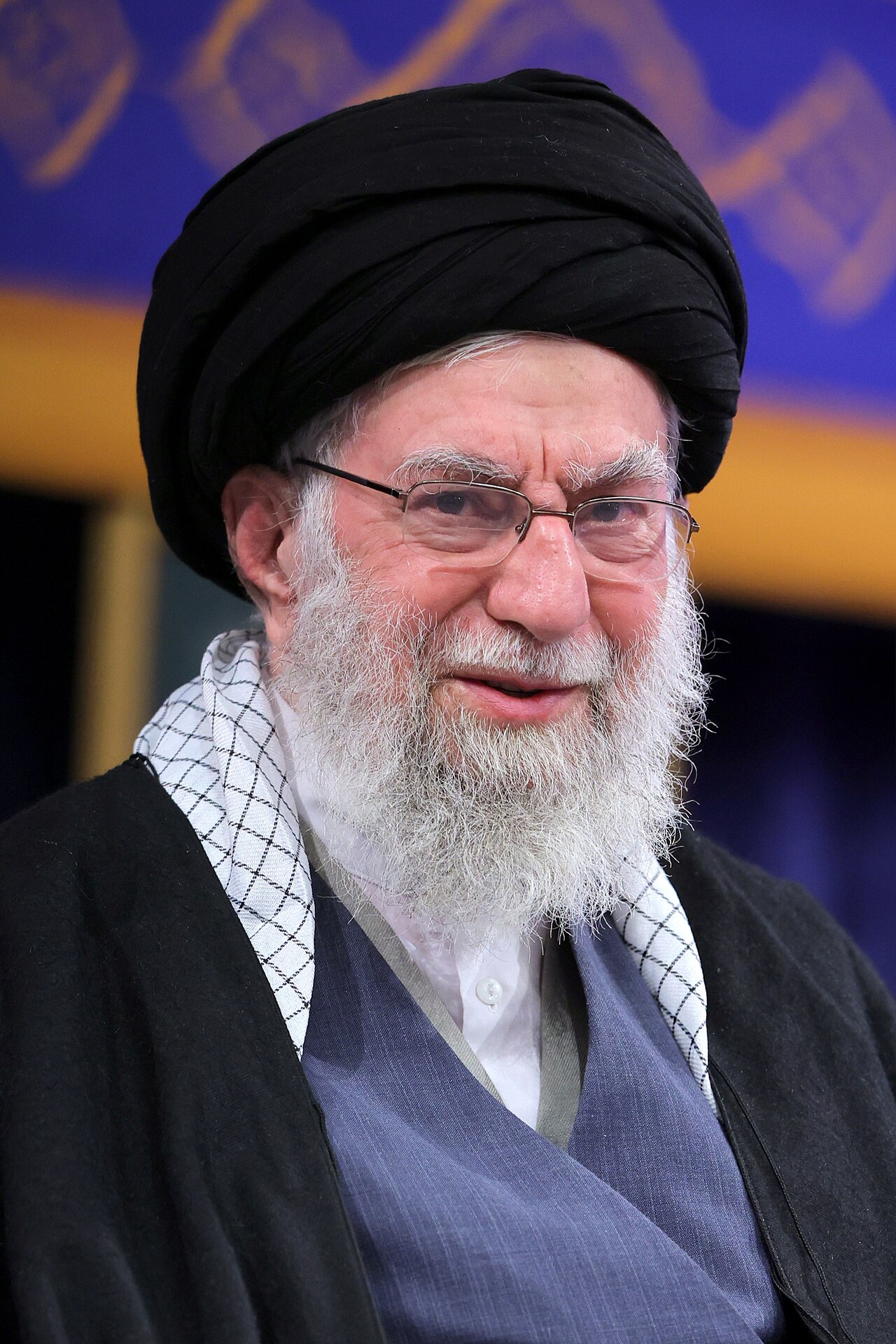
The news of the death of the Supreme Leader of the Islamic Republic of Iran, Ali Hosseini Khamenei, on Saturday February 28, came to many as a surprise. Multiple news sources confirmed that he died on February 28, 2026, following airstrikes in Tehran
For those who have been following his trajectory since he assumed power in 1989, his exit marks the end of a significant but tumultuous era..
Just like his predecessor Ayatollah Ruhollah Khomeini who was locked in a war of attrition with Iraq in the last six years of his reign, Khamenei posed as a global threat for all the years he was in power.
Recent reports indicate that U.S.-Israeli forces conducted a clinical operation to remove him. However, it did not occur without collateral damage; many lives have unfortunately been lost since the recent escalations and military actions within the Republic.
He was killed along with his daughter, son-in-law, daughter-in-law, and grandchild. He was 86 years old at the time of his death having been born on April 19, 1939, in Mashhad, Iran.
His “sins” from the standpoint of the international community were numerous. It is little wonder some Iranians took to the streets to celebrate his exit.
How do you explain a regime that has, over the decades, stifled the voices of its people and subjugated them in the name of religion? One of his many failures was the crackdown on Iranians who desired to express their God-given freedom.
Two major protests—the 2009 Green Movement and the 2022 “Woman, Life, Freedom” protests—are cases in point. These movements led to the deaths of thousands. Protesters were allegedly killed, arrested, or executed under his authority, marking a sore point in his reign.
Mike Arnold, in a social media post, captured the sentiment: “Iranians are dancing in the streets. Dancing—an act the Islamic Republic criminalized in 1979 because clerics declared it sinful.
“For forty-seven years, women have been beaten, imprisoned, and killed for showing their hair. Dissidents have been tortured. Apostates executed. An entire nation held at gunpoint by men who claimed to speak for God.”
Beyond the treatment of his own people, Ali Khamenei was accused of sponsoring militant groups across the globe. Groups like Hezbollah and Hamas have fueled decades of instability in Lebanon, Yemen, and Gaza with his backing. At the time of the strike—which reportedly also claimed the lives of close aides—the U.S. administration maintained he was actively developing plans to attack American personnel in the region.
The Impact on the Christian Community
For many, Ali Khamenei’s image was that of a hardline leader who unleashed an unfriendly atmosphere on the Christian community. This was an atmosphere he inherited from his predecessor, Ayatollah Ruhollah Khomeini, who died in 1989. Khomeini had established a system that entrenched Shia Islam as the state religion.
However, Christianity predates the Islamic era in Iran. Tradition holds that the Apostles Thomas, Thaddeus (Addai), and Bartholomew brought the faith to the region. While the Islamic conquests between 700 AD and 1400 AD changed the paradigm, they did not fully obliterate the Christian presence. Today, communities of Presbyterians, Anglicans, and Catholics exist alongside the traditional Armenian and Assyrian churches.
The Iranian Constitution officially recognizes three religious minorities: Christians, Jews, and Zoroastrians. They are granted reserved seats in the Parliament (Majlis). While traditional “ethnic” churches (Armenian/Assyrian) are protected, they are strictly forbidden from holding services in Persian (Farsi) or accepting Muslim converts. Conversion from Islam to Christianity remains a capital offense under the regime’s interpretation of Sharia.
The Growth of the Underground Church
Despite these restrictions, a significant “underground” house-church movement has emerged among Persian-speaking converts. Records show the church is growing rapidly. Estimates vary due to the secret nature of these groups, but many monitoring organizations place the number of believers between 1 million and 3 million.
This growth is fueled by: the internet. The preponderance of digital Bible has made it easy for the gospel to penetrate the republic. Beyond this is the divine intervention by God as stated earlier. Many Iranians reportedly see the vision of Jesus and then surrendered to him. There is also a strong discipleship culture in the middle east country
Many Iranians, disillusioned with state-imposed religion, are reportedly drawn to Christianity’s message of peace and grace. There are even reports of mosques closing due to a new wave of secularism and spiritual searching among the youth.
The state of the church in Iran is a study in contrasts: it is simultaneously one of the most persecuted and one of the fastest-growing Christian communities in the world.
Reports from early 2026 indicate that the “scapegoating” of Christians increased following the geopolitical fallout of the 2025 Israel-Iran war. The regime branded converts as “Zionist spies.” In 2025 alone, cumulative prison sentences for Christians exceeded 280 years.
What Lies Ahead?
Will the death of Ali Khamenei make a difference? Will it translate to new laws favoring religious freedom?
The problem in Iran is largely systemic rather than person-specific. Ali Khamenei represented that system, and while his exit is a massive turning point, it is uncertain if the country will experience immediate freedom.
The Assembly of Experts (the body of 88 Islamic scholars) is currently meeting to vet candidates for the next Supreme Leader. Their choice will determine whether Iran maintains its belligerent posture or evolves.
For the underground church, the “army of converts” is not propelled by material gain but by deep personal encounters. Their love for God is unlikely to wane under pressure. The onus lies on the global Church to continue supporting them in prayer.
By Gbenga Osinaike
Postscript: Iran and the Bible
In the Bible, “Iran” is referred to by its ancient names: Persia, Elam, and Media.
- The Home of Great Kings: The most famous “Iranian” in the Bible is Cyrus the Great. In Isaiah\ 45:1, God refers to him as His “anointed.” Cyrus allowed the Jews to return to Jerusalem to rebuild their Temple (Ezra\ 1:1-4).
- The Setting of Major Books: The Book of Esther is set in Susa (modern-day Khuzestan, Iran). The Book of Daniel also takes place largely within the Medo-Persian courts.
- Prophetic Mention: In Jeremiah\ 49:39, a prophecy states that in the “latter days,” God will “restore the fortunes of Elam” (Southwestern Iran).
- The New Testament: The Magi (Wise Men) who visited the baby Jesus are widely believed to have been Persian Zoroastrian priests, representing the first Gentiles to honor the Christ child.
