


One of Nigeria’s leading health enthusiasts and church leaders, Rev. Tony Akinyemi, has urged the church to lead the way in health education and in ensuring that people get proper medical support.
He made the plea as the guest speaker at the third edition of the Pastor Uyeh Public Lecture, which took place on Saturday, June 6, at The Apostolic Church, LAWMNA Territory in Ketu, Lagos.
Akinyemi spoke on the theme, “The responsibility of the church in promoting holistic health for national growth and development.”
The goal of the Uyeh Public Lecture is to bridge the gap between the church and society. The maiden lecture focused on promoting Christian values and advancing national development. In contrast, the second lecture focused on “the place and impact of Christian Youth in national development.”

Health education
In his lecture, which had hundreds of people from within and outside the church in attendance, Rev. Akinyemi emphasised the place of medicine and explored the many ways the church could be a veritable instrument in promoting a healthy society.
He said, “The church must teach its members that seeking professional healthcare is not a sign of weak faith, but an act of responsible stewardship. Faith and science should not function as enemies. Genuine faith and responsible medical care can coexist harmoniously.”
Akinyemi, who is the founder and Senior Pastor of Shepherd Flock International Church, noted also that every legitimate discovery in medicine ultimately reflects the wisdom and grace of God. “We must therefore move towards a balanced, evidence-based approach where our trust in God’s sovereignty works hand-in-hand with the medical tools that God has graciously provided for humanity’s well-being,” he said.
He urged the church to avoid the extremes of hyper-spiritualisation and secular materialism, “where society dismisses the spiritual dimension of human existence and attempts to solve all human problems through material and technological means alone.”
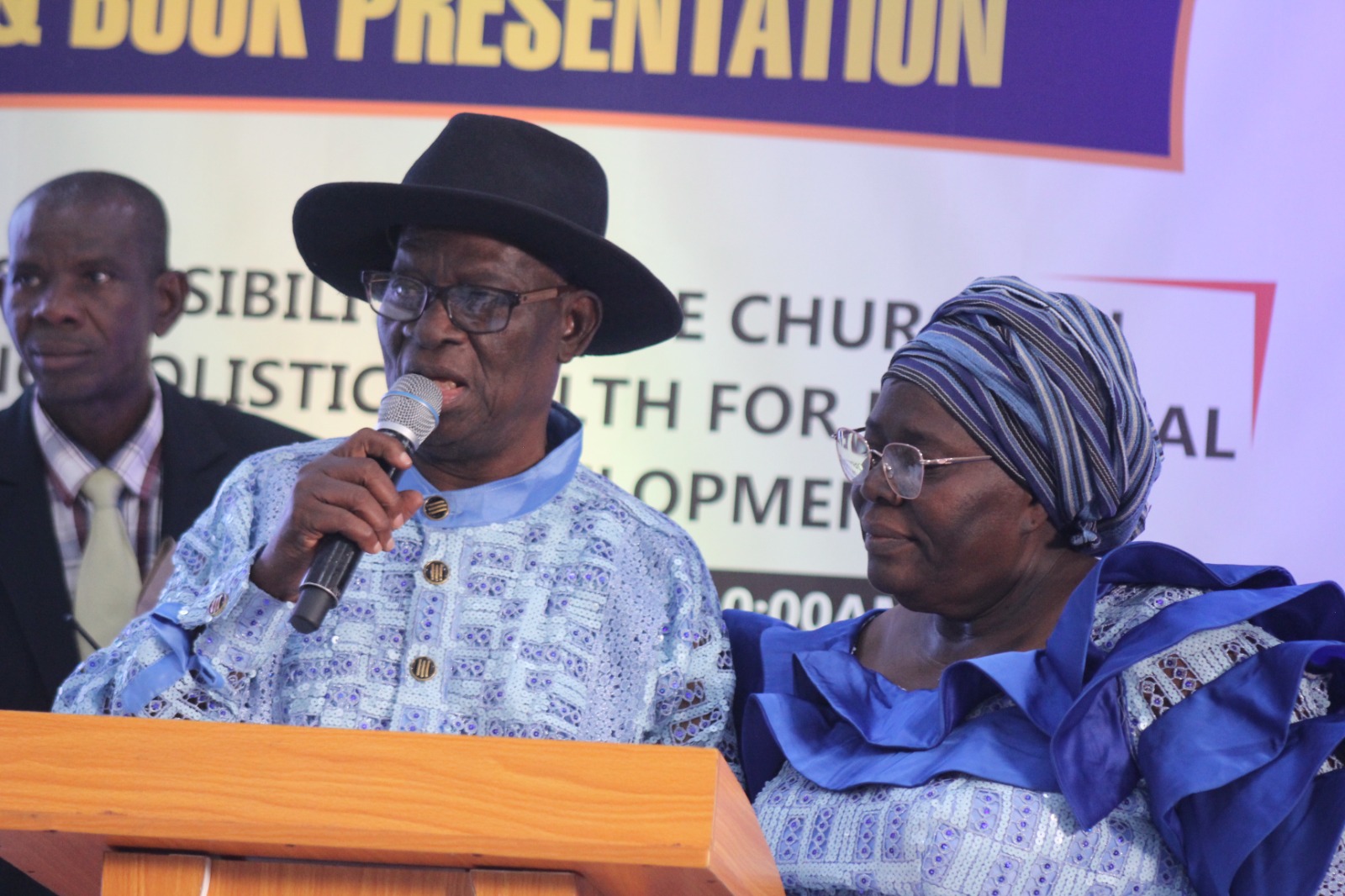
People’s health critical
At the onset of his lecture, Akinyemi said the future of Nigeria depends not only on political reforms or economic policies but also on the health of her people.
While stating that man is a tripartite being consisting of spirit, soul, and body, he said, “any approach to human development that neglects one aspect of our being becomes incomplete. The church must therefore avoid focusing only on spiritual matters while ignoring emotional suffering, physical illness, poverty, mental distress, or social injustice.”
He emphasised that true wellness is holistic. “It includes physical health, mental and emotional stability, social well-being, moral soundness, economic responsibility, and spiritual vitality.”
Rev. Akinyemi said further that research has shown that preventive healthcare and healthy lifestyle choices significantly reduce disease burden and improve life expectancy.
Church’s role in health education
He noted that over the years, the church has played a critical role in ensuring a stable society through the message of hope and its emphasis on morality, which has helped shape the lifestyles of people.
Referring to a philosopher, he said, “a morally healthy society is a more productive society.” He added that many of the teachings in the Church are exactly what society needs to develop.
Akinyemi highlighted many areas of the church’s social interventions, such as the healing of the sick, providing comfort for the distressed, and collaborating with health institutions to bring healthcare closer to the people.
He, however, pleaded with the church to continue to invest in hospitals, counselling centres, rehabilitation centres, elderly care facilities, maternity centres, and health support homes.
The church, according to him, cannot remain silent while preventable diseases and other health issues continue to devastate the vulnerable in society. “The church must therefore become a moral voice that consistently promotes justice, compassion, accountability, and equitable access to healthcare for all citizens, especially for the poor and marginalised.”
He cited many practical examples of how churches have been intervening in the health and social well-being of Nigerians, while urging them not to relent in these endeavours.
Health tips
Giving general health tips to his listeners while concluding his lecture, Akinyemi stated, “Make water your beverage. Never get dehydrated. Avoid sleep deprivation; it can cause accidents, crashes, and even disease. Keep moving. Never live a sedentary lifestyle. Exercise moderately and regularly. Always remember that whenever you eat or drink, you are either feeding disease or fighting it. So, mind what you permit into your mouth and body. Avoid toxic emotions. Forgive, forget, and move on. Unforgiveness is the poison you drink expecting that your enemy will die from it.”
He stressed that what people need is not more medication, but more education. “The best prescription is knowledge. To be informed is to be transformed. To be uninformed is to be deformed,” he noted.
In his welcome address at the event, the Provost of LAWMNA Theological Seminary, Jos, and Chairman of the SGO Uyeh Lecture Series Planning Committee, Pastor E.O. Olowoyeye, said the third edition of the lecture marked the conclusion of the tenure of Pastor Gabriel Uyeh as the 6th LAWMNA Territorial Chairman, “a position in which he provided visionary leadership, fostered unity, strengthened the work of the church, and inspired many through his steadfast commitment to the advancement of the kingdom of God.”
keynote address
In his keynote address, Dr. Grace Olutope Bajomo also noted that the lecture marked the close of the leadership season of Pastor Uyeh in The Apostolic Church.
He pointed out that the Church’s first responsibility is to uphold the sanctity and dignity of life. The church, according to him, should also teach a holistic understanding of health because “promoting holistic health is part of nation-building.”
Pastor Uyeh’s successor in the LAWMNA Territory, Pastor Moses Ogunibe, remarked at the event that Pastor Uyeh’s tenure as chairman of the LAWMNA Territory was marked by a “remarkable contribution to church growth, leadership development, missionary expansion, and the strengthening of the apostolic heritage entrusted to us.”

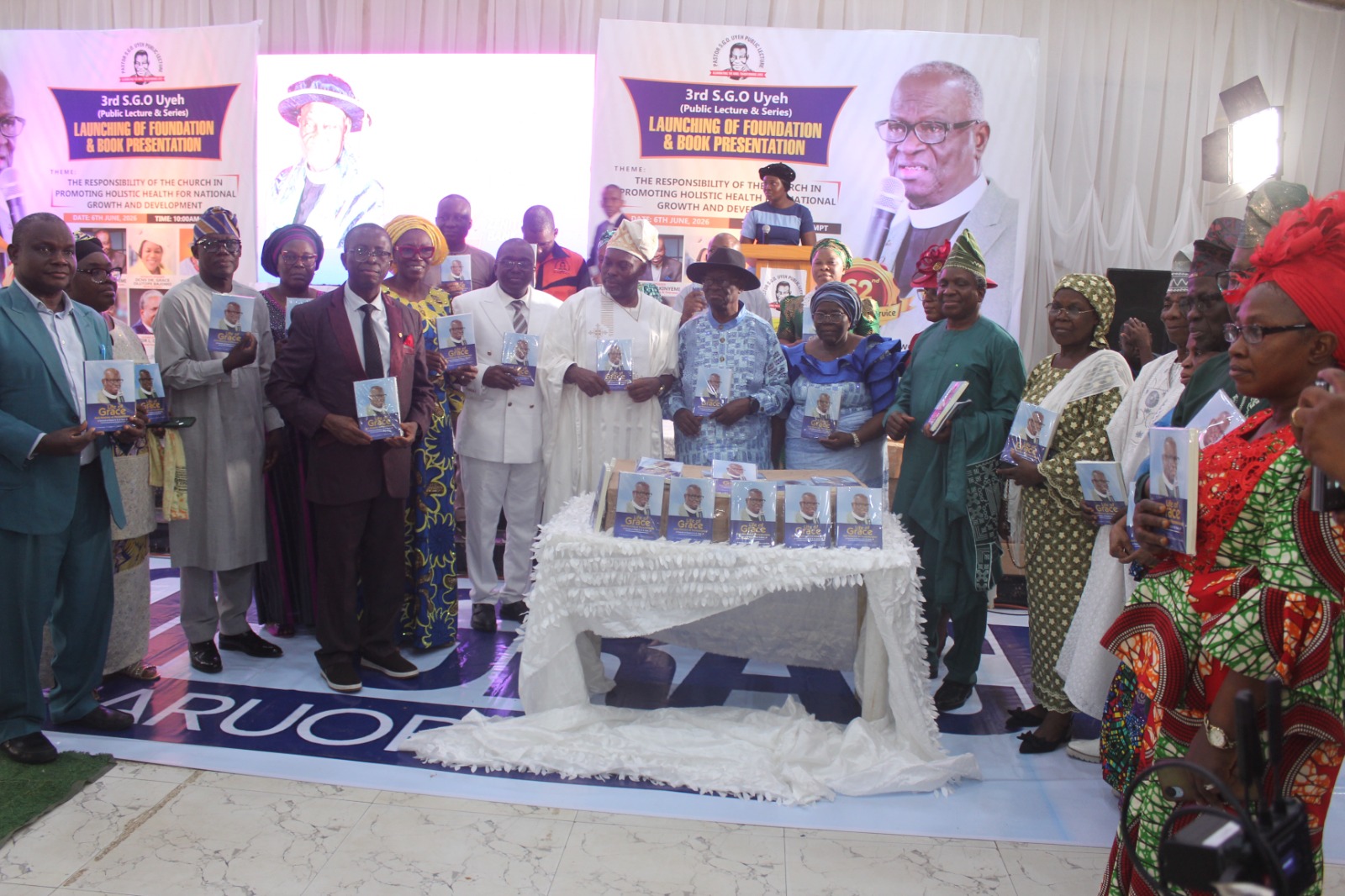
Foundation and book. Launch
Apart from the public lecture, a foundation in honour of Pastor Uyeh was also inaugurated. His biography titled Life of Grace, Ministry of Perseverance: A Portrait of Pastor S.G.O. Uyeh, JP, was also launched and presented to the public. The book was authored by E.O. Olowoyeye, T.A. Adebisi, S.C. Okorom, and J.O. Fashakin.
The 319-page book chronicled the life of Pastor Gabriel Uyeh and his 62-year experience in The Apostolic Church. Many of the sons and daughters in the faith of Pastor Uyeh took time out to celebrate him by donating generously to launch both the book and the foundation.
