


Apostle Moses Oludele Idowu is undeniably one of the leading faith-based researchers and writers in Nigeria.
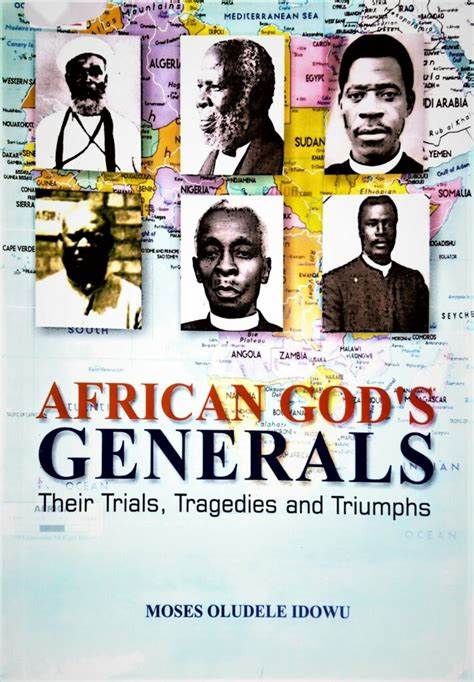
Over the years, he has written books on early fathers of faith in the country as well as hundreds of articles.
He wields the pen with the dexterity of a warrior cutting through people’s hearts with provocative lines.
His views on issues, though sometimes controversial, are compelling. Ironically, he read Civil Engineering at the University of Ilorin.
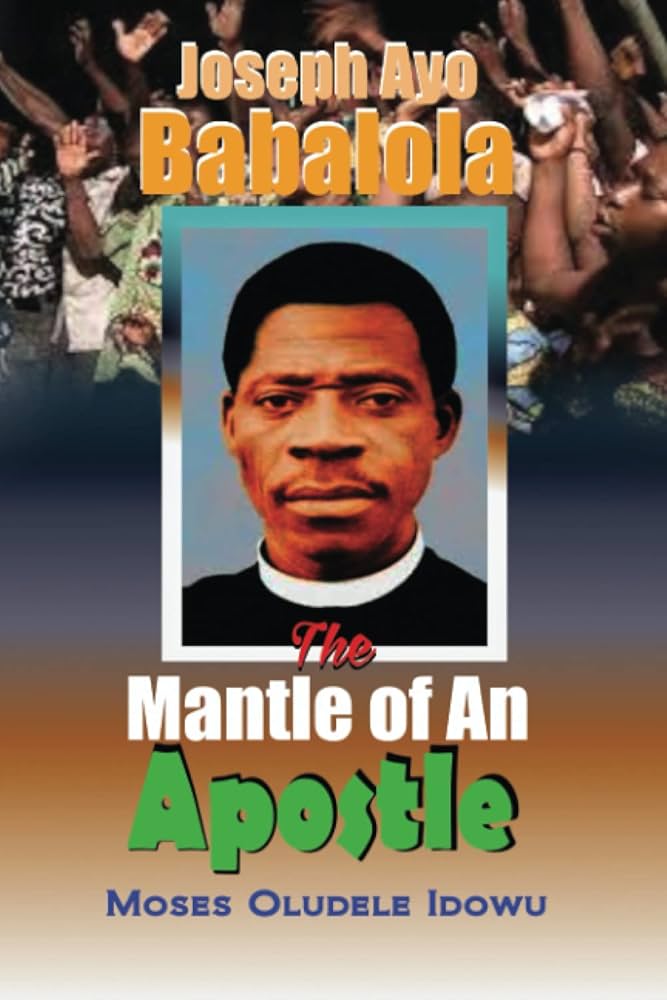
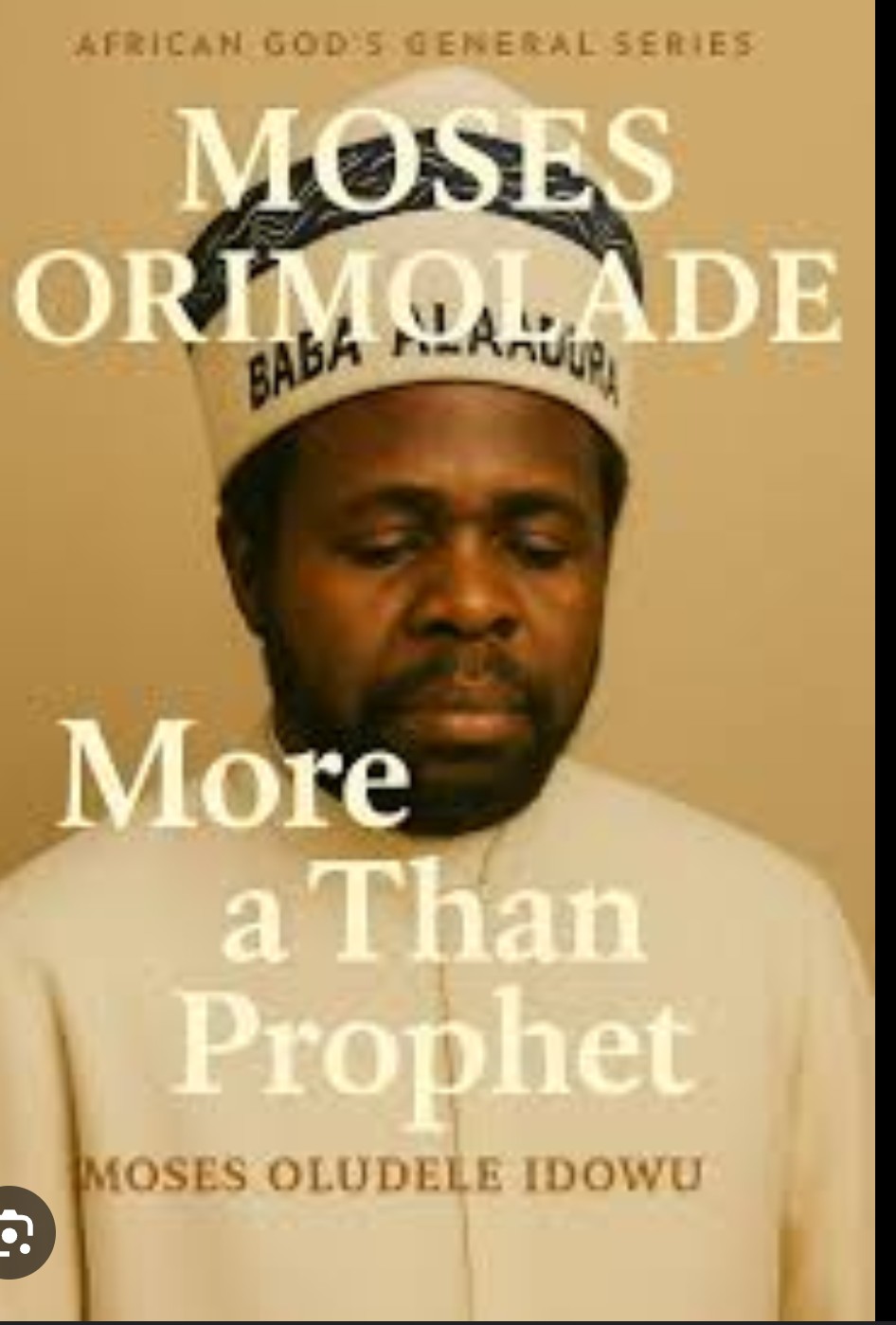
His sojourn in the writing world is, however, fortuitous. He recalled how he heard the voice of God in a daylight vision, urging him to study and write about the two early evangelists in Nigeria, Moses Orimolade and Apostle Joseph Ayo Babalola.
MOI, as he is fondly known, is a Professor of Ecclesiastical Theology and Human Development, a researcher and scholar in African Church history, historical biography, indigenous African cultural systems, and Pentecostalism.
Apart from being a published author of several books and papers, he is often invited to speak at international conferences, Government forums, and Symposia.
He is a Faculty Member, Ordinary People International School of Prophets, Georgia, USA and also Godman Soteria Academy of Theology, Mowe, Ogun State
In this interview with Church Times, Apostle Moses Oludele Idowu, who clocks 60 on August 2, shares experiences of his writing career.
Congratulations on your 60th birthday. Let’s talk about your background. How was growing up?
Thank you for the opportunity. I am an Igbomina man from Isin in Isin Local Government of Kwara State. That was where I had my primary school education. I then attended Government Technical College in Pakeji and Ijeba, both in Kwara State.
I lost my father when I was 11 years old. That was what made me attend Technical College. In those days, students of technical Colleges didn’t pay school fees. It was a preferred alternative for me due to the loss of my father. If I had opted for a secondary school, I would have had to grapple with the challenge of school fees.
But I think not going to a secondary school altered my destiny. If I had attended one, I would have been exposed to other subjects apart from the sciences. But I have since made up. And I thank God for that.
I also think technical education has its place. If Nigeria had developed technical schools, we wouldn’t be having issues with industrial manpower today.
The technical schools are supposed to evolve into polytechnics so they can provide the labour for the industrial sector.
Unfortunately, because of our craze for titles, the polytechnics are now transitioning to universities.
Good to know you went to a technical school. How did you now come about your inclinations to the art.?
My knowledge of the arts was gathered through self-effort. I wrote GCE as an external candidate and studied some of the art subjects on my own. It will interest you that I made an A in Bible Knowledge despite the fact that nobody taught me. I studied on my own. I did very well in the sciences, passed JAMB and secured admission to study Civil Engineering at the University of Ilorin between 1984 and 1989.
Still on your penchant for the arts. Your writings show you are deep in literature, history and philosophy. What gave rise to that?
I was exposed to books early in my career. I remember shortly after my technical school education, I was coaching the children of a particular family.
The first time I got to the house of the family, I discovered they have a rich library of books. The father of the kids was a military attaché, and he used to travel abroad and would buy books for his library.
I showed interest in the books and I was allowed to borrow, read and return. That was the first place I was exposed to all kinds of books, both secular and faith-based.
You will recall that between 1970- 1990, Nigeria was largely a typographical society. The library of those days was well stocked. I would go to the national library to read because I knew back then that reading is crucial to writing. You must be well-read if you are going to be a good writer. That is what happened to me.
Unfortunately, the reading culture in Nigeria is dying. For instance, I have not seen the social history of Nigeria, but I have seen that of Britain. And it’s largely because we don’t document our stories.
Our problem began when we stopped reading. We don’t have viable libraries that are easily accessible. In those days, we had access to good books. The article I wrote on Prof Ayodele Awojobi a few months ago was a product of things I read about him several years ago.

What about the faith dimension to your life? When did you come to the knowledge of Jesus, and how did it happen?
It was at the university that my story began to change. At the university, I was active in the leadership of the Christian Union.
But before my university days, I had an encounter with God. I remember stumbling on a piece of tract on the road. Till today, I don’t know the person who wrote it. I read it and committed my life to God.
Not long after that, I attended a crusade in Jebba where Evangelist J.K. Solomon came to preach. That was in 1981.
That was where I made an open confession of Christ. J.K. Solomon was one of the leading evangelists in those days. He belonged to the generation of Prophet Timothy Obadare and Timothy Iyanda.
At the crusade, he pulled me aside at the altar and asked if I was sure of my decision, and he prayed for me. Those are the foundational years of my salvation, and they are years I cherish quite well.
And you got admission thereafter?
Before I got to the university, I was involved in a fellowship called Christian Life Fellowship. Some of the church leaders today were part of the fellowship.
I remember Bishop David Oyedepo, Rev George Adegboye were members of that fellowship with many other university graduates. Interacting with those people helped me a lot to grow fast as a Christian. It was around that time that I was exposed to books in the Christian faith.
I read virtually all the books by Kenneth Hagin, John G. Lake and a host of others. But the books that influenced me most were those of A.W. Tozer. His writings were deep and quite inspiring. He was one of those who influenced my writing skills greatly.
So when I got to campus, people recognised the grace of God in my life almost immediately. I had the opportunity to share my thoughts during one of the fellowship days. That was when the leadership of the fellowship took note of me.
By the second year of my stay in the fellowship, I became the Vice President of the whole fellowship and the leader of the fellowship at the permanent site of the university.
Today, many of those in that fellowship are leaders in churches across the country. Many have their ministries. Unfortunately, the Christian Union’s vibrancy on campuses has been diluted with the invasion of denominational campus groups.

You said earlier that the books you read in those days influenced your writing today. How come you’re still able to recall many of the things you read back then, despite the huge time gap?
One of the gifts I have is elephantine memory. I think it is in the genes. My mother, too, has that memory. She can tell you what happened 50 years ago. I could also forget things. But largely, I have this gift of recalling things. I read, and it gets stuck in my brain.
You studied Civil Engineering. Now you’re in the writing ministry. These are two extremes. How are you managing them?
I have not had any struggle with that. I remember whenever I wrote articles and put them on the board while in the University, people would come to my room to look for me. The gift has been there. When I was in engineering practice as a consultant in those days, I still created time to write until 1996 when I had the call to go full-time into ministry.
Did you feel any loss leaving engineering?
I did not notice anything was amiss. Engineering helps a lot. I used it to help a lot of people and organisations. My engineering knowledge has not been a waste.
There was a time when a church building collapsed, and the church was trying to rebuild, and I saw that they were doing it in the wrong way. I had to intervene to save them from another collapse.
So my engineering knowledge is not lost, and I have no regret not practising it. But it is still part of me. The truth, however, is that I have my greatest fulfilment when I write and when I am with books. If I had a secondary school education, perhaps I would have noticed God’s gift in my life early enough.
How was your time at the University of Ilorin, and how was the engineering practice when you started?
The training in those days was intensive, and yet we never had anybody who had a first class that I know of in my department. But today, students can easily come out with First Class. But then, my real work life started when I began to practice engineering. I worked with Engr. Peter Ogunbiyi, one of the best in Ilorin.
We handled massive projects. I was doing well. I later came to practice in Lagos. But while I was in Ilorin, I handled some notable projects, I designed the Faculty of Law of Ilorin varsity, I supervised the Better Life Women Secretariat and many others. I was doing great, but working under somebody. I was only entitled to my salary.
But it was while in Lagos that I became a chartered engineer and got registered with the Council of Registered Engineers.
Immediately I got the registration, I did not stay long before I resigned to face ministry full time.
So what did it cost you to give up engineering?
I did not give up engineering as it were. But I will say I have moved to a higher call of God. When God calls someone, it cannot be a demotion. It is a promotion. I have used engineering to help people and some churches. I have done some jobs despite quitting. But because of the corruption in the system, it’s difficult to continue practising alongside my calling.
How did you receive the call?
It was in 1996 that I received the call for full-time ministry. But my call dates back to 1988 in Ilorin. I had an experience one Sunday morning. All my room mates had gone to church. I was alone in the room because CU used to meet in the evening so that members could go to their different denominations in the morning.
While in the room, I felt the presence of God. And I heard the voice say to me, ‘study and write about my servants, Joseph Ayo Babalola and Moses Orimolade.”
Until that time, I did not know anything about Joseph Ayo Babalola. I graduated and forgot about the divine instruction.
I went into engineering and was making money. I was very comfortable as a young man.
So when people say I started writing on Babalola to make money, I laugh. There was no money to make. Rather, I was spending my money. I was commissioned by God to write about him. It was not something I thought of or planned.
As God would have it, in 1989, I was posted to Ondo State for my NYSC, and the orientation camp was Efon Alaye. Ironically, there was only one tourist attraction there, the Babalola mausoleum. I went there, and immediately I recalled the daylight vision in 1988.
The security was asking me to leave, and I had to plead to wait and pray. After leaving there, I forgot again. If I had started the project at that time, I would have interviewed many people about him before they died.
After about six years, God allowed me to face some challenges in the engineering field. I had resigned my appointment with the firm I was working with in Lagos so as to secure a bigger job waiting for me. I should not have resigned. But I resigned.
After resigning, there was litigation on this new project, and it stalled the work. I could not go back, and I could not go forward. In the midst of that, I got a prophecy in a vigil where God reminded me of what he asked me to do. That was how I committed myself fully to it and went into full-time ministry.
Were there books on Babalola before you wrote yours?
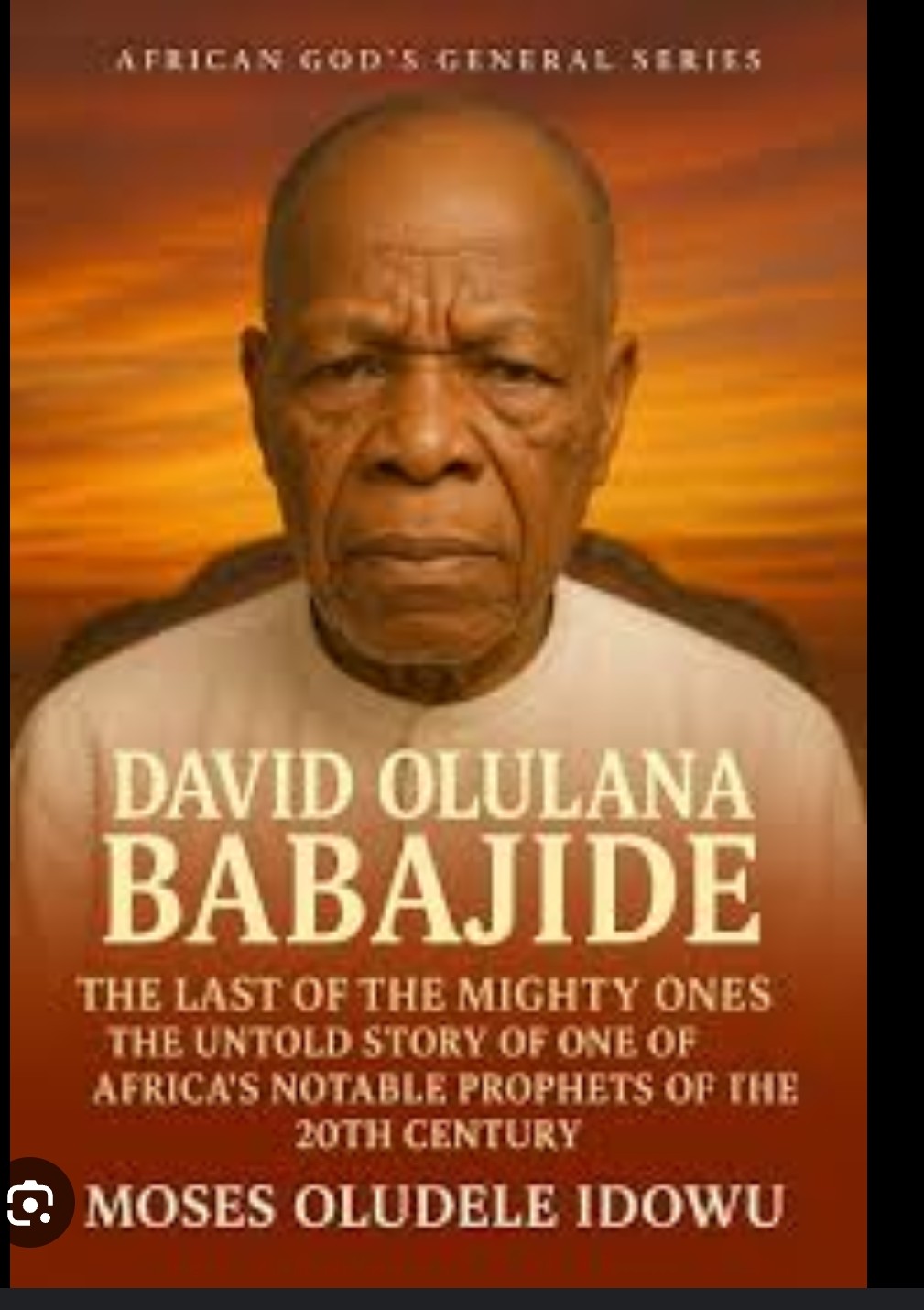
There was a man in CAC called John Odunayo Ojo. He had done a good job on him. Apostle Babajide also wrote some pamphlets on him, and another man close to him wrote, this time in Yoruba. Only those old generation fathers had those books, and they were limited to CAC.
My book was the first collection that would push Babalola out of CAC and brought him where he belongs because God’s gift is for the body.
Professor Akin Omoyajowo was the one who wrote the foreword to the first book I wrote on him. He was an Anglican bishop in one of the Ijebu Dioceses, though he came from Akure. He wrote his PhD thesis on Cherubim and Seraphim.
What was your experience writing those books on the fathers of faith? What did it cost you to do the research work on these fathers of faith?
The research cost me virtually everything. I know how my friends who are still in engineering are doing. But I thank God that I am no longer behind.
But you needed to see me when I was travelling from one place to the other, researching these fathers. I did not get the expected support. All the same, I thank God that the books are now in Cambridge, Oxford and many other great institutions of the world. It is a great privilege to be used of God to do this great work.
I interviewed people who were directly involved in the stories of these early fathers. That to me was fulfilling because many of them would have died without telling their stories.
We are still going to publish two more of those early fathers before the year runs out by God’s grace.
But just to answer your question. In those days, I remember taking off from Lagos to Ilesha to meet Apostle Babajide of the CAC for an interview on Babalola. I got to the place and told him I was doing a book on Babalola and would like to talk with him. He laughed.
He said he was not in a good frame of mind, so I should come back, which I did. I remember that of Prophet Daniel Orekoya, the Ijebu prophet and how I travelled to Ijebu Imusin in Ogun State trying to trace his roots.
Of all the books I have written, the one on Orekoya excites me most because even the CAC does not know his story. I had to ask for directions from one place to the other, his house, when I got to Ijebu Imusin.
I was the first person to discover his roots. I got to know he had a niece who was still alive and was living in Ibadan. I had to go back and forth. It was quite hectic. I got to meet the niece who gave me all the details about him. Writing those books put a lot of strain on me. But the joy is that they were written, and many lives have been blessed.
You said you did not get the needed support writing those books. How did you manage to publish?
After the first Book on Apostle Babalola, things became difficult. But God made a way. It was around that period that I got involved with The Apostolic Church. I told you of a church that was about to collapse, which I tried to help with its building. I got involved with the church, and from there got some engineering jobs that fetched me some good money.
That was when I married. I met my wife in The Apostolic Church. I was quite comfortable with the fallout of the engineering work, which I deployed to my research and writing work.
Later, when the children started coming, I could not give them the attention they deserved. They suffered. I remember one day my wife was calling me on the phone when I was away doing research work, telling me my children were crying and wanted me back home. I had to abandon what I was doing to come back home.
Your books and articles have been a huge blessing to many. If I may ask, what do you set out to achieve when you write?
In 1988, I had an encounter with God’s notable apostles that influenced my life, and also my writing. These men shaped my understanding of Christianity. When I write, I want to see how the church can be stirred back to the apostolic age. I have not even started. By the time I am through with the story of Prophet Obadare, you will see that Nigeria has truly been greatly blessed by great men of God.
But then we need to realise that books give birth to revival. Wesley was reading Martin Luther’s commentary when God stirred him to cause a revival. Josiah was reading the book of the law when he cried for revival. A book is always meant to call people back to order.
The level of moral deprivation going on in Nigeria today is alarming. Poverty and suffering are deepening. We need to call people back to the real faith. That is what inspires me to write with so much zeal and enthusiasm. And I believe that the coming generation will wake up one day.
What has writing done to you despite the things you have suffered?
What engineering cannot give me, writing has given me. Many people are following me today because of my writing. Many are following, and some are supporting. All the cars I have used after leaving engineering were given to me. The first car I had was given by a church G.O. As far as writing is concerned, I have been blessed.
Social media has helped me. Why are people stealing my articles and putting their names on them? It is because they saw value in them. I know an Assemblies of God pastor who saw one of my books, Foundation of an Apostle. He said that after reading the book, his prayer life moved to a higher dimension.
One of the students of a Bible school read one of my schools on Babajide. He went to the bush to pray and did not return until after 10 days. Another one went to MFM prayer mountain to pray for seven days after reading my book. One man said he experienced an angelic visitation after reading my book. I have heard several testimonies like that. We give God the glory for all these testimonies.
At 60, what are your expectations?
My friends and associates.are going to celebrate with me. We are looking up to having an event at the Excellence Hotel, Ogba, Lagos. Two of my books will be presented that day. We will rejoice. A guest lecturer, Professor Olusola Oyewole, former VC of FUNAAB, now Secretary General African Universities Association, will deliver a lecture on the “public intellectual in Nigerian society”.

1 comment
Congratulations sir and thanks for being a blessing to this generation. It’s my prayer that the Lord will reward you in ways you cannot imagine for all your labor in his kingdom