

By Oyewole O. Sarumi
Nigeria’s third-quarter 2025 Balance of Payments (BoP) numbers present what looks, at first glance, like a welcome relief. A current account surplus of $3.42 billion, higher crude oil exports, a dramatic 44 percent jump in refined petroleum product exports, and a measurable decline in fuel imports all suggest that something important is shifting in the structure of the economy. After years of hemorrhaging foreign exchange through imported fuel and production disruptions, the data hints at a turning point.
But beneath the headline surplus lies a more complex and troubling story. The surplus fell sharply by over 41 percent from the previous quarter, despite stronger oil exports. This paradox, higher oil earnings alongside a shrinking surplus, exposes the fragility of Nigeria’s external position and the limits of its oil-led recovery. More importantly, it raises uncomfortable questions about who is actually driving these gains and whether the state is even in control of them.
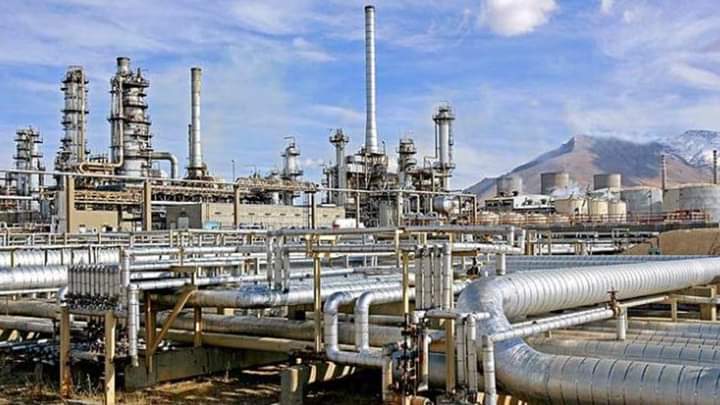
A closer reading of the Central Bank of Nigeria’s report makes one thing clear: Nigeria’s improving oil trade performance is being salvaged largely by privately owned modular and mega refineries, not by the government-owned refineries in Kaduna, Warri, and Port Harcourt, which have remained effectively comatose for close to two decades. The state is benefiting from outcomes it has consistently failed to produce.
As Nigeria approaches 2026, a politically sensitive pre-election year, the sustainability of these gains becomes even more uncertain. Election cycles in Nigeria have historically redirected government focus away from structural reforms toward political survival.
This article argues that unless Nigeria deliberately locks in the private-sector-driven refinery gains, reins in import growth, and insulates economic policy from electioneering pressures, the apparent recovery reflected in the Q3 2025 BoP data may prove fleeting.
Understanding the Q3 2025 CBN Numbers Beyond the Headlines
According to the Central Bank of Nigeria, Nigeria recorded a current account surplus of $3.42 billion in Q3 2025, down from $5.81 billion in Q2 and slightly below the $5.78 billion recorded in Q3 2024. This decline occurred despite a notable improvement in oil export earnings.
Crude oil exports rose from $7.66 billion in Q2 to $8.45 billion in Q3, representing a 10.31 percent increase. This improvement reflected better crude evacuation, relative stability in international oil prices, and modest gains in production consistency. More striking, however, was the surge in refined petroleum product exports, which climbed from $1.59 billion to $2.29 billion, a 44.03 percent increase in just one quarter.
On the import side, Nigeria’s refined petroleum product imports fell by 12.7 percent, declining from $1.89 billion to $1.65 billion. This reduction eased pressure on the trade balance and directly improved foreign exchange outflows.
Taken together, these figures suggest progress toward a long-stated national goal: reducing fuel imports and exporting refined products instead of crude alone. Yet the sharp quarter-on-quarter decline in the overall surplus reveals that oil-sector gains alone are insufficient to stabilize Nigeria’s external accounts. Rising imports in non-oil sectors, higher service payments, primary income outflows, and exchange-rate adjustments continue to weigh heavily on the balance of payments.
The key takeaway is not merely that Nigeria recorded a surplus, but that the surplus is narrow, volatile, and heavily dependent on factors outside direct state control.
The Quiet Revolution: How Private Refineries Are Doing What the State Could Not
The most consequential detail in the CBN report is not the crude export increase, but the 44 percent jump in refined petroleum exports. This surge is inseparable from the growing role of private refining capacity, particularly modular refineries and the gradual ramp-up of large-scale private investments.
For decades, Nigeria’s economic paradox has been painfully simple: Africa’s largest crude oil producer importing the bulk of its refined fuel. The state-owned refineries in Port Harcourt, Warri, and Kaduna, designed to anchor domestic refining, have collectively consumed trillions of naira in maintenance budgets while delivering little or no output. Turnaround maintenance cycles became euphemisms for fiscal waste, patronage, and institutional decay.
By contrast, privately owned refineries, operating without sovereign guarantees or political insulation, have been forced to prioritize efficiency, uptime, and market responsiveness. Modular refineries, in particular, have demonstrated an ability to scale incrementally, adapt to feedstock constraints, and respond quickly to market demand. The entry of large private capacity into the refining space has further altered trade flows, enabling Nigeria to export refined products for the first time at meaningful scale.
The implication is profound: Nigeria’s external accounts are improving not because the state fixed its refineries, but because it was bypassed.
This reality challenges long-standing assumptions about state-led industrial policy in the oil sector. It also raises a fundamental policy question: will the government consolidate this private-sector momentum, or attempt to reassert control in ways that undermine it?
The State-Owned Refineries: A Two-Decade Economic Liability
It is impossible to analyze Nigeria’s current account dynamics honestly without confronting the cost of the state-owned refineries’ prolonged dysfunction. For nearly twenty years, the refineries in Kaduna, Warri, and Port Harcourt have functioned more as fiscal sinkholes than productive assets.
Their repeated rehabilitation announcements have coincided with persistent fuel importation, subsidy regimes, and foreign exchange pressure. Even when global oil prices were favorable, Nigeria remained structurally exposed because it exported low-value crude and imported high-value refined products.
The opportunity cost has been staggering. Every dollar spent importing fuel was a dollar not invested in infrastructure, education, or healthcare. Every naira allocated to refinery “repairs” without output represented a missed chance to crowd in private capital earlier.
What the Q3 2025 data demonstrates is that Nigeria did not need functional state refineries to improve its oil trade balance, it needed functional refineries, period. The distinction matters. The data implicitly indicts the model that prioritized public ownership over performance.
Crude Oil Exports: Improved, But Still Precarious
The 10.31 percent rise in crude oil exports reflects some genuine progress. Improved pipeline security, reduced shut-ins, and better coordination by upstream operators have helped stabilize production and evacuation. International oil prices during the period also remained relatively supportive.
However, Nigeria’s crude oil export gains remain vulnerable to structural risks. Oil theft, aging infrastructure, regulatory uncertainty, and community tensions continue to threaten production consistency. Moreover, Nigeria’s crude export revenue remains highly sensitive to global price fluctuations over which it has little control.
The Q3 figures should therefore be interpreted as cyclical improvement, not structural transformation. Without sustained investment in upstream efficiency and governance reforms, crude export gains alone cannot anchor long-term external stability.
Why the Current Account Surplus Is Shrinking Despite Oil Gains
The most sobering aspect of the CBN report is the sharp decline in the current account surplus, even as oil exports rose. This underscores the reality that Nigeria’s balance of payments is influenced by far more than oil trade.
Non-oil imports remain elevated, reflecting structural dependence on imported machinery, food, pharmaceuticals, and consumer goods. Services outflows, particularly in shipping, insurance, education, and professional services, continue to drain foreign exchange. Primary income outflows, including profit repatriation and interest payments, have increased in line with exchange-rate adjustments and external obligations.
These pressures explain why oil-sector improvements have not translated into a proportionate strengthening of the current account. Nigeria’s economy remains import-intensive and externally exposed, with oil serving as a buffer rather than a solution.
Diaspora Remittances: The Silent Stabilizer
One of the most underappreciated supports to Nigeria’s external position remains diaspora remittances, which contributed an estimated $5.50 billion surplus in the secondary income account during Q3 2025. These inflows continue to cushion the economy against trade and income deficits.
Remittances are particularly valuable because they are relatively stable, countercyclical, and less sensitive to commodity price swings. However, relying on remittances as a structural support raises its own questions. Migration-driven inflows reflect domestic economic weakness as much as external confidence.
Moreover, remittance flows are not immune to global economic shocks, immigration policy changes, or exchange-rate volatility. They should be seen as a stabilizer, not a substitute for domestic productivity.
The Refining Breakthrough and Import Compression: A Strategic Opportunity
The combination of rising refined product exports and falling fuel imports represents a rare alignment of policy intent and market outcome. For once, Nigeria is moving in the direction policymakers have long promised: exporting value-added products while reducing import dependence.
This moment presents a strategic opportunity. If consolidated, it could meaningfully reduce foreign exchange volatility, improve trade balances, and support naira stability. But consolidation requires policy discipline.
Private refiners need predictable crude supply, transparent pricing, and regulatory consistency. Export logistics must be streamlined, and port inefficiencies addressed. Perhaps most importantly, the government must resist the temptation to re-politicize fuel pricing or reintroduce distortive subsidies under electoral pressure.
2026: The Political Economy of a Pre-Election Year
As Nigeria enters 2026, the political context cannot be ignored. Pre-election years in Nigeria have historically been marked by policy drift, fiscal slippage, and populist reversals. Governments become preoccupied with consolidating power, while opposition forces work to destabilize narratives of progress.
The risk is not merely distraction, but deliberate economic compromise. Fuel pricing, exchange-rate management, and fiscal discipline often become casualties of electoral calculations. Gains painstakingly achieved through reform can be undone by short-term political expediency.
The Q3 2025 BoP data should therefore be read as a warning as much as an achievement. The current surplus is fragile, and the refining gains are recent. Without insulation from electioneering pressures, there is a real risk that policy inconsistency could reverse progress.
Structural Reforms: The Only Real Insurance Policy
The CBN itself acknowledges that sustaining a strong current account surplus will depend on controlling import growth, deepening non-oil exports, and maintaining steady remittance inflows. This is not a rhetorical statement; it is a policy imperative.
Import substitution must extend beyond fuel to food, basic manufacturing, and intermediate goods. Non-oil exports require investment in logistics, standards, and trade facilitation. Exchange-rate reforms must be sustained, not selectively applied. Above all, the private sector must remain the engine of value creation, not an afterthought.
The refining sector demonstrates what happens when private capital is allowed to operate with relative autonomy. Replicating this model across other sectors is Nigeria’s best chance at durable external stability.
Shielding the Economy From External Shocks
With global financial conditions uncertain, geopolitical risks elevated, and commodity markets volatile, Nigeria cannot afford complacency. Oil exports may be strong today, but history shows how quickly conditions can reverse.
Locking in current gains requires building buffers, not consuming them. Foreign reserves must be strengthened, not depleted for political optics. Fiscal coordination between monetary and fiscal authorities must be maintained. Above all, credibility must be preserved.
Policy inconsistency is itself an external shock amplifier. Investors and markets respond not just to numbers, but to expectations. The Q3 2025 data provides a foundation for confidence, but only if policymakers protect it.
Progress Without Illusions
Nigeria’s Q3 2025 Balance of Payments report offers cautious optimism, but no room for illusions. The $3.42 billion surplus reflects real improvements in oil trade flows, particularly the rise in refined petroleum exports and the decline in fuel imports. Yet it also exposes the economy’s enduring vulnerabilities and the limits of oil-led recovery.
The most important lesson is that private refineries, not state-owned ones, are carrying the weight of reform. This should inform future policy choices. The state’s role must shift from operator to enabler, from controller to regulator.
As 2026 begins, the true test will be whether Nigeria can resist the gravitational pull of election-year economics. If policymakers lock in private-sector gains, maintain reform momentum, and shield economic management from political interference, the country can convert fragile progress into structural resilience.
If not, the Q3 surplus will be remembered not as a turning point, but as another missed opportunity in a long history of near-misses.
The data is speaking. The question is whether Nigeria will listen.
Prof. Sarumi, a digital transformation enthusiast, writes from Lagos
