

By Tosin Olugbenga
There are some leadership lessons you don’t learn from a sermon. You learn them by watching people.. I learnt one of mine from Pastor Sola Osunmakinde.
I used to attend Household of David in Lagos before I migrated abroad. While I was there, I served in the media department, so I had the privilege of seeing quite a bit of what happens behind the scenes during church programmes and conferences.
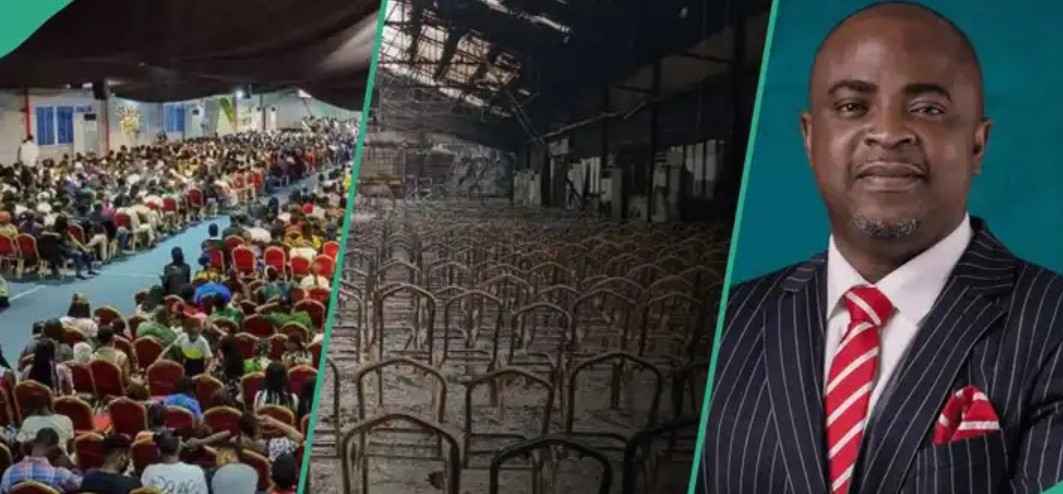
One particular moment has stayed with me. In January 2024, just hours before the Household of David’s annual Mercy Conference was scheduled to begin, the church auditorium in Ikeja was gutted by fire. Everything that had been prepared for the conference was suddenly gone.
Equipment, chairs, air conditioners, instruments and other facilities were destroyed. But somehow, the conference still went ahead. The venue had to change. Then plans had to change again. People had to move equipment. Teams had to set up in completely different locations. People who had probably been preparing for weeks suddenly had to start almost from scratch. And they did.
The conference eventually happened. I remember the final day, a Sunday. There was a moment when one of the associate pastors took the microphone and asked the congregation to rise and give Pastor Sola an ovation.
And honestly, it made sense. From the outside, it was Pastor Sola who had carried the weight of the situation.The church building had burnt down just before one of its biggest annual gatherings. Yet he remained focused. The conference was not cancelled. The church moved. Plans changed. Venues changed. And somehow, the programme continued.
So the applause was understandable. But Pastor Sola stopped them. He took the microphone and redirected the honour. He essentially said that if anyone should be celebrated, it should be the members and workers who had done the hard work of moving equipment, setting up and making the conference happen in the midst of all the disruption.
That moment stayed with me. Because he could have accepted the applause. Nobody would have questioned it.
He was the senior pastor. He was the face of the church. He was the one everyone was looking to during the crisis.
But he chose to point the light away from himself. And that, to me, is humility.
The people behind the service Having served in the media department, I understand something that people sitting in the congregation may not always see. The last two days of a major conference can be exhausting. By then, the excitement has worn off, and fatigue has set in. You have been carrying cameras. Standing for hours. Moving equipment. Recording services. Editing. Streaming. Troubleshooting.
Going from one assignment to another. Sometimes, you are so tired that even holding a camera begins to feel like work.
And media is only one department. Think about the choir members who rehearse for hours, sometimes late into the night, to prepare for a service.
Think about the sanctuary workers who arrive early and leave late, ensuring that the environment is clean and ready.
Think about the ushers who stand for hours helping people find their seats and maintaining order.
Think about the traffic and car park teams who are outside while everyone else is enjoying the service inside.
Think about the technical teams. The protocol teams. The welfare teams. The children’s workers. The security teams. The people who move chairs. The people who carry equipment.
The people who arrive before everyone else and leave after almost everyone has gone. Many of them are volunteers. They are not doing it because somebody is paying them a salary. They are doing it because they believe in the mission. They are serving God. And yes, we know that God sees their labour. We know that their reward ultimately comes from Him.
But I have also come to appreciate that being spiritual should not make us incapable of appreciating people.
There is nothing unspiritual about saying, “Thank you.” There is nothing unspiritual about recognising the people who make the work possible.
There is nothing unspiritual about a pastor looking at the people serving behind the scenes and saying, “I see you.”
Leadership is not always about being celebrated
One of the easiest traps in leadership is becoming the person who receives the credit for everything.
The bigger the organisation becomes, the easier it becomes for the leader to become the face of every achievement.
The pastor preaches. The pastor casts the vision. The pastor stands on the stage. The pastor is recognised. And sometimes, without intending to, everyone else becomes invisible.
But organisations, including churches, are built by people. A pastor may preach the sermon, but there are people who made sure the microphone worked.
There are people who made sure the service was streamed. There are people who cleaned the auditorium. There are people who arranged the chairs. There are people who welcomed the congregation. There are people who worked while everyone else worshipped.
There are people whose names the congregation may never know. And sometimes, those people are the reason the programme went smoothly. That is why Pastor Sola’s response that day meant something to me. He had the opportunity to receive the applause. Instead, he gave it to the people. That is leadership.
The fire revealed something Interestingly, the fire did not only reveal the vulnerability of a physical building. It revealed something about the people. A church is more than its auditorium. More than its seats. More than its sound equipment. More than its cameras.More than its stage. When the building was gone, the people remained.
And those people got to work. They moved. They adjusted. They served. They rebuilt. They made the conference happen. That is something worth celebrating. Perhaps that is why Pastor Sola’s response made such an impression on me.
He understood that the success of that conference was not his achievement alone.
It was a collective sacrifice. I hope more church leaders recognise their workers This is not an attempt to put Pastor Sola on a pedestal or suggest that he is a perfect leader.
It is simply one moment I personally witnessed that taught me something about leadership.
And I wish more church leaders would intentionally recognise the people serving alongside them. Especially in large and established churches. Sometimes the pastor’s job is reduced, in the eyes of the congregation, to preaching the sermon.
But behind that sermon are dozens, sometimes hundreds, of people making the service possible.
The pastor may be holding the microphone, but someone made sure there was a microphone. The pastor may be preaching to thousands, but someone operated the camera.
Someone controlled the sound. Someone prepared the stage. Someone opened the doors.
Someone cleaned the building. Someone managed the crowd. Someone worked through the night. Someone sacrificed time with family. Someone gave up rest.
Someone served when nobody was watching. And sometimes, the greatest thing a leader can do is simply look at those people and say: “I see what you are doing. Thank you.”
Pastor Sola taught me that humility is not merely refusing to take praise. Sometimes humility is knowing exactly who deserves the praise and making sure they receive it.
I have left Household of David now and live abroad, but that moment as I watched it live has stayed with me. And perhaps that is one of the greatest things about leadership. Long after people forget the sermon, they may remember how a leader made them feel.
They may remember whether they were seen. Whether their sacrifice mattered. Whether their contribution was recognised. And whether, when the applause came, the leader chose to keep it or give it away.
On that Sunday, Pastor Sola gave it away. And I think that was worth remembering.
About the author
Tosin Olugbenga is a software engineer, entrepreneur and writer based in the United Kingdom. He previously served in the media department of Household of David Church, Lagos, and writes about faith, leadership, technology, entrepreneurship and the experiences that shape people and communities.
tosinolugbenga@gmail.com
https://x.com/TosinOlugbenga
