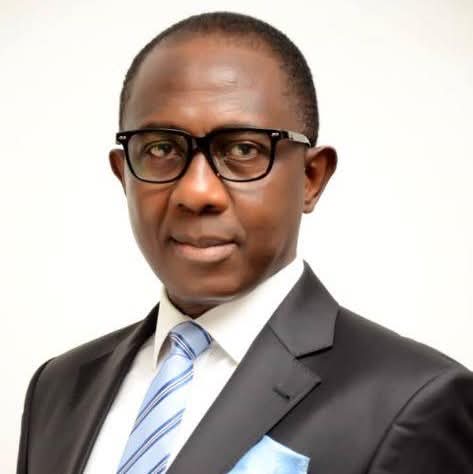
By Akin Olaniyan
The re-election of Governor Ademola Adeleke was a high-profile as elections come in Nigeria with the dominant narrative being that the ruling All Progressives Congress (APC) was hell-bent on taking the state.
The political emotions aside though, the Osun 2026 governorship election invites us to take a second look at the entire political communication around the event. Adeleke, who contested on the platform of the Accord Party, won 19 of Osun’s 30 local government areas against 11 by the APC’s) Bola Oyebamiji.
The African Democratic Congress (ADC’s) Najeem Salaam finished a dismal third with just 17,180 votes, winning no local government whatsoever .
Taken at face value, the 511,067 votes recorded by Adeleke, against the 444,815 polled by Oyebamiji, might look like a straightforward electoral victory. However, lying deep under the numbers is a more complex story that questions our collective understanding of the contestations between digital political communication and actual electoral outcomes.
The abject failure and demystification of Rauf Aregbesola is probably the best illustration of such a gap – his performance brutally reminding us that the former Osun governor, now National Secretary of the ADC and his online activities carried no weight at all.
At Polling Unit 001, Coop. Building Junction, Isare, Ward 08, in Ilesa East Local Government Area, APC’s Oyebamiji secured 256 votes; Adeleke 3 votes; against Aregbesola’s own ADC candidate, Najeem Salaam who managed just 13 votes .
At another polling unit close to his family compound, the pattern repeated: APC recorded 202, Accord 110, ADC 12 . The local government result was no kinder to Aregbesola with the ADC polling just 504 votes in Ilesa East, finishing third behind APC’s 16,208 and Accord’s 12,280 .
At this point, we should ask: what does it mean when a former governor, a man who once controlled the state’s political machinery, cannot deliver his own neighbourhood, let alone his local government? Aregbesola’s exit from the APC and involvement in ADC – a party promoting itself as the main opposition to the APC in the 2027 Presidential election – was expected to unsettle the political dynamics in the South West. Or so it seemed.
But when the actual voting came, his political machine proved hollow; as did the influence of former Vice President, Atiku Abubakar and other prominent politicians in the ADC. The social media noise, the realignments, the name recognition – none of them mattered when the people of Osun voted on Saturday.
It is easy and certainly misleading to conclude that where Aregbesola and online media handlers failed, Afrobeats superstar Davido won big. Put in proper context, his involvement in the Osun election was deeply personal as the governor’s nephew.
Some of his social media activities were controversial and naturally sparked heated exchanges with other activists including Omoyele Sowore, who accused the Adeleke family of attempting to maintain political influence in Osun while embracing the Tinubu administration at the federal level .
Familial bonds aside, the real question is not about the Adeleke’s attempting to establish a dynasty in Osun but rather about the electoral value of an influencer. As I have previously argued, understanding and measuring street credibility is confusing and there is nothing to support the belief that artistes – no matter how big they are – bring anything to the electoral process beyond their entertainment value.
From the results announced by INEC, Adeleke won decisively – and we can safely conclude that the victory was earned in on the streets, not on social media timelines. In Ede North, Adeleke recorded 35,427 votes against APC’s 10,283 . In Osogbo, he ended with 36,480 votes against 30,474 .
These were not celebrity-driven margins; they were the product of a man’s popularity on the streets, grassroots organisation, trust and actual connection with the people who belive he had done enough in four years to deserve another term. A million retweets is not a million votes.
This election raises crucial questions that extends far beyond the state’s boundaries: how reliable is online political engagement as a measure of electoral strength? Some of the smartest politicians and their media managers probably know that elections are won at the polling units by voters armed with their Permanent Voters Cards (PVCs) and not on social media.
The Osun election, should be taken as one more evidence that a loud online presence alone, and coordinated social media campaigns may create an illusion of widespread support, but the ultimate test of political relevance lies in the ability to convert goodwill into votes.
That observation brings an uncomfortable insight when applied to Osun. The APC and its well-drilled online noise machine failed to propel Oyebamiji to electoral victory. The ADC, despite featuring a former governor as its National Secretary, and big-name politicians as major promoters at the national level finished a dismal third. The Accord Party, despite lacking the celebrity firepower that dominated headlines, won.
This pattern is not new. I have argued elsewhere that perople generally have a tendency to overstate the influence of social media on political events. In my study of OccupyNigeria, for instance, I found that that social media functioned only as a tool, not as the actual cause of the protests.
As with the Egyptian protests of 2011, the platforms “only functioned as tools, rather than being the actual causes of the ‘revolutions.'” The lesson for Osun is the same. One thing social media has done is to democratise political communication in ways that allow bettter participation in the democractic process.
However, there is still a stubborn gap between online engagement and offline action. Politicians and their media advisers who mistake one for the other risk losing out.
The obvious question here is what do we make of all this? The Osun election shows that online presence and electoral value are not the separate things. I am bold to suggest in fact that they are increasingly disconnected.
The platforms that dominate political communication – WhatsApp, Facebook, Instagram, TikTok, X, and YouTube – now sit inside the political information chain. But they sit there as vehicles for information, not as substitutes for organisation, trust, and grassroots connection. In other words, street credibility stoll matters in this age of “audience democracy” Just so we leave no doubt.
The gap has profound implications for political communication in the digital age because now it beyond being able to reach the largest crowd at a rally. One of the core pillars of “audience democracies” is the personalisation of leadership, with voters voting for people based on individual image, perception and obverall media appeal rather than party platforms.
So, the attempt by the APC and its social media noise machine to frame Adeleke as an “unserious, dancing governor” was off-mark. Politics in this age is increasingly having to deal with a campaign environment in which attention itself has become political currency.
A warning here: attention in itself is not votes and in elections, votes are what matter. This election looks to me like a learning curve for political strategists who think digital engagement can provide a shortcut to electoral success. It is not. It is a tool – one tool among many – and like any tool, its effectiveness depends on how it is used.
The future of Nigerian political communication lies not in choosing between digital and traditional strategies, but in understanding their relationship.
Who will succeed in this new environment? My money is on those who can bridge the gap between online noise and on-the-ground reality. Think about those who understand that a retweet is not a vote, no matter how many times it is shared and who have genuine street credibility and you get the idea.
The election in Osun has shown us that in the age of digital politics, some things never change: elections are still won by those who earn the trust of voters where it matters most – on the streets.