BY Chika Abanobi
The Azusa Street Revival that took place from 1906 to 1915 in Los Angeles, California, United States of America, is globally touted as the second landmark Pentecostal movement, after the first Pentecostal experience in the second chapter of the Acts of Apostles.
It was characterised by literal display of tongues of fire, inexplicable spiritual experiences that saw street residents who had never heard about the Holy Ghost before, much less the baptism, falling under the anointing and speaking and singing worship songs in unlearned tongues.
At a point, it included a reported glow of fire over the building housing the meeting venue and, subsequently, a visit by the city firefighters who allegedly raced to the scene with firefighting trucks and hoses expecting to put off burning fires.
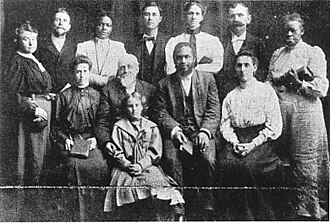
But, alas, they went back disappointed that there was no fire to put off. Led by Willam J. Seymour, an eloquent black American preacher, the revival which began in the month of April, around the Easter period of that year, attracted massive crowds from all over the world who came by trains and other means of transportation to find out what was happening. But many attendees not only fell under God’s power and spoke in tongues, they also experienced bodily healings and other miracles.
The wave of this Revival that blew across the spiritual landscape of the world was such that it attracted admirers and critics alike. For instance, “The Los Angeles Times” of April 18, 1906, was quite critical and unsparing in its reports of the Revival. It described it as “meetings held in a tumble-down shack on Azusa Street, and devotees of the weird doctrine (as practising) the most fanatical rites, preach(ing) the wildest theories and work(ing) themselves into a state of mad excitement in their peculiar zeal. Colored people and a sprinkling of whites compose the congregation, and night is made hideous in the neighborhood by the howlings of worshippers who spend hours swaying forth and back in a nerve- wracking attitude of prayer and supplication. They claim to have the “gift of tongues” and be able to understand the Babel.”
Today, the original building where the event took place at 312 Azusa Street in downtown Los Angeles, is no more. Rather, it has been replaced with a bricked-out park, the historic building having been demolished in 1931 following its destruction by a fire incident. It is now part of an area covered by industrial buildings, parking lots connecting San Pedro and E. Temple Streets.
The Revival was to become the precursor of other gospel revival movements that took place in the 20th and 21st centuries. They include the East Angila Revival (1921); The East African Revival (1930s); The Indonesian/Timorese Revival (1965); The Asbury Revival (1970); The Toronto Revival (1994-2000s) and The Brownsville Revival (1995-2000).
It is interesting to note that 120 years after the outbreak of The Azusa Street Revival, the ripple effects are still being felt today in many parts of the Pentecostal world, including Nigeria. Who knows, one of these days we are going to talk about The Nigerian Revival. In this write-up, I intend to outline seven great lessons that we, the Nigerian Pentecostal Christians, can learn from The Azusa Street Revival.
1: God hates discrimination/social segregation on whatever basis – skill, age, occupation, religion/denomination, politics, education, social status, gender, race, tribe/ethnicity, wealth distribution/economic power, etc.
The aforementioned are grounds for discrimination in our society today, including the church. But if there is anything that the Azusa Street Revival teaches us, it is this: “there is neither Jew nor Gentile, neither slave nor free, nor is there male and female, for you are all one in Christ Jesus” (Galatians 3:28, NIV).
Therefore, if you are holding to any of the above means/source of discrimination, if you live in their consciousness while praying “earnestly” to be baptised with the Holy Ghost, you will make it difficult for your prayers to be answered. You may act it up and pretend to be baptised in a bid to please either your Pastor, General Overseer or Leader, as many believers in many Pentecostal assemblies are doing today.
But you can only fool fellow human beings, not God. The truth is you cannot harbour malice/pride/disdain for a fellow believer on the basis of the aforementioned biases and still claim to be filled with or be operating with the power of the Holy Ghost. It does not work that way.
It is interesting to note that Seymour, the black American preacher/pastor that the Lord used as a catalyst to bring about the revival was not the first to talk about the baptism and power of the Holy Ghost. In America, it was a white preacher called Charles F. Parham, known in Pentecostal circles as “The Father of Pentecost.” But it seems to me that the reason he could not be used is because he hated to see black and white believers coming together or mixing up for any reason.
If you are a minister of God, where do you belong today? Are you a carrier of God’s power with whom there is no shadow of discrimination? Or, a tribal irredentist covered with a pastoral cassock or wearing a priestly collar? Could that be the reason the Holy Ghost has find it difficult to imbue you with real power from on high?
2: When it comes to the issue of divine testing, God is no respecter of person or personality
Seymour who the Lord used to bring the blacks, the whites, the Hispanics and the Europeans together in a bid to break the racial/cultural differences that used to exist among believers from the social divides was not initially baptised by the Holy Ghost and did not speak in diverse tongues like others who had the experience under his ministrations. In fact, when those who were strongly opposed to his teachings on the baptism of the Holy Ghost came together to look into his case, this was one of the accusations they had against him.
But later he was miraculously baptised in a prayer session that had nothing to do with praying for Holy Ghost baptism. He was to say later that the Lord purposely did that to test whether he was dead to ministerial ego/pride which is the bane of many preachers/pastors today. So?“Though it linger, wait for it; it will certainly come and will not delay”(Habakkuk 2:3, NIV).
3: The Holy Ghost baptism can change us from “ordinary” to extra-ordinary believers
Fela Anikulapo Kuti, in one of his songs, mocked believers as only attendees of church programmes: “waka waka waka”/perambulators or only Amen-affirmers to the “gibberish” tongues spoken by their spiritual leaders. Well, as a social critic, he is entitled to his opinion. But as Mel Tari, author of “The Gentle Breeze of Jesus” demonstrates with his story about a team of believers’ unsettling odyssey with occult powers in Semau, located in the Asian island of Timor, you cannot be baptised with this power and still remain an Amen-affirmer.
Although the place was said to be dreaded by everybody because of the natives’ possession and display of diabolic powers, however, during the 1965 Indonesian Revival, a remarkable visitation of, and unique encounter with the Holy Ghost baptism transformed the believers concerned from “waka waka waka” kind of believers “just carrying Bible up and down”, to carriers of Heavenly power that was feared by people who, all their lives, had been used to nothing else but demonic powers.
4: The revival helps to explain the difference between the Holy Ghost being “in” us and “upon” us.
In trying to explain John 14:17, D.L. Moody, author of “Secret Power” made a distinction between the power being “in” us and “upon” us. While the first produces the fruits of the Holy Ghost which are, namely love, joy, peace, forbearance, kindness, goodness, humility, gentleness and self-control (Galatians 5:22,23), the latter experience which Jesus earnestly asked from His Father, on behalf of His disciples, produces power to speak in diverse, previously unknown or unlearned tongues; to convict one of their sins, including hidden ones; to heal the sick and the diseased; to prophesy and see into people’s lives; to deliver the oppressed and the tormented from demonic powers/bondages.
Talking about Seymour, Roberts Liardon, in his book, “God’s Generals: Why They Succeeded and Why Some Failed”, reported that one of the ministers who, along with other church elders, vehemently opposed Seymour’s view on the Holy Ghost baptism said that what surprised/confused them was whenever they came together to look into what they termed his heresy, no matter how they fumed and argued, Seymour’s demeanour remained unchanged. “No amount of confusion and accusation seemed to disturb him. He would sit at behind that packing case and smile at us.” That’s a man with the power of the Holy Ghost already at work “in” him before the power came “upon” him later in his ministry.
If you are a believer, what you are likely to discover, in each given situation, is, the Holy Ghost would either work from the “outside” to your “inside” to imbue you with moral virtues/character you did not initially possess and which only He can implant and grow. Or, being already in you and bearing some fruits, would work from your “inside” to your “outside” by baptising you afresh with the Holy Ghost fire so that you can begin to speak in diverse tongues and perform miracles.
From Cornelius and family experience (Acts 10), and from the Azusa Street Revival, we see that the first example is usually the case with people who are meeting with the Holy Ghost for the first time in their lives while the second is typical of long-time believers in whose lives a measure of the Holy Ghost power had been at work in their character and conduct. But the tragedy of our situation today is, we have believers who belong to neither the first nor the second group. But who are contented to continue to live with the way they are, simply because of the influential positions they occupy in the church or because of what they are bringing in, in terms of tithes and offerings.
5: Holy Ghost hates being caged in a denominational pigeonhole, no matter how vibrant the movement may look
The Azusa Street Revival started on a good note, with Catholics and Anglicans, evangelicals and non-evangelicals, blacks and whites, men and women coming together to pursue a common moral goal. They not only spoke in diverse tongues including Russian, Hebrew, Chinese, Arabic, etc. the revival also witnessed tremendous miracles. One of them happened when, one day, after a fervent prayer session on the issue, ravenous birds which used to eat and destroy wheat-fields held a meeting and decided that it was time they respected themselves and leave the poor farmers of the community to eat the fruits of their labour.
Apart from that miracle, the blind saw, the lame walked, the deaf heard, the dumb spoke and the demon-possessed were delivered by the power of the Holy Ghost. Moreover, there was so much show of love and unity among the congregants that you did not know who was who or which religious doctrine anybody subscribed to. But the problem and decline began when, one day, someone, apparently an overzealous religious member, wrote the name of a particular church/ministry across the top of the building they were using as a meeting or gathering venue. According to Liardon, “the trouble and division began. It was no longer a free Spirit for all as it had been.
The work became one more rival party and body along with other churches and sects of the city.” It is not as if the Holy Ghost is no longer at work in many churches, denominations and ministries today. Let nobody deceive you: He is very much at work, going by tremendous stories of works/miracles coming out of many assemblies/gatherings. But the story would have been something different if He, rather than human leadership, is allowed to dictate the pace of events.
6: Nobody can predict what extent the Holy Ghost can go when He starts a revival.
John G. Lake, dubbed “a man of healing” demonstrated this truth when, in later years, he travelled to South Africa with the fire he received from the Azusa Street Revival. Lake, a man who actively participated in the revival and whose uncharacteristic faith was forged in its fire, took the revival to a new level. Quite unlike today when many so-called miracle-workers would fake miracles by paying large sums to people to act as the blind, dumb, deaf, lame and all kinds of characters, which is why you don’t get to meeting any of the miracle-recipient after each healing crusade or anybody who knows them and can testify to the genuineness of their miracles, Lake demonstrated that when you are genuinely baptised with the power of the Holy Ghost, you don’t need such props or deception.
Instead, you would summon medical doctors who knew about the case, in fact, who had been the ones treating the patients before the healing crusade took place, to talk to the audience about what they knew about the case before prayers of healing took place and what they can see with the aids of their medical instruments now that divine healing had taken place in the bodies of the recipients. The doctors although sceptical about the miracles would, all the same, aided by documented reports of the patients’ medical history, give an unbiased report of what they were able to observe after Lake’s prayer sessions.
The miracles were so transparent and uncomplicated that, at a point, people started calling Lake, “Dr” even though he did not train as a medical doctor. Such raw demonstration of the power of the Holy Ghost! Can we still witness it today in our midst? Or, has our religious chicanery chased the power away and made us begin to live like people who know only about the teachings and doctrine of the Holy Ghost baptism, who have it as one of their religious tenets but who have denied the power thereof?
7: In Nigeria today where ethnic politics and all manners of social discriminations have torn the Church into shreds, the Azusa Street kind of Holy Ghost revival can help reposition Nigerian Pentecostal Christianity in the divine scheme of things and bring about the kind of unity that never existed among us.
Forget about the talks about Holy Ghost baptism and about its various gifts and operations in many Pentecostal assemblies. Forget about the speaking in tongues and other wild claims that go with the experience. The truth we must tell ourselves is that the Church as it exists today in Nigeria is riddled with power tussles, ethnicity/tribalism, divisions, egotism/egoism, etc. and all kinds of –isms, all of which have helped to keep the power of the Holy Ghost at bay in our midst.
But if a genuine Holy Ghost revival such as the Lord visited the Azusa Street with, is allowed in Nigeria to sweep across tribes and tongues, politics and polemics, scandals and sanctimonious attitudes, nobody can predict what can be the overarching reach of such a revival. But as the life of William Seymour demonstrates, the journey starts with only one genuinely concerned individual, not a committee of elders who meet, from time to time, to plan for revival and to determine what shape it should take. Or who, in other words, ask the Holy Ghost to report to them what form the revival will take so that they can know whether to approve it or not!
Mr. Fidelis Yadi, the General Coordinator of End-time Move Mission (aka the Holy Ghost School) once noted that, across the ages, revival had always come in a way that people who were originally praying for it never imagined or expected. This is why people who pray the most for revival, he added, sometimes end up being the ones who fight it most. As he explained, this is because it always takes a different turn or shape from what people originally hoped for or had in mind.
He cited an example with the first coming of Jesus as a Messiah to die on the Cross at Calvary. He explained that the reason the Pharisees/children of Israel rejected Him as their Messiah was because He came in a way they never envisaged – through poor parents. They expected that He would be born in a palace.
But instead He was born in a manger. Secondly, when He began to minister, He did not conform to most of the laws handed down to them by Moses. They include laws having to do with mingling with social outcasts like sinners and prostitutes and about keeping holy the Sabbath day. Rather than doing so, in their own thinking, Jesus healed many on Sabbath.
According to Mr.Yadi, it was based on these facts, that the Jews rejected Him as the Messiah they were expecting. Applying this to our situation, he explained that sometimes when revival does not follow the normal way we are used to doing things, we tend to gossip about it or oppose it. But if we will surrender our personal opinions and yield to the leading of the Holy Ghost, at any given time, we stand a greater chance of reaping a mighty reward.

Abanobi, winner, Governor Olusegun Mimiko Prize for Foreign News Reporter of the Year, 2018, Nigeria Media Merit Award (NMMA) and member, Journalists for Christ Outreach International is author, “Offences and Forgiveness”, “How Youth Become Addicts to Porn” and other books.