By Aderinola Adeogun
Business leaders, industry captains and other stakeholders gathered in Lagos on Wednesday, October 7, for the sixth edition of the annual CEO Luncheon organised by the Franco-Nigerian Chamber of Commerce and Industry (FNCCI) in partnership with KPMG.
The luncheon, held at Red Restaurant, Eko Hotel and Suites, Victoria Island, Lagos, brought together business and industry stakeholders to discuss the changing political and economic environment and how companies can remain resilient while planning for growth.
The event was themed, “Political Dynamics and Global Realignment: A CEO’s Playbook for Resilient Growth.”
The theme reflected some of the major issues currently confronting businesses, including political uncertainty, changing government policies, inflation, rising financing costs, global economic developments and the increasing need for businesses to adapt to technological changes.
The annual CEO Luncheon also provided an opportunity for business leaders to consider how developments in Nigeria and around the world could influence investment decisions, business expansion and long-term planning.
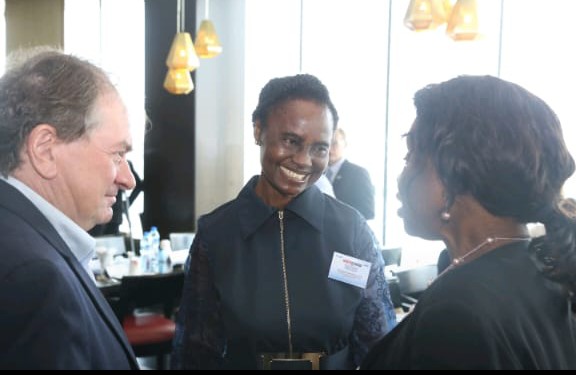
Among those present at the event were the Consul General of France, Mr Laurent Favier; Mr Tola Adeyemi, CEO of KPMG One Africa and Senior Partner at KPMG Nigeria; Mrs Aminat Jegede, Partner, Energy and Natural Resources at KPMG Nigeria; Mr Ajibola Olomola; Mr Jouni Loukman; Lawrence Amadi, FCA, MBA; and other business and industry leaders.
Also present was the President of Women in Maritime of West and Central Africa, Nigeria (WIMOWCA), and Secretary of the FNCCI, Mrs Oritsematosan Edodo-Emore.
France-Nigeria relationship
The Consul General of France, Laurent Favier, opened the luncheon and reaffirmed the strong relationship between France and Nigeria.
In a light moment during his remarks, Favier described the relationship between both countries as “we dey kampe.”
The comment reflected the friendly nature of the relationship between France and Nigeria, while the gathering itself brought together stakeholders from the business community and other sectors to discuss issues affecting economic growth and investment.
The presence of the French Consul General also underscored the role of business and economic relations in strengthening cooperation between France and Nigeria.
KPMG calls for preparation ahead of 2027
A major focus of the luncheon was the political environment and what it could mean for businesses as Nigeria approaches the 2027 general elections.
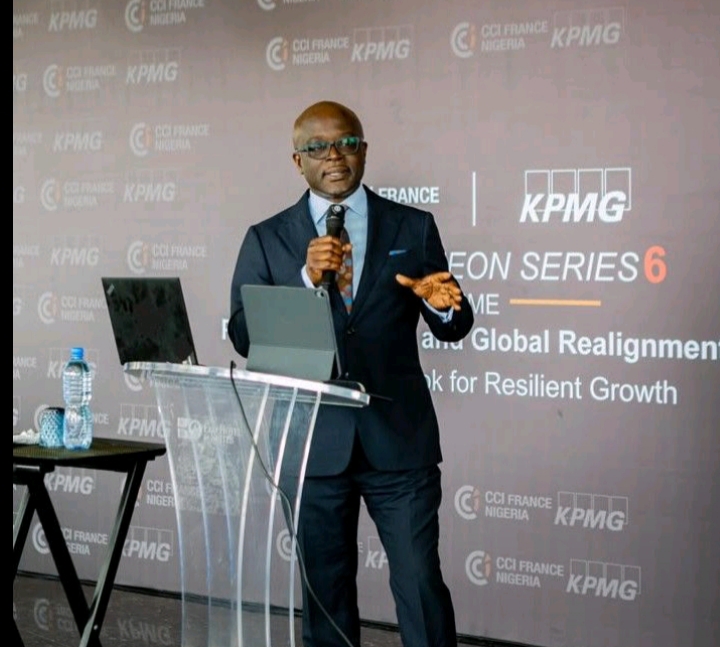
Speaking at the event, Mr Tola Adeyemi, CEO of KPMG One Africa and Senior Partner at KPMG Nigeria, advised business leaders to prepare for different political outcomes rather than build their strategies around one expected result.
According to Mr Adeyemi, the outcome of the 2027 elections could influence government policies and priorities, making it important for businesses to consider different scenarios when making decisions about investment, expansion and operations.
He outlined three possible scenarios for Nigeria: continuity, policy recalibration and increased uncertainty.
Mr Adeyemi explained that each scenario could present a different environment for businesses.
Continuity could mean that existing policies and priorities remain largely in place, while policy recalibration could bring changes to the direction of government and its approach to different sectors.
The third possibility, increased uncertainty, could make business planning more difficult if companies are unable to clearly determine the direction of government policies or the wider economic environment.
Rather than trying to predict exactly what will happen, Mr Adeyemi urged companies to prepare for different outcomes.
“Nobody actually knows what the answer will be,” Mr Adeyemi said”.
His message was that businesses should focus on being prepared rather than relying on a single prediction about the political future.
Taxation, monetary policy and security
Mr Adeyemi identified several areas that businesses should pay close attention to as the country moves towards the 2027 elections.
These include taxation, monetary policy, infrastructure, social development, security, sector priorities and revenue mobilisation.
Changes in taxation, for example, could affect the cost of running businesses, while monetary policy decisions could influence access to financing, interest rates and investment.
Infrastructure and security are also important to businesses because they affect transportation, production, logistics, movement of goods and the general cost of doing business.
Mr Adeyemi’s advice therefore placed emphasis on the need for business leaders to understand the possible impact of government decisions on their operations.
For companies making long-term investments, understanding the direction of public policy can be important when deciding where and when to invest.
Businesses face global uncertainties
The discussion also moved beyond Nigeria’s political environment, with Adeyemi highlighting some of the global challenges that businesses are currently facing.
He pointed to geopolitical conflicts, global economic changes, supply chain disruptions, inflation and rising financing costs as factors that could affect businesses.
For companies that depend on international trade, changes in the global economy can affect the cost of raw materials, transportation, financing and other aspects of business operations.
Supply chain disruptions can also create delays and increase costs, while inflation can affect both businesses and consumers.
The changing global environment therefore means that companies need to look beyond local developments when planning their future.
Businesses operating in Nigeria have to consider both domestic policies and developments in international markets, particularly where their operations involve imports, exports, foreign investment or international partnerships.
Opportunities beyond Nigeria
While highlighting the challenges facing businesses,Mr Adeyemi also pointed to opportunities that companies can explore.
He encouraged Nigerian businesses to look beyond the Nigerian market and explore opportunities in other African countries.
One of the opportunities highlighted was the African Continental Free Trade Area, which provides a framework for increasing trade among African countries.
For Nigerian companies, expanding into other African markets could create opportunities for new customers, partnerships and investment.
Mr Adeyemi also noted the growing trade and investment relationships between Nigeria and countries in Asia and the Gulf region.
The changing global economic landscape, according to the discussion, means businesses should remain open to new markets and partnerships rather than depend entirely on traditional business relationships.
This could allow Nigerian businesses to diversify their markets and reduce their dependence on a single market.
Call for localisation by foreign companies
Another important issue raised was the need for foreign-owned companies operating in Nigeria to strengthen their connection with the local economy.
Mr Adeyemi encouraged foreign companies to work with Nigerian talent, suppliers and local partners while still making use of foreign technology, capital and expertise.
He summarised the message with the phrase, “Localise, localise.”
The call for localisation highlights the importance of foreign businesses understanding the Nigerian market and building relationships with local businesses and professionals.
For companies operating in a complex and changing environment, strong local partnerships can also help them better understand the market and respond to local needs.
Businesses told not to adopt AI simply because it is popular. Artificial intelligence was another major area discussed at the luncheon.
As businesses across the world increasingly adopt AI, Mr Adeyemi cautioned companies against using the technology simply because it is becoming popular.
He advised business leaders to first examine their existing processes and identify areas that need improvement before deciding where artificial intelligence can add value.
According to the advice, businesses should not start with the technology itself but with the problem they are trying to solve.
Companies should first understand their processes and then determine where AI can improve efficiency, reduce unnecessary work and deliver better results.
This approach could help businesses avoid spending money on technology without a clear understanding of how it will contribute to their operations.
The discussion around AI also reflects the wider changes taking place in the business environment, where companies are increasingly looking for technology that can help them remain competitive.
Cost of living and pressure on households
Another issue raised at the luncheon was the rising cost of living and its effect on Nigerians and the business environment.
Dr Olisa Agbakoba discussed the challenges created by the rising cost of living and the pressure it places on households.
The issue is also important to businesses because changes in household income and spending power can affect demand for goods and services.
When consumers face higher costs, businesses may also have to deal with changes in purchasing patterns, pricing and sales.
For business leaders, understanding the economic realities faced by consumers is therefore important when making decisions about products, pricing and expansion.
The discussion reinforced the need for businesses to consider not only economic figures but also the realities affecting ordinary households.
Technology as a driver of business growth
Mr Jude Chiemeka, CEO of Nigerian Exchange Group (NGX Group), also encouraged business leaders to use technology to improve their operations and support growth.
Technology has become an increasingly important part of business operations, with companies using digital tools to improve efficiency, communicate with customers and manage different aspects of their businesses.
For Nigerian businesses, the adoption of technology can also help companies improve their ability to compete in a rapidly changing market.
Mr Jude Chiemeka’s contribution added to the wider discussion about the need for businesses to adapt and make better use of available tools to improve performance.
Preparing for an uncertain business environment
The different discussions at the luncheon pointed to one major issue: businesses cannot afford to ignore the changes taking place around them.
The political environment, economic conditions, global developments and technological changes are all factors that can influence the way businesses operate.
As Nigeria approaches the 2027 general elections, companies may need to consider how possible changes in government policies could affect their businesses.
At the same time, global developments such as geopolitical tensions, inflation, supply chain disruptions and changes in international trade can create additional challenges.
The discussions therefore highlighted the importance of flexibility and proper risk management.
For business leaders, preparing for uncertainty does not necessarily mean knowing exactly what will happen. It means considering different possibilities and ensuring that the company is able to respond when circumstances change.
A focus on resilience and growth
The theme of the luncheon, “Political Dynamics and Global Realignment: A CEO’s Playbook for Resilient Growth,” placed resilience at the centre of the discussion.
For businesses, resilience can involve having the ability to continue operating during difficult periods, adjust to changing policies, manage rising costs and identify opportunities in new markets.
It can also involve investing in people, technology and partnerships that can help businesses remain competitive.
The discussions at the event showed that business growth cannot be separated from the wider political and economic environment.
Companies have to understand the factors influencing the market and make decisions that allow them to remain prepared for both challenges and opportunities.
Looking beyond the 2027 elections
Although the 2027 elections were an important part of the discussion, the issues raised at the luncheon went beyond the election itself.
The speakers also focused on longer-term issues affecting the Nigerian economy, including infrastructure, security, taxation, technology, international trade and the cost of living.
For businesses, these issues will remain relevant regardless of the political outcome of the 2027 elections.
The message to business leaders was therefore to build strategies that can survive changes in the political and economic environment.
Instead of waiting for uncertainty to disappear, companies were encouraged to prepare for it and identify ways to continue growing.
The sixth FNCCI-KPMG CEO Luncheon brought together business leaders and other stakeholders at a time when companies are facing several layers of uncertainty.
From Nigeria’s political environment ahead of the 2027 general elections to global economic changes, rising costs, technological developments and changing trade relationships, businesses are being required to make decisions in an increasingly complex environment.
The discussions emphasised the importance of preparing for different political outcomes, monitoring government policies, exploring new markets, strengthening local partnerships and using technology strategically.
For Nigerian businesses, the ability to adapt could become increasingly important as the country moves towards another election cycle and as the global economy continues to change.
The event ended with closing remarks from Mrs Oritsematosan Edodo-Emore.