By Chika Abanobi
If he were a Nigerian Christian journalist, and lived in our day, there is no doubt that he would had been a member of Journalists For Christ Outreach International, the Christian journalists body established in April, 1988, by Lekan Otufodunrin, formerly the Group Political Editor, “The Punch” newspaper, Lagos, and later, Editor, “The Nation On Sunday”.
His aim in founding the body is to encourage those who are already born again Christians to remain steadfast in the faith and to win over those who are yet to accept Jesus Christ as their Lord and Saviour.
But Frank Bartleman was not a Nigerian Christian journalist. And, did not report for either “The Punch”, “The Nation”/”The Nation On Sunday”, “Voice of Nigeria (VON)”, “Ikorodu Oga Radio”, “Rock FM”, “News Agency of Nigeria (NAN)”, “The Sun”, “The Guardian”, “Vanguard”, “The Independent”, “The Tribune”, “ThisDay”, “National Wire”, “JKNews”, “New Dawn”, “Pan-Atlantic Kompass:, “ABNews”, “Circular News”, “Providence News”, “Church Times” or the “PTL News”.
These are some of the print, electronic and online news media from which some of the Christian journalists that make up membership of JFC, are drawn.
Faithful chronicler of how Pentecost came to Los Angeles
That notwithstanding, as a reporter/contributing writer to Christian magazines like “Way of Faith” (Columbia, South Carolina), “Word and Work” (Framingham, Massachusetts), the “Apostolic Faith” (Los Angeles, California) and “Confidence” (United Kingdom) Bartleman reported consistently for the nation. The nation of Pentecostal Christians worldwide!
It was through his balanced news reports, as against the jaundiced, biased reports presented by such secular news media as “The Los Angeles Times” that we were able to know the true state of things as regards the great revival that broke out at 312 Azusa Street, Los Angeles, California, United States, from April, 1906 to 1915. He later wrote an eyewitness account that captured fascinating details about the revival in a way that brought some deep insights into the spirituality and worldview of early Pentecostals on the phenomenon.
Originally published as “How Pentecost Came to Los Angeles” (1925), in 1980, the book was reissued by Logos International Publishers as “Azusa Street.” In one of the haunting lines, Frank wrote about the blood of Jesus washing away the “colour line that divides the whites and blacks” during the Revival.
It is still doing so today for millions who know. But for those who don’t or who don’t care to know or who profess so with some level of insincerity, the problem of race, ethnicity, tribalism and other social stratifications is bound to be a recurring divisive one till the Kingdom comes.
In one of his reports captured by his book, “Azusa Street”, he wrote: “Many were curious and unbelieving, but others were hungry for God. Outside persecution never hurt the work. We had to fear the working of the evil spirits within.
Even spiritualists and hypnotists came to investigate and to try their influence. Then all the religious soreheads and crooks came, seeking a place in the work. But this is always the danger to every new work.
They have no place elsewhere. This condition cast a fear over many which was hard to overcome. It hindered the Spirit much. Many were afraid to seek God, for fear the devil might get them.”
Many battles of Bartleman
The third son of his father, a German immigrant, a farmer and a nominal Roman Catholic and of his mother, an American but a highly religious woman, a Quaker, Frank was born in Carversville, Pennsylvania, United States, on Dec. 14, 1871. One of his aunts was said to have prophesied when he was four years old that he would be a preacher. But he was not to know about the prophecy until he was 22.
Though his spelling of “Bartleman” is different from the normal spelling of “battle” we know in English language, all the same, he ended up being an embattled man in every sense of the word.
This is because he battled with various sicknesses, diseases and afflictions almost throughout his lifetime. They include: dyspepsia, acute headaches/migraine, varicose veins, gastric fever, eyesight problems that made him to be led about by hand for about two years, swollen back muscles contracted through railroad accident.
But his chance meetings with preachers/revivalists like D.L. Moody and Evan Roberts from Wales, England, and the healing fire/power that ensued changed his story/life forever.
Later, through voracious reading especially when he was at Moody Bible Institute, Chicago, Illinois, Frank became acquainted with the stories and lives of great men and women of God like David Brainerd, Peter Cartwright, Jonathan Edwards, Charles G. Finney, George Muller, Father Dyer, Roland Hill, John G. Patton, Luther Lee, Phoebe Palmer and Amanda Smith. Before signing on with the Bible Institute, he attended the great Temple University, Philadelphia, Pennsylvania.
Though not located in the same state, studying at Temple University, and later at Moody Bible Institute, in Nigeria, it’s like studying at Theological College of Northern Nigeria (TCNN), Bukuru or Jos ECWA Theological Seminary (JETS), after graduating from the University of Jos or Ahmadu Bello, University (ABU), Zaria. Or, going to Immanuel College of Theology and Christian Education, Ibadan after graduating from the University of Ibadan. Or, doing a post-graduate theological course at the West Africa Theological Seminary (WATS), Lagos after graduating from either the University of Lagos (UNILAG) or the Lagos State University (LASU).
After his salvation/conversion experience in October, 1893, he had some spiritual stints as a Christian worker with some ministries like the Salvation Army, the Wesleyan Methodists, the Pillar of Fire Ministries and, the Peniel Missions before meeting with William J. Seyemour and being used by God not only as a part of prayer warriors who prayed the revival into existence but who also as a faithful recorder/writer of all that happened, wrote about the peaks and lows of it.
Capturing the lengths and breadths of a Revival
Though Frank started as early as 1905 to report for the Christian magazines mentioned earlier in the article, from 1906 to 1908, he attended prayer meetings led by William Seymour.
He reported news stories and wrote articles for Pentecostal magazines and documented events that led up to the 1906 Los Angeles revival. In all, he was said to have written over 550 published news-reports/articles and over 100 tracts.
One of them was the great clash that allegedly took place between Seymour and William Harold Durham. The main contention was doctrinal teaching. While Durham, a powerful, charismatic preacher of the day, from Los Angeles, California, preached on the “Finished Work” which holds that after conversion, the converted Christian progressively grows in grace though it rejected the possibility of entire sanctification, Wesleyan doctrine which Seymour subscribed to, on the other hand, preaches entire sanctification as instantaneous, definite second work of grace, At a point when their disagreement became very sharp, Seymour locked out Durham who used to minister, from time to time, at 312 Azusa Street.
Frank Bartleman captured in great details the doctrinal bone of contention between the two God’s Generals and many readers felt and still feel that as a Christian journalist, he shouldn’t have given their differences such prominent attention in his reportage.
He also reported extensively on how the revival fire began to wane or go down when suspicion, backbiting, distrust, gossip and division found their way into the church. “The church should be an organism, not a human organisation”, he wrote in his book “Azusa Street”, before adding: “We found early in the ‘Azusa’ work that when we attempted to steady the Ark, the Lord stopped working.
We dared not call the attention of the people too much to the working of the evil. Fear would follow. We could only pray. Then God gave the victory. There was a presence of God with us, through prayer, we could depend on. The leaders had limited experience, and the wonder is the work survived at all against its powerful adversaries.”
Frank Bartleman died on August 23, 1936, the same year that Pope Francis, the first Latin American Pope, John McCain (the American politician and naval officer who represented Arizona in the United States Congress for over 35 years), Joseph Sepp Blatter, former President of International Federation of Football Association (FIFA) and Chief Ernest Shonekan, Nigeria’s consummate corporate business entrepreneur/titan, and later, head of Nigeria’s Interim National Government, were born.
Some news reporting lessons from the Bible
In 1978, Rev. Jim Jones-ordered cold-blooded murder of Leo Ryan, the U.S. Congressman and four others, including journalists and press photographers who came to investigate allegations of human right abuses and forced labour in his church, People’s Temple, in Jonestown, Guyana, and subsequent mass murder/suicide, through a cocktail of cyanide, sedatives, and fruit juice of 918 members, and other happenings across the years, show that churches, ministries, religious organisations and ministers of God fear/detest/resent having their bad sides exposed in the media.
But if you are a Christian journalist, while you should be careful not to allow yourself to become a willing tool in the hand of Satan, to knowingly or unknowingly destroy the work of God, at the same time, you must be balanced in your reports.
You must not be biased or become one-sided as many journalists on the payrolls of rival parties or organisations have a tendency to.
As far as integrity and reliability of the Bible is concerned, in 2 Peter 1:16, 20,21 we read that “we have not followed cunningly devised fables… knowing this first that no prophecy of the scripture is of any private interpretation… but holy men of God spake as they were moved by the Holy Ghost”(KJV).
And, in their Biblical accounts, nothing was left untouched, the good and the bad, the beautiful and the ugly. Abraham was a friend of God who went as far as deciding to sacrifice his son, Isaac, the only child between him and his wife, Sarah. But when he told a lie (Genesis 20:1-13), the Bible said so and did not hide the account.
Balanced historical, humanistic accounts by the Bible
David was said to be a man after God’s heart. But when he committed adultery with Bathseba and tried to cover it up by having Uriah, her husband, killed in a battle, the Bible did not hide it (2 Samuel 11:1-27). It also revealed to us that he married many wives, besides many concubines or side chicks (1 Chronicles 14:3-7; 1 Chronicles 3:1-9; 2 Samuel 5: 13-16; 15:16). The same truth was applied when King Solomon the wisest man on the then earth married 700 wives in addition to 300 concubines (1 Kings 11:1-3).
While on earth, the Lord rarely got angry but when He once did by using a whip/scourge to chase away those engaged in bureau de change or buying and selling in the temple, upturning their tables of transactions in the process, the Bible said so (John 2:13-16). It also said so when He called Herod Antipas a fox (Luke 13:32, 32).
In the second and third chapters of the Book of Revelation, the Lord, while addressing the seven churches in Asia Minor, commended some where they needed some commendations and criticised/condemned some goings-on in the same churches where He thought it necessary. For Him, there was no sugar-coating of anything as some ministers of God want us to do, not because of the glory or name of God but because of their own ego or pride.
From the foregoing examples, we find that the Bible is not out to cover anything for anybody, no matter how highly placed in the sight of God or men.
A Christian journalist who intends to please the Lord should take a cue from these accounts preserved for us by the Holy Spirit, and be objective or balanced when they render accounts of happenings or their investigations.
Journalists as change agents
But where certain journalistic investigations or publication can bring harm to you, the best advice is: keep off. Many journalists foolishly walk their way into harm they never bargained for, in their bid to expose corruption, scandals/wrongdoings in high places.
Though danger is one of the hazards of the journalistic profession, we don’t deliberately put ourselves in harm’s way just because we want to make a name for ourselves.
Unless, of course, we are sure that our death in the course of pursuing the truth to its logical end, will help bring about a change either in the society, system or in the way that things are being done.
This was what happened in some cases. A typical example is the Watergate political scandal which brought about the impeachment/resignation of Richard Nixon, the 37th President of the United States, in 1974.
Or, the alleged certificate forgery scandal that, in 1999, led to the resignation of Ibrahim Salisu Buhari, Speaker, Nigeria’s House of Representatives, or that, which in October 2025, led to the resignation of Uche Nnaji, the then Minister of Innovation, Science, and Technology. Or, the NYSC discharge certificate forgery which, in 2018, led to the resignation of Kemi Adeosun, then Minister of Finance.
Biblical caution, injunction on investigative journalism
But if it is the kind of news reporting/investigation that will lead to death or harm, then the Bible advises extreme caution. In Nigeria, such suspicious deaths that took place include that of Dele Giwa, co-founder of “Newswatch” magazine, in 1986; Bagauda Kaltho, a senior correspondent and a prominent investigative journalist, with “The News” magazine, on January 18,1996, through a bomb said to had been planted somewhere in his hotel room at the Durbar Hotel and Tunde Oladepo, a senior correspondent with “The Guardian” when five masked gunmen made their way into his home early in the morning of February 26, 1998 and shot him dead.
Others are: Chinedu Offoaro, a journalist with “The Champion” newspaper, who, in 2001, went missing mysteriously while on his way to a local airport in Owerri, to board a flight to Lagos; Bayo Ohu, assistant news editor with “The Guardian”. Alleged to be working on a sensitive story, in 2009, he was killed when gunmen stormed his house around 7 a.m. on a Sunday; Titus Badejo, former Naija FM news anchor, trailed and killed outside a club house in Ibadan, Oyo State, in 2021, by some unknown armed men and Tordue Salem. A “Vanguard” newspaper reporter covering the House of Representatives, he was killed in 2021 under suspicious circumstances.
If you are working on the kind of story that can bring harm your way, the Bible injunction is: “do not be overly righteous, nor be overly wise. Why should you destroy yourself” (Ecclesiastes 7:16, NKJV). For all you care, the society you are trying to change with your news report or investigation may choose to remain the same way or even worse. Secondly, your premature or sudden death could put your loved ones through some distresses you and they never bargained for. So? “Why should you destroy yourself”?
•
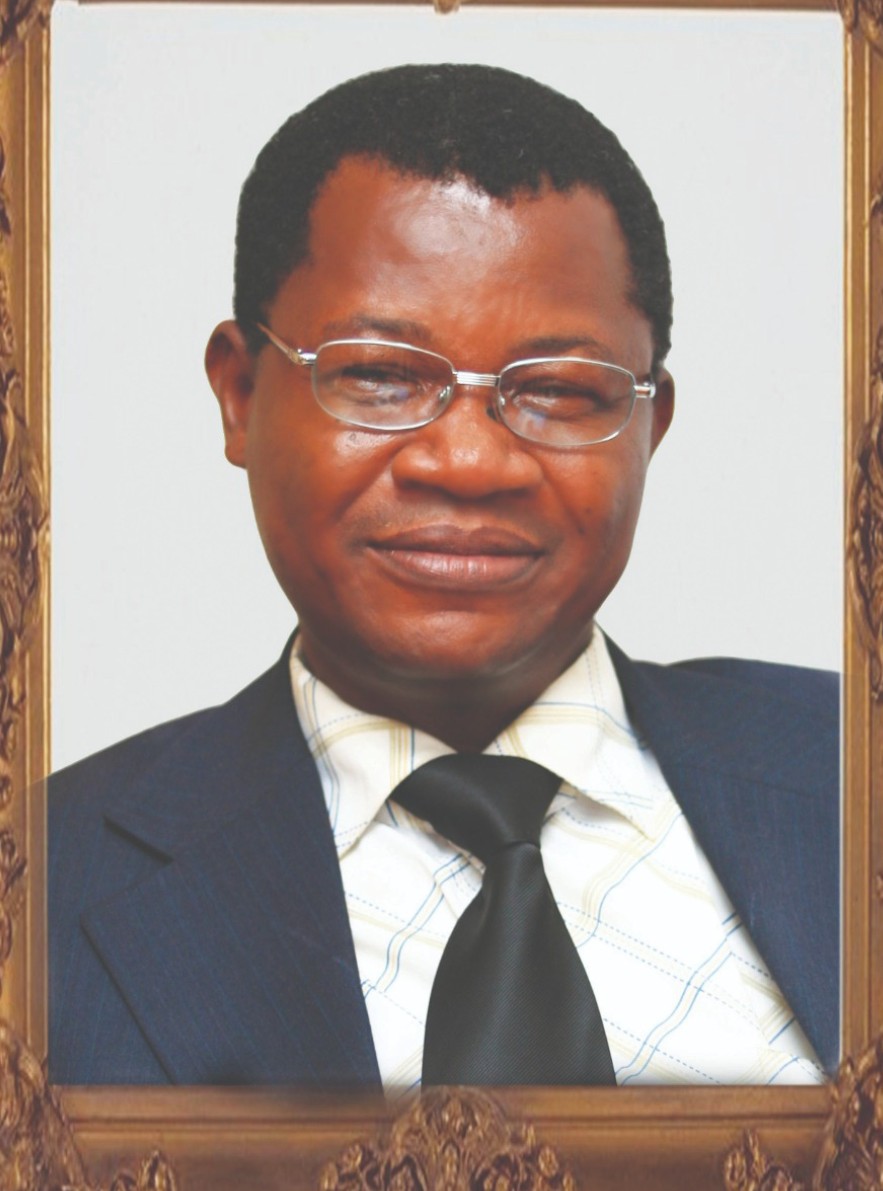
• Abanobi, winner, Governor Olusegun Mimiko for Foreign News Reporter of the Year, 2018 Nigeria Media Merit Award (NMMA) and member, Journalists For Christ Outreach International is the author “Offences and Forgiveness”, “How Youths Become Addicts to Porn” and other books.