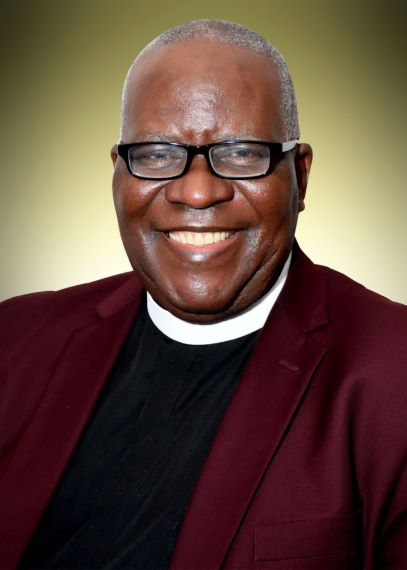
Pastor Henry Odeneye. President, Harvest Point Ministries Inc has been at the vanguard of promoting the Yoruba Language in the US for over 20 years. Beyond promoting the Yoruba Language; he runs a school of ministry in a number of countries where local pastors are exposed to theological training in their languages.
Odeneye himself is a polyglot of sorts. He speaks Hausa and two Ghanaian languages: Twi and Fanti, and then the Yoruba Language apart from English, which he speaks well.
A professional marketer by training and consultant to many organisations, Odeneye, a Septuagenarian, is a pastor of The Apostolic Church Nigeria. He is the Apostle of
The Apostolic Church South Kirkwood District Houston Texas.
His work in the US has attracted awards and commendation from the US government and the State of Texas. He has also succeeded in securing December 6 as Yoruba Dagunduro Day in Houston Texas. And then was able to convince the US government to allow US citizenship exams to be written in the Yoruba Language for those who want to.
In this interview with Church Times Nigeria, Odeneye, a certified and licensed counsellor with a Master’s Degree in Missions and Indigenous church planting, shares some of his experiences. Below are excerpts:
You have been at the forefront of promoting the Yoruba Language in the US for quite a while now. How has it been in the last couple of years?
Well, it has been from one testimony to the other. When God gives a command, he backs it up. When we started about two decades ago, many people thought we were joking or that we had embarked on something that we could not see through. But here we are today, getting recognition from both the US Federal Government and the Governor of the State of Texas, where we operate.
The beauty of our impact is that it has extended beyond the spiritual to the physical. Through ministering in the Yoruba Language, we have been able to address some strategic social concerns in the US. Now, Yorubas can write their citizenship exams in the Yoruba Language. We have also been able to create public awareness for some of the government policies using the Yoruba Language.
It’s interesting you’re able to achieve this feat. How did it happen?
Well, I think the whole thing started during the COVID-19 pandemic when the whole world was in turmoil and when there was a need for medical intervention. That period allowed us to create awareness about the virus in the Yoruba Language and encourage our people to take their covid vaccines.
We discovered some of our elderly in the US have an inferiority complex because they cannot speak the English language. So, we had to intervene. We were able to translate the information on COVID to Yoruba to assist them. We also tried to make them feel a sense of belonging. We provided transportation for them to go and take their covid vaccines. It was while we were doing this that it occurred to us that we could push this further and ask that our people be allowed to write their US citizenship exams in Yoruba.
We also discovered, for instance, that the Chinese people were allowed to use their language to write the qualifying exams. So, we approached the government, and they said we could use the Yoruba language to write the exams. So far, we have helped a couple of Yorubas write their exams, and it has been awesome.
But then little did we know that the then-government of Biden was taking note of our efforts. The White House honoured our ministry and I and gave us a certificate of recognition. We got a medal for our voluntary and community work. We were decorated with the Presidential Gold Medal for our community efforts. That is the testimony.
Nobody would have thought that the Yoruba language would be needed in the US. Is there still a growing need for the language?
In the first place, we did not introduce the Yoruba language to our worship because we wanted to cater to those who don’t understand English. All we wanted was to create a template through which people can worship in their language. The fact that you can worship in your language makes worship a delight. It goes to buttress scripture that the Lord will purify each language so that they will be used to worship the one and only God.
So, the idea was to give Yoruba people the opportunity to worship God in their mother tongue, not necessarily because they do not understand the English language. It was in the course of doing this that we discovered there were some elderly folks among us in the US who came to take care of their grandchildren. Many of them could not speak the English Language.
We had to step in, provide social support for them. And that has led to the growing need to use the Yoruba language for worship in Houston, Texas, where our ministry is located. Today, Texas recognises Dagunduro Yoruba Day. We have been given congressional recognition with the seal of Congress.
What is your relationship with the Yoruba Self-Determination groups, given your patronage of the Yoruba language? Have they approached you to join them in their advocacy?
I have been approached a number of times. But I tell them I am a pastor and I cannot compromise my Christian convictions. Our Lord Jesus knew why he came, and he pursued the reason for his coming with the singleness of heart. So also, we, his followers. God gave me a mandate, which is to make the Yoruba language a tool of worship of the one and only true God and not for idolatry. I am a Yoruba man. But the moment I accepted Jesus, my allegiance shifted to him. That does not mean I am against the self determination groups. They have a right to pursue their dreams just as I am pursuing my dream..I can only pray for them.
I try as much as possible to be more of a child of God than a tribal irredentist. From my understanding, a true child of God is blind to race. That does not mean the person will despise his race. Like I said, I am a proud Yoruba man and from Ijebu. But if I don’t tell you, you won’t know.
My calling does not allow me to discriminate. I am praying for Nigeria. If tomorrow Yoruba Nation becomes a reality, all well and good. But that is not my calling. I am not pursuing that agenda. My support for the presidency is also not based on tribe. Whoever gets there and can perform, it won’t matter where that person comes from. By the way, there is so much to do in my ministry that I won’t be able to take on another responsibility.
Tell us about those other things you do, sir?
The purpose of our ministry is to promote local languages across the globe. It only happened that I am Yoruba, and we are promoting Yoruba here in the US. But then we school of ministry in a number of countries, including Tanzania, Uganda, Brazil, Senegal, Mexico, the Republic of Benin, where we reach out to the locals and help them with Theological courses in their local languages.
We obtained the Bible curricula and translated them into local languages, such as Swahili, Portuguese, Yoruba , French and several other languages, depending on the country. This became necessary because we think it is a misnomer to expose people to theological training in a language they do not understand. Our vision is to train church leaders in their local languages.
We are striving to establish Bible colleges in local languages worldwide, as God grants us the opportunity. For now, we collaborate with the Sons of Issachar ministry in Ibadan, Nigeria. They have mission fields in a number of countries. We provide technical training for their pastors in some of the countries where they have missionaries.
From what you have experienced so far, what does speaking the local language do to people?
It helps to strengthen their faith. According to research carried out by Harvard University, only 37 per cent of people who give their lives to Christ eventually become disciples. The reason for this is that there are no teachers to put them through a discipleship programme.
The Ethiopian Eunuch, as recorded in the book of Acts, could not understand what he was reading because there was no teacher. Immediately Philip explained to him, he was excited. Many people got saved during the Reinhard Bonnke crusades. Unfortunately, many of them did not enjoy proper follow-up because of the mother tongue problem. That is where our ministry comes in to help integrate the local languages into theology.
You talked about Biden and how he gave you an award. What has been your experience under President Trump?
Trump has done a lot of good things, but the acceptance of those good things is a challenge to the far-left people in the US. Some of his policies have turned people against us.
What specific issue from your observation do people not like about Trump?
I won’t want to go into that. But I believe there is a need for a great deal of wisdom in doing the right thing so that those who need to change will not foreclose the possibility.
What other impact has your ministry and the Yoruba community made in the US?
I think largely we have been responsible and have comported ourselves very well. We pay our taxes and contribute our quota to the development of the country. God has also used us to carry out the rehabilitation of young people who are into drugs, and also the homeless. We run a programme that encourages young people to stay away from drugs, and when they successfully stay away after high school, we give them prizes. We had to do that because many blacks are getting hooked on drugs. I can tell you without mincing words that the Yoruba community has been a tremendous blessing in the US. Our delicacies like Jollof rice, ewa aganyin and fried plantain are increasingly popular among the people.
Because of some of the work we have been doing, we get awards from the government. We were honoured the same day as the Redeemed Christian Church of God and many other organisations.
You seem to be appreciated in the US for this great work. What has been the response of the government of Nigeria to the work you are doing in the US?
Thanks for this. I think largely the US government have been good to us in terms of encouraging us to do what we are doing and to do more. But coming to the recognition from Nigeria, we are yet to have such despite the fact that our activities are in the public domain. Well, that does not stop us from doing what we have been called to do.
Our passion is to see lives liberated and people set free from the power of darkness. Our promotion of the Yoruba language is also a way of promoting our values and entrenching morality on the global front. So far, we have had good outcomes of our activities. Many young people who would have been lost to drugs and illicit lifestyles have found redemption through our efforts, to the glory of God.