By Oyewole O. Sarumi
In the contemporary Christian environment, a subtle yet profound confusion has taken root. It is not merely a confusion of doctrine, but a confusion of source.
We are witnessing an era of unprecedented activity within the church, concert-style worship services, high-level strategic planning, and media-savvy evangelism. Yet, a lingering question remains about the origin of this energy. Is it the dynamic power of the Holy Spirit, or is it the adrenaline of the human soul?
The author of the Book of Hebrews provides the scalpel necessary to address this condition: “The Word of God is living and active and sharper than any two-edged sword, piercing as far as the division of soul and spirit, of both joints and marrow, and able to judge the thoughts and intentions of the heart” (Hebrews 4:12).
This verse suggests a terrifyingly precise reality: the soul and the spirit are not the same, yet they are so closely joined that only the sharpest instrument, the Divinely inspired Word, can separate them. For too long, the modern church has operated under a cloud of ambiguity, treating emotional exhilaration as spiritual depth and intellectual prowess as divine revelation.
The result is a form of Christianity that is often two-dimensional, lacking the transcendent power of the Holy Spirit because it relies on the finite resources of the human personality.
To recover true spiritual power, we must undergo a “surgery of the soul,” allowing the Word to expose the difference between what is born of man and what is born of God.
The Anthropological Triad: Body, Soul, and Spirit
To understand the current crisis, we must first establish a biblical anthropology. While some theological schools argue for a dichotomy (man as body and soul/spirit), the Apostle Paul provides a clear trichotomy in 1 Thessalonians 5:23: “Now may the God of peace Himself sanctify you completely; and may your whole spirit, soul, and body be preserved blameless at the coming of our Lord Jesus Christ.”
This distinction is not academic hair-splitting; it is the framework for spiritual survival.
The Body (Soma): This is our world-consciousness. It is the vehicle through which we interact with the physical realm via the five senses.
The Soul (Psychē): This is our self-consciousness. It comprises the mind (intellect), the will (volition), and the emotions (feelings). It is the seat of human personality.
The Spirit (Pneuma): This is our God-consciousness. It is the deepest part of man, the organ designed to commune with God, receive revelation, and house the Holy Spirit upon regeneration.
The tragedy of the modern believer is often a failure to distinguish between the psychē and the pneuma. We usually assume that because we feel something intensely (emotion) or understand something logically (mind), we have touched the Spirit. However, the soul can be religious, fervent, and active without ever being truly spiritual.
The Tabernacle as a Blueprint of Being
The Old Covenant provides a vivid architectural model of this tripartite nature. When God commanded Moses to build the Tabernacle, He did not leave the design to human ingenuity. The structure was divided into three distinct sections, each corresponding to a part of man’s nature.
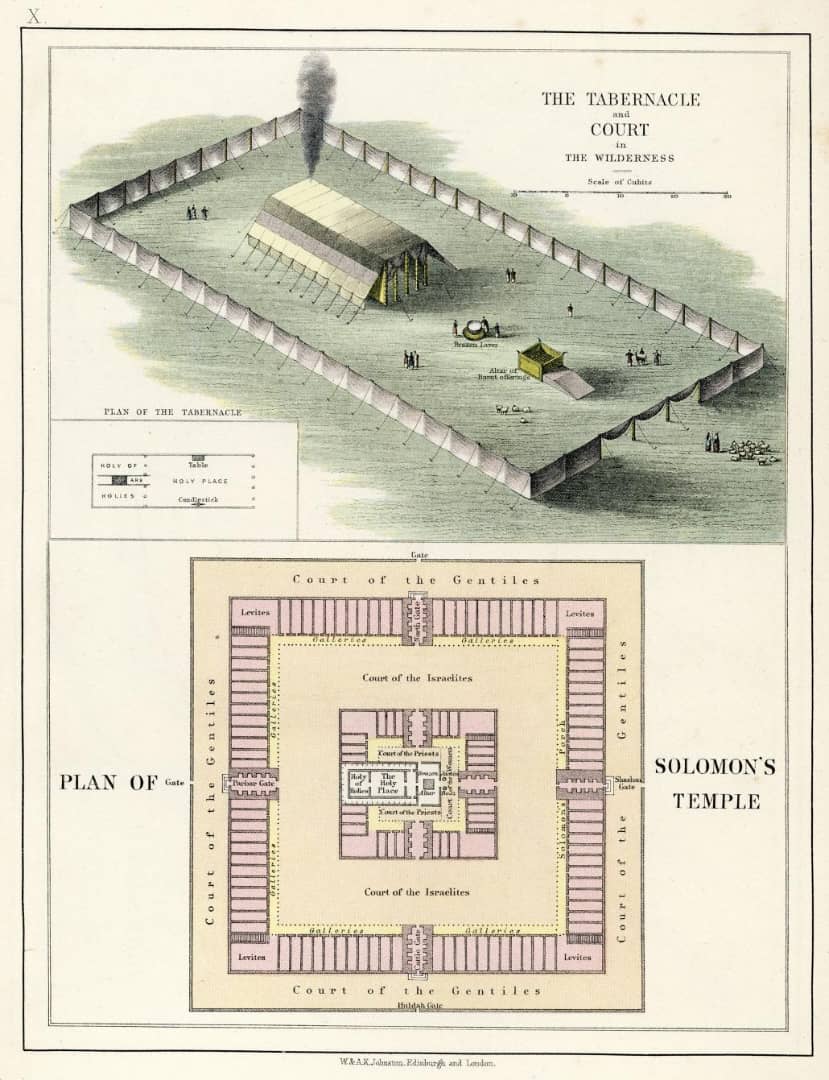
The Outer Court: Open to the natural light of the sun and accessible to the public. This represents the Body, visible to all and operating by natural senses.
The Holy Place: Illuminated only by the Golden Lampstand (oil) and containing the Table of Showbread. Only priests could enter here. This represents the Soul, where the intellect is enlightened and the will is exercised in service.
The Most Holy Place (Holy of Holies): This room contained the Ark of the Covenant and the presence of God (Shekinah glory). There was no natural light and no lampstand; God Himself was the light. This represents the Spirit.
Under the Old Covenant, a thick veil separated the Holy Place (Soul) from the Most Holy Place (Spirit). This veil signified that man, in his fallen state, could not live in the Spirit.
He was trapped in the realm of the soul and body. The High Priest could only enter once a year, and even then, with great trepidation.
However, the glorious truth of the New Covenant is that when Christ died, the veil was torn from top to bottom (Matthew 27:51). The way into the Holiest of All was opened.
Yet, despite this access, many Christians today voluntarily live on the wrong side of the veil. They are content to operate in the Holy Place of the soul, using their natural reasoning and emotions to serve God, rather than entering the Most Holy Place of Spirit-led communion.
To remain in the soul when the way to the spirit is open is to live as an Old Covenant believer in a New Covenant era.
The Three Categories of Believers
Based on this understanding, we can categorise Christians not by their denomination, but by their source of operation.
The Carnal Christian
The carnal Christian is the “babe in Christ” described by Paul in 1 Corinthians 3:1-3. This believer is born again; their spirit has been regenerated, but their life is still dominated by the flesh (sarx).
They are ruled by bodily appetites: lust, greed, envy, and strife. While they possess the Holy Spirit, the Spirit does not possess them. Their focus is on sinful pleasure and worldly gain. This category is easily identifiable because their works are overtly sinful.
. The Soulish Christian
This is the most deceptive category and the primary focus of our critique. The soulish Christian has often crucified the gross sins of the flesh. They may not drink, smoke, or commit adultery. They are often “good” people, eager to serve the Lord. However, their source of energy is the soul, their natural intellect and emotions.
They serve God using human ideas. They preach using human eloquence. They organise the church using secular management principles. They worship using emotional hype.
To the undiscerning eye, they look spiritual because they are active and religious. But as Isaiah 55:8-9 reminds us, God’s ways are as high above our ways as the heavens are above the earth. A soulish Christian tries to reach God’s ends using man’s means.
The Spiritual Christian
The spiritual Christian is one who has allowed the Cross to deal not only with their sins but with their self. They seek to be led by the Holy Spirit in all things (Romans 8:14). They do not rely on their own cleverness or emotional stability. They have learned the lesson of Paul: “I die daily.” They operate from the Most Holy Place, where the initiative lies with God, not man.
The Trap of Good Intentions: The Error of the Ox Cart
One of the most poignant biblical examples of soulish service is found in the life of King David (2 Samuel 6). David had a noble desire: to bring the Ark of God back to Jerusalem.
His intention was good, his zeal was commendable, and he gathered the “chosen men” of Israel to celebrate. However, David made a fatal error. He transported the Ark on a “new cart.”
Where did David get this idea? He got it from the Philistines (1 Samuel 6:7). The Philistines, pagans who did not know the Law of God, had used a cart to move the Ark. It was a pragmatic, efficient, and logical method. It saved human effort.
From a soulish perspective, it was a brilliant idea, why burden the Kohathites with carrying a heavy piece of furniture for miles when a bullock cart could do the work?
But God had explicitly commanded that the Ark be carried on the shoulders of the Levites. God’s way was not efficient; it was intimate. It required human contact and consecrated strength.
When the oxen stumbled and Uzzah reached out to steady the Ark, God struck him dead. The celebration turned to mourning. Why? Because God does not accept a “Philistine method” for a holy mission. David’s service was soulish; it was a good idea, borrowed from the world, executed with human logic, but devoid of obedience to God’s specific pattern.
Today, the church is filled with “new carts” in various forms, depending on the denomination. We borrow methods from the entertainment industry, the corporate world, and political campaigns to transport the glory of God.
We try to save the “burden” of prayer and fasting with the “wheels” of technology and programs. We may get the Ark moving, but the glory is compromised, and eventually, spiritual death ensues. We must learn, as David eventually did, to carry the burden on our shoulders, the way of personal consecration and obedience.
The “Unlearning” of the Soul
To transition from soulishness to spirituality, one often undergoes a process of “unlearning.” The soul is proud of its capabilities, and God must usually break this confidence before He can use a person.
Moses is a prime example. Acts 7:22 tells us that Moses was “learned in all the wisdom of the Egyptians and was mighty in words and deeds.” He had the best secular education the ancient world could offer. He understood architecture, strategy, and law.
Yet, when he tried to deliver Israel using his soulish strength (killing the Egyptian), he failed miserably. God then took him into the wilderness for forty years.
What was the purpose of the wilderness? It was not just to teach him humility; it was to drain him of his Egyptian confidence. By the time God called him at the burning bush, Moses claimed he could not speak.
The man “mighty in words” had been broken. Only then was he ready to wield the rod of God. He had to lose his “pyramid-building” mentality to build the Tabernacle according to the pattern shown on the mountain.
Similarly, the Apostle Paul spent three years in Arabia (Galatians 1:17). He had to unlearn the soulish traditions of Gamaliel to receive the revelation of the New Covenant.
The intellect is a wonderful servant but a terrible master. Until our natural brilliance is submitted to death and resurrection, it remains a hindrance to the pure flow of the Holy Spirit.
We live in a sensory age, and this has affected our understanding of the Holy Spirit. In many gatherings, “spirituality” is measured by decibels and sweat. We have confused the move of the Spirit with the move of the emotions.
Let us highlight a critical deception: “What they call ‘the baptism in the Holy Spirit’ is only a ‘baptism of their soul-power’.”
Psychology teaches us that human beings are susceptible to “emotional contagion.” In a large crowd, with repetitive music, lighting effects, and hypnotic suggestion (“Lift your hands,” “Shout halleluiah seven times,” “Say ‘I believe'”, or “I receive”), it is easy to whip the human soul into a frenzy. People may feel a rush of endorphins, weep, and feel a sense of “release.” But is this the Holy Spirit?
Elijah learned on Mount Horeb that God was not in the wind, the earthquake, or the fire, but in the “still small voice” (1 Kings 19). Jesus and the apostles did not need to “set the atmosphere” to heal the sick. They did not require forty-five minutes of repetitive choruses to get God to move. Peter said, “Silver and gold I have none, but what I have I give you: In the name of Jesus Christ… rise up and walk” (Acts 3:6). It was immediate, authoritative, and often quiet, because that is the way of the Spirit.
The modern practice of “releasing faith” through screaming or sweating is often a manifestation of soul power, an attempt to force a spiritual result through intense human exertion. This is closer to the prophets of Baal cutting themselves on Mount Carmel than it is to the prophets of Yahweh. True faith is a rest (Hebrews 4:3), a quiet confidence in the integrity of God’s Word, not a frantic attempt to twist God’s arm.
The Cult of Gadgets and Influence
Another manifestation of the “soul” is our reliance on external resources. We have come to believe that the Great Commission requires significant funding, political influence, and cutting-edge technology. We view these as the “power” of the church, and we have observed with trepidation the rat race among churches in our day to acquire them.
I categorically say NO to this, my friend, because it is a deception: the early church had none of these things. They had no microphones, no internet, no friendly politicians, and very little money. Yet, they “turned the world upside down” (Acts 17:6). Why? Because they possessed genuine spiritual power, which today’s churches lack.
We, conversely, have all the gadgets and all the money, yet our impact on society’s moral fabric is negligible. We have exchanged the dynamo of the Holy Spirit for the mechanics of the soul. We trust in our ability to organise, market, and lobby.
We have forgotten that “the weapons of our warfare are not carnal but mighty in God for pulling down strongholds” (2 Corinthians 10:4). A church that relies on its soul power, its smarts, its wealth, its social status, is a church that has ceased to be a spiritual entity and has become merely a religious NGO.
The Way Forward: Letting the Sword Cut
How do we escape the deception of the soul? How do we ensure we are not merely “Old Covenant Christians” living behind the veil of our own feelings?
The answer lies in the text we began with: Hebrews 4:12. We must expose ourselves to the Word of God.
The Word as Judge: We must stop reading the Bible merely to find comfort or sermon points and start reading it to be judged. We must allow Scripture to critique our methods, motivations, and traditions. When we read that the apostles rejoiced in suffering, does it judge our obsession with comfort? When we read about their lack of resources, does it make us question our obsession with fundraising?
The Jesus Standard: We must use the life of Jesus as our ultimate metric. If we see a practice in the church, be it a style of healing, a method of fundraising, or a way of leadership, we must ask: Did Jesus do this? Did He manipulate crowds? Did He use hype? Did He fawn over political leaders? If Jesus didn’t do it, it is likely a product of the human soul, not the Holy Spirit.
The Discipline of Silence: To distinguish the Spirit from the soul, we must learn to quiet the soul. The soul loves noise, activity, and attention. The Spirit often speaks in silence. We must cultivate a “quiet and peaceable life,” learning to wait on God rather than rushing ahead with our “good ideas.”
The Call to True Spirituality
The distinction between soul and spirit is the battlefield of the mature believer. It is the difference between a religion that exhausts us and a relationship that empowers us. A soulish Christianity, dependent on hype, intellect, and human effort, will ultimately collapse under the weight of life’s storms, for it is a house built on the sand of human ability.
A spiritual Christianity is one that has passed through the Cross and relies solely on the leading of the Holy Spirit, and is a house built on the rock. It does not need to shout to be heard. It does not need gadgets to be effective. It requires only the abiding presence of the Living God.
Let us, therefore, be like the Bereans, searching the Scriptures to see if these things are so. Let us invite the Sword of the Spirit to do its necessary work, cutting away the callous layers of our soulish innovations, so that the pure life of the Spirit may flow through us to a dying world. The world does not need a smarter, louder, or richer church. It needs a spiritual church. Think deeply before responding: Are you one? If not, it is time to repent!