By Sanmi Falobi
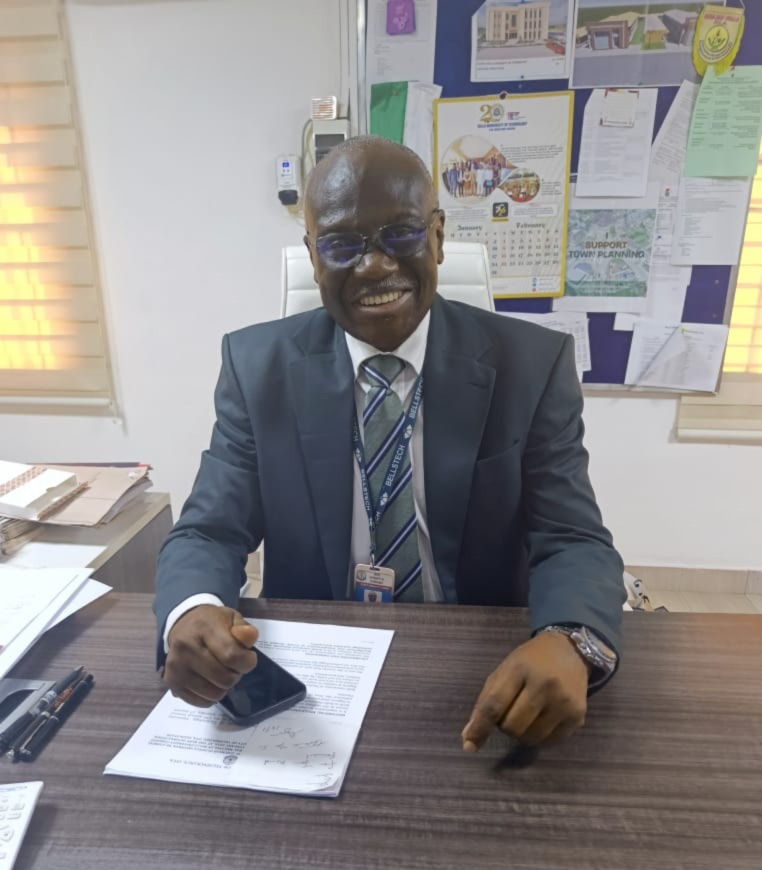
Calm in tone, firm in principle and deeply purposeful in action, Professor Jeremiah Oludele Ojediran, Vice-Chancellor of Bells University of Technology, Ota, Ogun State, does not command attention through volume of words, he does it through action, impact and transformational leadership.
In a world increasingly shaped by loud influence and fleeting fame, his leadership speaks quietly yet powerfully — through character, consistency and conviction.
As a distinguished academic and engineer, Professor Ojediran, R.E. (COREN), FNSE, FNIAE, ION, is not only a master of his craft but a proven performer and transformational leader. Combining technical mastery, human insight, and wise management of resources as an educational administrator, he has transformed institutions, strengthened systems, and guided students and staff in navigating academic, professional, and personal challenges — showing that excellence, integrity, and strategic vision can create lasting impact.
His life sends a simple but profound message: where you begin does not determine how far you can go. At a time when many young people feel disillusioned by economic instability and shrinking opportunity, Professor Ojediran stands as proof that leadership anchored in values, knowledge and purpose still inspires. His is not a story of hurried success, but of greatness built deliberately.
From curiosity to calling
Every remarkable journey begins with a spark. For Professor Ojediran, that spark was ignited not in a laboratory or lecture hall, but beside a local motorcycle mechanic’s workshop. As a boy, he would watch in fascination as engines were dismantled and reassembled, sensing instinctively that machines held stories he wanted to understand.
“My journey into science and engineering began in Form Four at Baptist High School, Jos,” he recalls. “My elder brothers were already in the science stream. Their enthusiasm influenced me, and I chose Physics, Chemistry, Biology and Additional Mathematics.”
Yet his interest in engineering predated secondary school. The mechanic’s workshop near his home became an informal classroom.
“The real catalyst was a motorcycle mechanic near our home. His workshop was a place of wonder for me. I spent hours observing him work. I even told my father I wanted to become a mechanic,” he noted.
For a time, Biology drew him towards medicine. However, childhood health challenges — including undergoing three major surgeries — forced a reassessment. “I realised medicine might not be suitable for me. Engineering aligned better with my temperament and abilities.”
When life redirects the plan
Professor Ojediran’s academic path was anything but linear. Admitted to the University of Ibadan to study Wood Engineering, he initially sought to transfer to Mechanical Engineering. Administrative constraints prevented this, but the university’s structure required all engineering students to take common courses for the first two years. By his third year, he transitioned into Agricultural Engineering — a discipline that combined mechanical principles with agricultural application, satisfying both interest and practicality.
Like many of his generation, he initially envisaged a career in industry rather than academia. After graduating and completing his National Youth Service in Irrua, present-day Edo State, he explored corporate and government roles.
Then came an unexpected turn.
“My entry into academia was not planned,” he admits. While exploring employment options, he noticed an advert for an Assistant Lecturer position at the Polytechnic of Sokoto, Birnin-Kebbi. He applied, was interviewed, and was offered the role.
Before resuming, two additional offers arrived — from the Federal Ministry of Land Resources in Kaduna and the Federal School of Soil Conservation in Jos. He briefly worked in Kaduna but found the role unfulfilling. Birnin-Kebbi called.
“I planned to stay only six months,” he says. “But the institution provided accommodation and a car loan. That convinced me to remain.”
Six months became twelve formative years. In retrospect, that unplanned detour became the foundation of a lifelong vocation. As John Lennon once observed, life is what happens while you are busy making other plans.
Birnin-Kebbi: the crucible of leadership
Birnin-Kebbi was more than a workplace; it was a furnace that forged leadership.
There, Professor Ojediran was mentored by Alhaji Sabi Saleh, then Head of Department — a disciplined administrator who groomed him for leadership long before he realised it himself.
When Alhaji Saleh left the institution, Professor Ojediran was unexpectedly appointed Acting Head of Department, despite being younger than many of his peers.
The Rector placed his confidence in him, granting both responsibility and autonomy. It was a daunting but defining opportunity.
“Upon settling into the Polytechnic of Sokoto State, Birnin-Kebbi in 1980, I found myself fortunate to be mentored by Alhaji Sabi Saleh, Head of Department (HOD) at the time. Alhaji Saleh was not just a remarkable administrator, but also a thoughtful mentor who groomed me for the challenging administrative roles that awaited me. Under his guidance, I acquired a wealth of experience in handling departmental affairs, much of which I would later rely on in my career.
His influence was fundamental in shaping my administrative skills, and I am deeply grateful for the experience,” he noted.
“When Alhaji Saleh left the Polytechnic, to my surprise, I was given the opportunity to step into his shoes as the Acting HOD. Although I was much younger than the other Heads of Department, the Rector placed his faith in me, recognising qualities I was not fully aware I possessed. He gave me the freedom to manage the department, trusting me to lead it effectively.
This level of responsibility, while daunting, also presented a profound opportunity for growth.”
One of the defining milestones of his tenure as Acting Head of the Department of Agricultural Engineering was his leadership in restructuring the department into two specialised areas: Agricultural Mechanisation and Irrigation. This strategic division was not merely administrative; it represented a forward-looking reorganisation that aligned the department with evolving professional and national development needs.
Following his term as Head of Department, his responsibilities expanded when he was appointed Coordinator of the Industrial Training (IT) programme, now known as the Student Industrial Work Experience Scheme (SIWES), for the College of Science and Technology — the largest college on campus. Through diligent coordination and disciplined oversight, he strengthened the programme’s impact, ensuring that students gained meaningful and relevant industrial exposure. His effective leadership in this role subsequently earned him the position of Acting Director of SIWES.
His insightful contributions at board meetings and the tangible successes recorded during his leadership as Head of Department further distinguished him. These qualities led to his appointment as Acting Dean of the School of Engineering, following the withdrawal from service of the substantive Dean, Mr Asamoah, a Ghanaian national.
Shortly thereafter, the institution underwent a major restructuring, resulting in the creation of two distinct entities: the College of Science and the College of Engineering. As the serving Dean at the time, he was consequently appointed Acting Director of the College of Engineering, reinforcing institutional confidence in his leadership and marking another significant ascent in his academic administrative career.
As Head of Department and later Acting Dean, he confronted ethnic tensions, religious sensitivities, institutional politics and professional rivalry. One incident, in particular, nearly cost him his life.
“I vividly recall one incident that underscores the subtle but fragile religious atmosphere I was navigating. A student came into the examination hall with a book which I did not recognise as the Qur’an. In an effort to enforce examination regulations, I threw the book aside, inadvertently committing what they perceived as an act of religious sacrilege. This escalated into a potentially dangerous situation, as some individuals were prepared to attack me over what they saw as an act of disrespect to their religion. It took a great deal of humility and numerous apologies on my part to defuse the situation, and I count myself fortunate to have emerged unscathed and alive.”
That incident left a lasting impression. From then on, he understood that leadership in a diverse society requires cultural intelligence, restraint and empathy as much as authority. The pressures eventually made him reconsider his future at the Polytechnic.
In search of new opportunities
Around 1990, while seeking new opportunities, he encountered two respected academics — Professors Aboaba and Makanjuola — who redirected him once again, this time to the newly established Oyo State University of Technology (now LAUTECH) in Ogbomoso, his hometown. There, guided again by familiar mentors, he re-entered academia at a higher level.
“The ethnic and religious tensions, along with other challenges, led me to reconsider my future at the Polytechnic. Around this time in 1990, I had a conversation with my father-in-law, who provided me with a letter of introduction to Air Vice Marshal Larry Koinyan, the then Chairman of the Directorate of Food, Roads and Rural Infrastructure (DFFRI). When I arrived at DFFRI, I had the fortune of meeting two distinguished personalities: Professor Aboaba and Professor Makanjuola.
Professor Aboaba had been my Dean during my third year at the University of Ibadan, and he was thrilled to see me. He encouraged me to join DFFRI, but one of them cautioned me that the organisation lacked stability. Instead, I was handed a letter of recommendation to Professor Olusegun Oke, the Vice-Chancellor of the newly established Oyo State University of Technology (OSUTECH), now Ladoke Akintola University of Technology (LAUTECH), in Ogbomoso, which happened to be my hometown.
As fate would have it, Professor ‘Segun Oke was appointing lecturers for the Department of Mechanical Engineering at LAUTECH. He instructed me to submit my CV to Professor E. B. Lucas, the Dean of Engineering at the time. Coincidentally, Professor Lucas had also been my mentor during my undergraduate studies at the University of Ibadan. In a fortunate turn of events, this connection led me back into academia, and I found myself rejoining the academic fold for the second time at a higher level.”
Reflecting on his years in Birnin-Kebbi today, he noted that those years taught him that true growth comes not from comfort, but from confronting adversity.
“Ultimately, my journey in Birnin-Kebbi was a testament to the fact that smooth seas may offer comfort, but it is the storms that truly shape us. It was through overcoming these complexities that I uncovered the resilience, adaptability and leadership qualities that would guide me throughout the rest of my career. I emerged from my time there not only as a more skilled academic and leader, but also as a person more aware of my own strengths, limitations, capacity for growth and the need for reliance on the Divine.”
Mentorship: the quiet architecture of success
Behind every successful scholar stands a constellation of mentors. Professor Ojediran’s earliest was an unlikely one: a primary school teacher.
Between Primary One and Three, Arithmetic terrified him — until Mr Fehintola arrived. Teaching with oranges, guavas and bananas, he transformed fear into understanding. For the first time, Professor Ojediran scored full marks. Confidence replaced anxiety.
In secondary school, teachers such as Mr Angba, Mr Zacchaeus and Mr Ketiku deepened his love for Mathematics and Physics. At the University of Ibadan, Professors Lucas, Bamiro and Igbeka instilled academic rigour and integrity. Administrators like Alhaji Sabi Saleh and Professor Oke taught leadership through discipline and example.
From these experiences emerged a conviction: mentorship is not optional for greatness; it is essential.
Today, he mentors deliberately, believing that leadership without succession is failure postponed. He emphasises humility, openness to feedback and patience — virtues that sustain long-term relevance.
The doctoral furnace
Perhaps no period better exemplifies Professor Ojediran’s humility and willingness to learn than his PhD journey. Under the supervision of a former classmate who had become an exacting and uncompromising scholar, he faced relentless critique, repeated rejections and moments of doubt. At one stage, a manuscript returned with the stark comment: “This is not of doctoral standard.”
However, instead of becoming disheartened, he approached each critique as an opportunity to grow. Humility allowed him to separate himself from the work, to absorb the lessons embedded in every correction, and to refine his thinking with patience and precision. Rather than resist the criticism, he embraced it, listening carefully to feedback, reflecting deeply and using every correction as an opportunity to improve.
From this experience, he drew a profound lesson: a PhD is not merely an academic qualification, but a training ground in humility, perseverance and intellectual endurance.
For young scholars, he advises that one must detach ego from feedback, focus on improvement rather than praise, and recognise that rigorous critique is a signal of the seriousness with which one’s potential is being evaluated.
Reinventing and advancing: a pathway to greater opportunities
For Professor Ojediran, progress has never been accidental; it has been shaped by deliberate reinvention and a constant pursuit of relevance. His academic journey through leading institutions in Nigeria and the United Kingdom reflects a steady rise built on purpose, discipline and excellence in Agricultural Engineering.
While the foundation was laid at the University of Ibadan (1975–1979), where his fascination with engineering found direction and meaning in solving real agricultural challenges, he later broadened his expertise at the SILSOE College, Cranfield Institute of Technology, UK (1983–1984), earning an MSc in Agricultural Engineering (Soil and Water) — an experience that exposed him to global best practices and sharpened his technical vision.
Reinvention remained central to his professional life. His transition from the polytechnic system into the university environment required more than experience — it demanded advancement. At LAUTECH, he rose through the ranks while pursuing requisite academic criteria to properly fit into the university system, earning a PhD in Agricultural Engineering (Soil and Water) at the University of Ibadan (1993–1997), equipping himself with the intellectual depth and resilience that would define his academic and leadership career.
In 2004, he was pronounced Professor of Agricultural Engineering — a defining milestone that affirmed a principle he often shares: adaptability is the currency of long-term relevance. In doing so, Professor Ojediran exemplified a powerful truth: lasting relevance belongs to those willing to evolve in pursuit of greater opportunities.
Leadership beyond title
At LAUTECH, Professor Ojediran’s rise was defined by performance. Recognised for diligence and reliability, he was entrusted with key administrative roles. Even when regulations initially prevented him from becoming Head of Department, the Senate created a coordinating role in acknowledgement of his leadership capacity.
As Deputy Dean, Acting Dean and later Deputy Vice-Chancellor, he strengthened systems, improved accreditation outcomes, expanded postgraduate programmes and upgraded infrastructure.
By the time he was elected Deputy Vice-Chancellor in 2008, his reputation for competence, integrity and foresight was firmly established.
Integrity under pressure
Towards the end of his tenure, LAUTECH was engulfed in a political succession crisis following the removal of the then Vice-Chancellor before end of tenure. In the ensuing crisis, Prof Ojediran was announced by the Osun State government as Acting Vice-Chancellor, while the Oyo State Government announced another person.. This placed him under surveillance, threat and pressure. He however refused to be used as a pawn. Guided by conscience and prayer, he declined the position and worked quietly to restore institutional calm.
“Towards the end of my tenure as Deputy Vice-Chancellor, the university became the center of a heated succession crisis. This followed the forceful removal of Professor Benjamin Adeleke as Vice-Chancellor by the Oyo State Government, one of the university’s owner states. Appointed in October 2005, Professor Adeleke was expected to serve a full five-year term, concluding on September 30, 2010. Yet, the ongoing ownership dispute between Oyo and Osun States cut his tenure short. In his place, Professor Nassir Olanrewaju was installed as Acting Vice-Chancellor.
In a counter-move, the Osun State Government announced me, the Deputy Vice-Chancellor, as their candidate for Acting Vice-Chancellor. The sudden appointment came as a complete shock. It was a position I neither sought nor desired. Overnight, I found myself caught between two formidable political forces, each viewing the leadership of LAUTECH as a symbol of their influence and ownership rights.”
At the height of it, he had to reject the offer to be VC and chose to ease himself out of the system. At the point in time, he had to accept a visiting appointment at the University for Development Studies in Tamale, Ghana, which provided renewal and global exposure. After a year, he returned to Nigeria, and realising that the crisis in LAUTECH was atill ongoing, he reactivated his leave to be a visiting professorship at Landmark University in Omu Aran, Kwara State. From March 1, 2013, to February 28, 2014. He thereafter was seconded to Adeleke University as a Visiting Professor and foundation Dean of the Faculty of Engineering.
From there, he applied to head Bells University of Technology.
“After two fulfilling years at Adeleke University, the position of Vice-Chancellor there was advertised. I applied for the role, and around the same time, Bells University of Technology also announced the vacancy for its Vice-Chancellor position. I applied to both universities and performed exceptionally well in the interviews. Guided by prayer, I resolved that I would accept whichever offer came first.
As fate would have it, the day Adeleke University’s letter was due for delivery to the proprietor for approval, he was away in Dubai. Before his return, Bells University of Technology had already extended their offer, which I accepted. On August 1, 2016, I officially assumed office as the Vice-Chancellor of Bells University of Technology, Ota.”
Transforming Bells University
When Professor Ojediran assumed office as Vice-Chancellor in 2016, Bells University faced low morale, salary arrears, declining enrolment and a weakened academic culture.
However, through strategic reforms — financial restructuring, service outsourcing and operational stabilisation — he restored confidence. Salaries were regularised, making the 25th of every month symbolic of renewed trust.
Recognising that degrees without skills were no longer sufficient, he embedded ICT certifications across all levels in partnership with New Horizons Nigeria. Graduates now leave with both degrees and globally recognised skills.
The Student Work Experience Programme was also redesigned into a hands-on industrial model involving construction, wiring, production and fabrication. “We stopped asking students to imagine engineering,” he said. “We asked them to practise it.”
Staff development became a priority, transitioning the institution from contract dependence to a strong base of full-time, PhD-holding academics. Research structures improved global visibility, while campus infrastructure expanded — supported by a strong working relationship with the Promoter, Chief Olusegun Obasanjo.
Legacy Beyond Office: Lessons for the Next Generation
Beyond the count of his years, Professor Jeremiah Ojediran, who celebrated his 70th birthday on 13 January 2025, stands as a living testament to values that rise above age, office and era. While his journey spans many decades of service and scholarship, it is his principles — not his chronology — that define his true legacy and enduring relevance to the next generation. His legacy is not merely etched in achievements, but in principles that speak across generations, lighting the path for those who will come after him.
At the heart of his life’s message are the following timeless truths:
Purpose outlives position — for roles may change, but a life anchored in purpose continues to shape the world long after the seat is vacated.
Mentorship is a responsibility — not a favour, but a sacred duty to lift others as we rise.
Adversity is a teacher — every trial, when embraced with courage, becomes a classroom for wisdom.
Excellence is a habit — not an occasional act, but a daily discipline that defines true greatness.
Character sustains success — for without integrity, even the brightest triumphs fade into shadows.
Indeed, as he steps into a new phase of impact and transformational leadership later in 2026, having served two terms of five years each as Vice-Chancellor of Bells University of Technology, his influence will certainly not diminish — but will be multiplied and carried forward in the lives he has shaped, the minds he has sharpened and the values he has so steadfastly embodied.
His, is a story that confirms the truism that the greatest legacy is not what we build for ourselves, but what we awaken in others.
…………………………………………………………………………………………
Credits: Valedictory Lecture — Guiding the Next Generation: Lessons from a Professor’s Academic Journey, by Professor Jeremiah Oludele Ojediran.