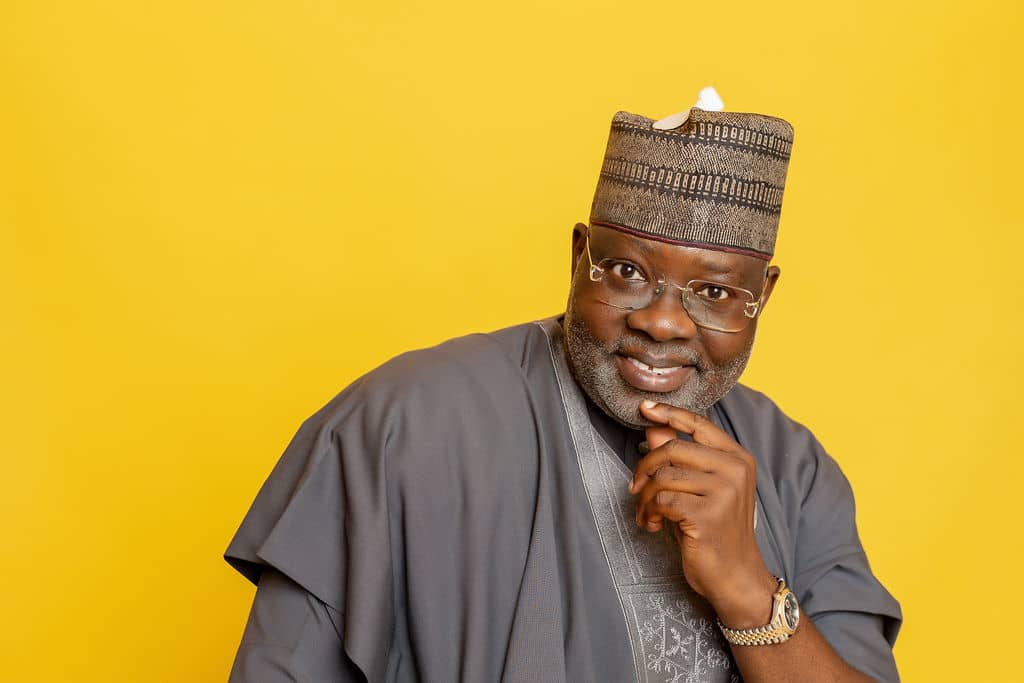
Dayo Adedayo doesn’t just take photographs. He stamps Nigeria’s image on the world.
From the landscapes etched into the N100 note to the images on the Nigerian e-passport, his work is seen daily by millions who may not know his name.
Yet, he offers the simplest of introductions at public fora: “I am Dayo Adedayo, a photographer.”
Behind that modest declaration is a man whose lens has captured presidents, royalty, and the hidden beauty of his homeland.
For more than three decades, he has chronicled Nigeria’s people, places, and stories with the precision of a historian and the passion of an artist.
His journey, however, began far from the glamour of global recognition, shaped by early privilege, sudden loss, and an unexpected gift that set him on an extraordinary path.
Indeed, Adedayo is the quintessential lens freak who has earned a solid reputation in documentary photography.
He describes himself as a photographer of people, places, things and animals. He has been plying his trade since 1988.
Early beginning
An indigene of Ijebu-Ife, Ogun State, Adedayo started his education at the Children’s Home School, Ibadan, one of the highbrow schools in the 70s. His school fees then were in the region of 100 pounds.
Life was, however, quick to play a queer game on him. Just when he was about 7 years old, he lost his wealthy father. Two years later, he was told there was no money to sponsor his education in the expensive school.
He and his siblings were moved back to their country home in Ogun State, where they completed their primary school and had to continue their lives. “My father was a gold trader and was doing quite well. He was wealthy and gave us the best in his lifetime. But his death put paid to the prosperity we were enjoying.” He recalled with a tinge of nostalgia.
Community School
After his primary school education, he secured admission to Ijebu Ife Community Grammar School. He confessed it was the school that shaped him to be the person he is today. It was in that school that he and the present governor of Lagos State, Mr. Babajide Sanwoolu, first met. They were in the same hostel. And they struck a chord of friendship that has endured over the years.
Adedayo recalled his time in secondary school and the attendant fun that shaped his early years. Incidentally, he never set out to practice photography from day one. He had wanted to be an Agriculturist.
He also thought of becoming a lawyer at the same time while having a passion for politics, history and current affairs. These desires played in his mind until destiny began to shape his path. By his 18th birthday anniversary, a gift of a camera redefined his path. ‘It was that camera that birthed my love for photography,” he confessed.
But he still went on to study General Agriculture at the Institute of Agriculture Research & Training (IAR&T) under the University of Ife now Obafemi Awolowo University. It was during his studies that he started taking pictures at birthdays and wedding ceremonies.
Journey to the UK
A couple of years after his programme at the then University of Ife , he travelled to the UK and continued honing his photography skills. He became famous in the UK and was known then as A-Z Pictures.
He thought he had arrived, so to speak, until he met another photographer with a medium format camera at a wedding ceremony.
That was the day his orientation changed. Adedayo had a quick dialogue with the man and thereafter decided to go back to school to study photography, earning both a diploma and a degree in the profession at the Westminster College and University of Westminster in the UK.
“Until you go to school and study photography, you’re not likely to make headway in the profession. The fact that I studied photography is the reason I am who I am today,” he quipped.
While paying homage to photographers of the old order, he stated that the difference between then and now is education. “Those of this generation are more daring, creative and resourceful. They have changed the narrative. And I am glad I belong to that order.”
Today, you’re not likely to mention five prominent photographers in Nigeria without mentioning Dayo Adedayo. That credential makes him grateful to God.
“It is a privilege which I do not take for granted. The face of photography in Nigeria has changed partly because of what God has enabled some of us to do.”
Adedayo came back to Nigeria from the UK in 2003 and began to dazzle the image space. Before then, he had taken up a freelancing job with Ovation Magazine, which enabled him to traverse the world and meet important people.
He spoke glowingly of Chief Dele Momodu, publisher of Ovation Magazine, describing him as one of the people who helped change the face of photography in Nigeria through the Ovation platform.
Upward and downward swing
For Adedayo, it has been an upward swing with a lot of downsides too. He confessed that he has had more downsides. But he has never at any time given up on his dreams.
He has so far published 17 books which were duly registered with the National Library. He says the 18th book which is on the way will be his flagship. “It’s going to be a 1000-page book and will weigh 10kg.” He informed.
The Nigerian dream is wrapped up in his passion. He markets the country with the dexterity of a professional marketer through his trade, capturing its beauty, glamour and historical sites.
Dayo Adedayo Centre
A centre known as Dayo Adedayo Photography (DAP) Experience Centre is currently in the works. He said, “It a vibrant cultural space celebrating nearly four decades of my photographic journey alongside the works of other talented photographers. Showcasing both digital and analogue displays.
“The centre offers an immersive visual narrative of Nigeria’s landscapes, people, culture, and heritage. Designed as a meeting point between history and innovation,”
He is inviting visitors to come to the centre to explore, learn, and connect through powerful imagery that preserves the past, captures the present, and inspires the future.
Adedayo notes that the need for photographers to think outside the box cannot be overemphasised. “Social diary photography does not last. A photographer has to up his game by looking at other areas of the profession. We are in the age of technology, People now use their phones, sometimes better than cameras.
He recalled that some of his outstanding collections were taken with a mobile phone, warning that photographers who want to make an impact must go beyond what is commonly celebrated.
Advice for photographers
For potential players in the industry, he counsels, “The first rule is to forget about making money. It is not a business you want to count naira and kobo, even though there is money to be made. What can sustain you on the job is passion. You must be willing to stay there whether money is coming or not.”
Coupled with this is persistence. “You have to be persistent and must be ready to compete against yourself, not any other person. And of course, you must know the environment where you operate.”
Despite the seeming dark side of the profession in Nigeria, he noted, “there was a time in this country that a photographer called Jarkie Philips was riding a Rolls-Royce.
“He was the one who took the picture of great people and places in the 60s. He died in 2017. So the past has not been all that bad.”
But Adedayo’s role model in the industry is Yousuf Karsh, a portrait photographer.
He says photography has brought him fame and has given him access to many important people across the globe. It has also earned him some respect at immigration points and border posts from people of other countries.
Tinubu’s picture
He was the one who took the portrait picture of President Bola Tinubu, which is being hung in various offices across the country. To get the shot he only had the luxury of spending 15 minutes with the president.
He had also taken the picture of the late Queen of England and notable individuals across the globe.
His documentary pictures are however what brought him global attention.
Nigeria, good to me
Adedayo says “Nigeria has been good to me. I am honoured to have my photographs watermarked on the Nigerian passport. If you scan the QR code on the N100 note, it will take you to all my pictures of the beautiful landscape of Nigeria and the tourist sites. The CBN bought the items off me.”
Friendship with Sanwoolu
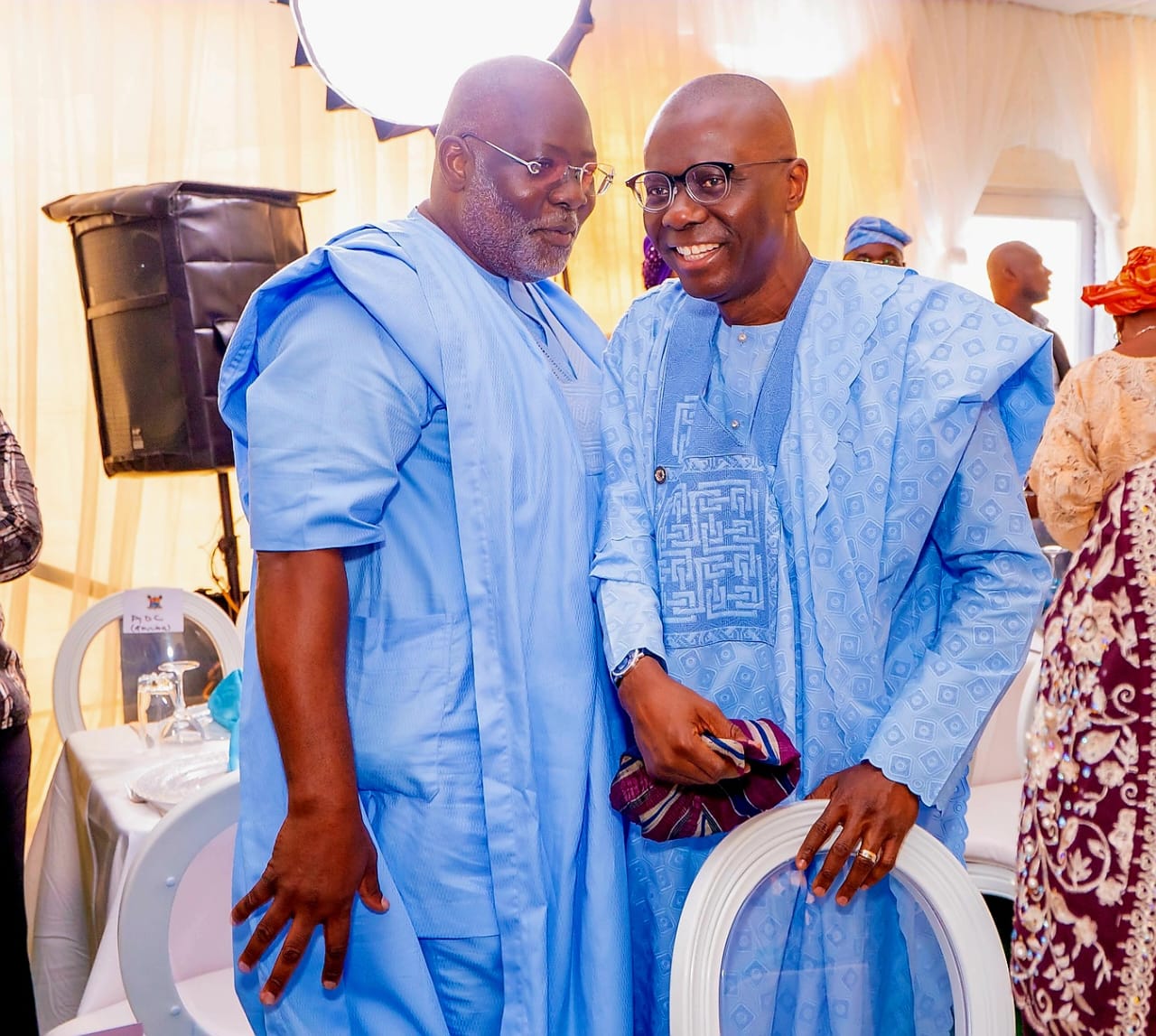
Reflecting on his friendship with the Governor of Lagos State, Mr Babajide Sanwoolu, Adedayo says, “Our friendship started way back in 1976. We met on the very first day we resumed school. After school, we never left each other.
“We have continued to be friends and become so close that we sometimes wear the same clothes. He knows every member of my family, and I know his family too. His children call me second daddy. We respect each other, and I must say our friendship is not transactional.
“We are great friends and we have mutual respect. He has been a blessing to me long before he became governor, just as I am to him. Every year, he buys the ram for my mum to celebrate the Muslim festival. He has been doing that ever before he became governor, and he still does.”
Adedayo reveals an ironic twist in his friendship with Sanwoolu, recalling how he and Sanwoolu went to visit one of his clients, Oba Fredrick Obateru Akinruntan of OBAT Oil to deliver his portrait. That was long before he became governor.
“By the time we were leaving, the client called me and said I should take note of what he was going to say. He made a joke of my incessant trips to the UK and urged me to stay back in Nigeria that my friend, referring to Sanwoolu, would be commissioner and he would be governor. Truly, he became commissioner and now governor”
Adedayo noted that he has made many enemies because some people believe that, as a friend of the governor, he should be able to get things done for them.
“They don’t understand that my relationship with the governor is not transactional,” he said adding, “I have never taken advantage of our friendship. But I can tell you with great conviction that Sanwo-Olu is a remarkable human being who has never allowed power to come between him and friends