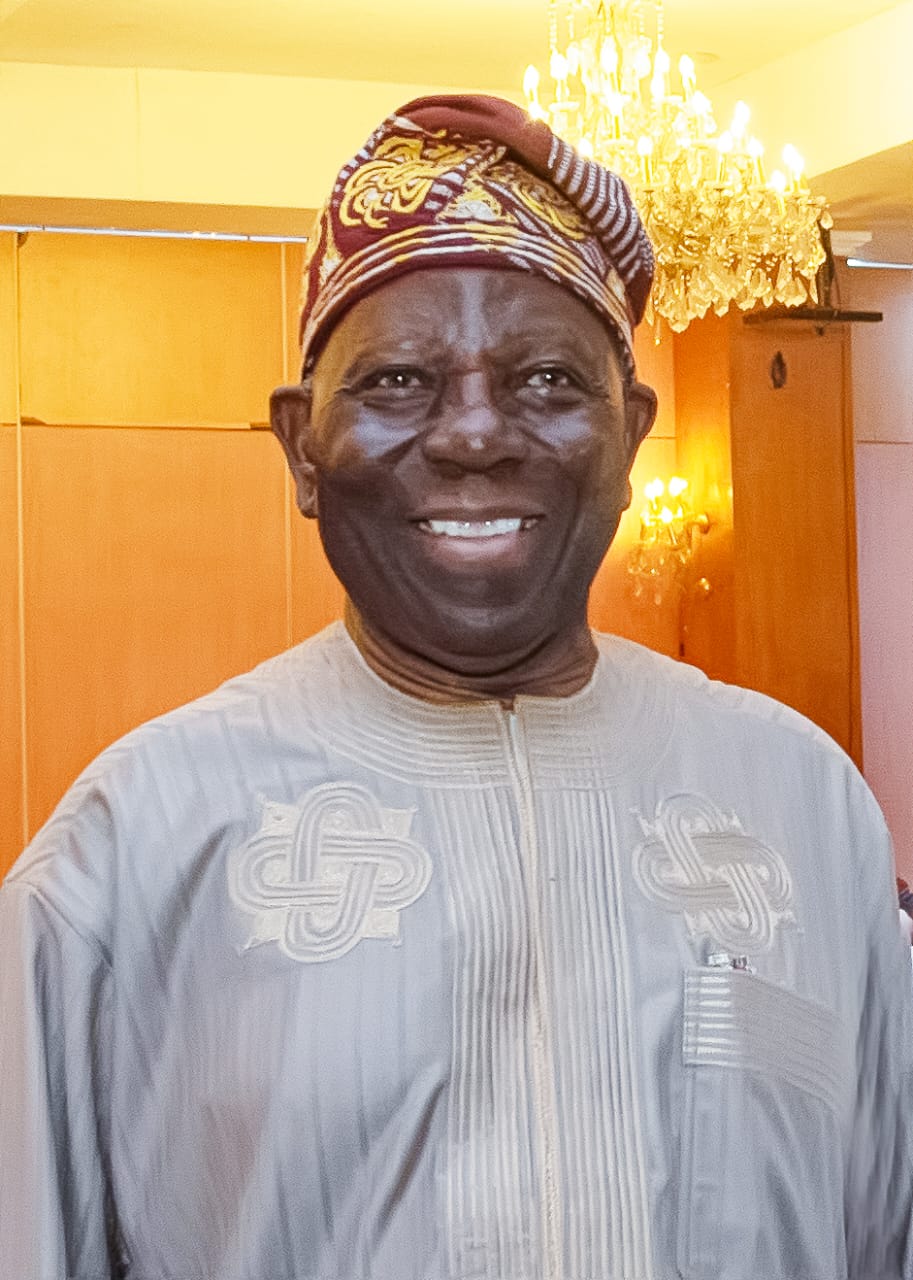
At 85, Chief Olusegun Osunkeye, Nigeria’s celebrated boardroom guru, still walks straight, talks with incredible coordination and goes with the gait of a 65-year-old. Age is not telling on him.
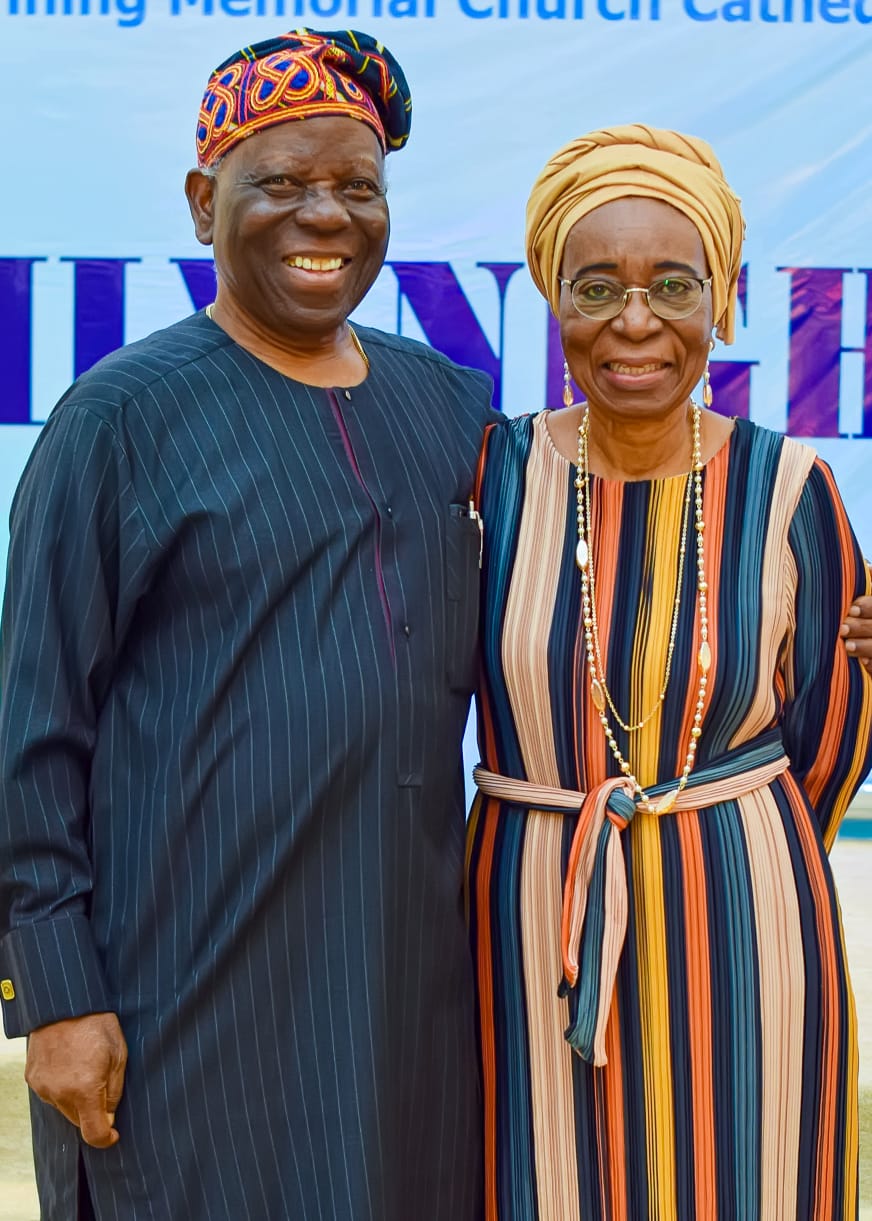
He will be celebrating with family and friends at the Archbishop Vining Memorial Church on Sunday, September 7, his birthday.
The story of his life, however, is a lesson in diligence and service to humanity. His countenance betrays a contented man.
Despite his seemingly towering height in the corporate world, he has managed to keep his head low.
An indigene of Ijemo in Abeokuta, Ogun State, Osunkeye, reveals in an interview with Church Times and other media houses that he was born in Agege, Lagos.
His father had moved from Abeokuta to Agege following the 1914/18 Adubi war, which came about because of the excessive tax regime of the colonial government, leading to the exodus of many residents of Abeokuta to Lagos and its environs.
Many who left Abeokuta settled down in Agege, while some moved farther to what is now known as Abule Egba. A good number settled in Ebute Meta in Lagos.
Growing up
Osunkeye recalls his growing-up years were marked with simplicity and a sense of purpose. When it was time for him to start school, he travelled with his elder brother, a railway worker, to Zaria, Kaduna State. It wasn’t long before the brother had to come back to Lagos. He followed him again.
It was in Lagos that he completed his primary school at St Paul’s Catholic school, Ebute Meta. From there, he went to King’s College for his secondary school education.
By 1958, Chief Osunkeye, whose name is synonymous with Nestle Nigeria Plc because of the great impact he made in the organisation, joined Messrs Akintola Williams and Co to train as an accountant.
He was there from 1958 till 1961 and then went to the Nigeria College of Arts, Science and Technology in Ibadan before travelling to the UK to complete his studies in accountancy.
By the time he came back to Nigeria, he was fully equipped to impact the corporate world. He worked with West African Portland Cement, which was a subsidiary of UAC, for five years and then resigned to join Nestlé.
In Nestlé, Chief Osunkeye served for about 40 years, part of which was at the managerial level. He was managing director/CEO for 11 years (1988-1999) and served as chairman of the company for 14 years (1999-2013). He retired voluntarily from Nestlé in 2013. He was also chairman of Glaxosmithkline Consumer Nigeria Plc (2000 and 2014) and chairman, Lafarge Africa Plc (2009-2015).
He has, over the years, headed other boards and has been a director of many companies.
His trajectory looks smooth. But he notes that he was only a beneficiary of grace. “Some people were taking the bullets for me. My parents and elder brother bore the cost, and they sacrificed a lot for me. My job was to read while they provided the funding. The fee was quite high at that time. I think we were paying 2 pounds per term.”
Osunkeye confessed that his family upbringing, experience with Messrs Akintola Williams and Co as well as his days at King’s College, contributed to the person he has become.
Nestle years
His time at Nestle will forever be etched in his memory. He recalled that the infrastructure in the country was still evolving when he was the MD/CEO of Nestle.
The company, according to him, once operated for 14 years up to 1983 without electric light in Agbara, Ogun State “We had two base load Rolls-Royce powered generators of 1500 KVH each to serve the production plant at Agbara alternatively for 14 years. With those two base loads, the machines worked without a hitch. We knew how many hours the generator would work before it would be serviced. We ordered spare parts well in advance from abroad. We also had to apply for a visa to bring in technicians to service the generator. It used to take three months to service one generator while the other one would be switched on. But throughout those periods of 14 years, we hardly had hitches with our production.”
Over time, Nestlé began to gain momentum locally. All along, the company brought in finished goods from its parent company to Nigeria to sell. But that changed with time. Rather than bringing in finished goods, it decided to produce locally while getting its raw materials abroad.
The idea gave more jobs and led to the transfer of technology. But then, it got to a point where there was not enough foreign exchange to import the needed raw material. ‘We had to lay off one-third of our staff because we could not meet our production target. Many of those who were sacked from the organisation were coming to ask for support from the company many years later. “It was the most painful period for me and one of the low moments I had in the organisation,” Osunkeye said.
High moments in Nestle
He, however, had several high moments in Nestlé. One of them was the acquisition of the land upon which the company built its factory in Agbara and the inauguration of the factory.
He was also excited when the organisation began its backwards integration programme with a farm producing maize, sorghum and soya beans for its manufacturing operations and at the same time training farmers and out-growers to adopt good agricultural practices.
Today, Nestle buys farm produce from about 40000 local farmers, empowering them and improving their standard of living.
Tinubu’s government’
In his assessment of the administration of President Bola Tinubu, he observes that “many reforms, which include exempting the poor from taxation, are being proposed”
He believes, however, that beyond that, there should be reform in critical sectors of the economy that will help the poor breathe.
Transportation, healthcare, education and agriculture are key areas the government should carry out reforms according to him.
He decried the situation where students study Agriculture, but they cannot farm. “The policy should be that every university of agriculture should produce and sell agricultural products to its local area. They should also teach their students how to plant and nurture their harvest for sale. That will help to bring down the prices of food. The reform in the agricultural sector should also consider integrating technology.
“We also need to develop technical education to develop the skills of people.
“For instance, we have a couple of schools in the Anglican Church dedicated to technical education. People need to be taught plumbing, electrical/electronic, refrigeration, air-conditioning skills, etc, that are relevant to our day-to-day life. That is how to grow the economy.
Osunkeye also lamented the deplorable state of Nigeria’s industrial sector. “In the past, we used to have close to 100 textile factories in Nigeria, but today many of them are gone. The economy has nosedived in the last 30 to 40 years. We have to revive it, especially in critical areas like agriculture, health and transportation,” he stated.
Younger generation
On his advice for the younger generation, he states, “There is no substitute for hard work. Education is also very key. It is the way to a lot of things. If you don’t have an education, you will be limited in life. But you have to be hard-working and have good character with diligence. There is no use being an expert and not being diligent. It does not add up.
“Young people should be patient. “If a person does what he is supposed to do, he will live a good life. It may take a while, but things will invariably work out for the person.”
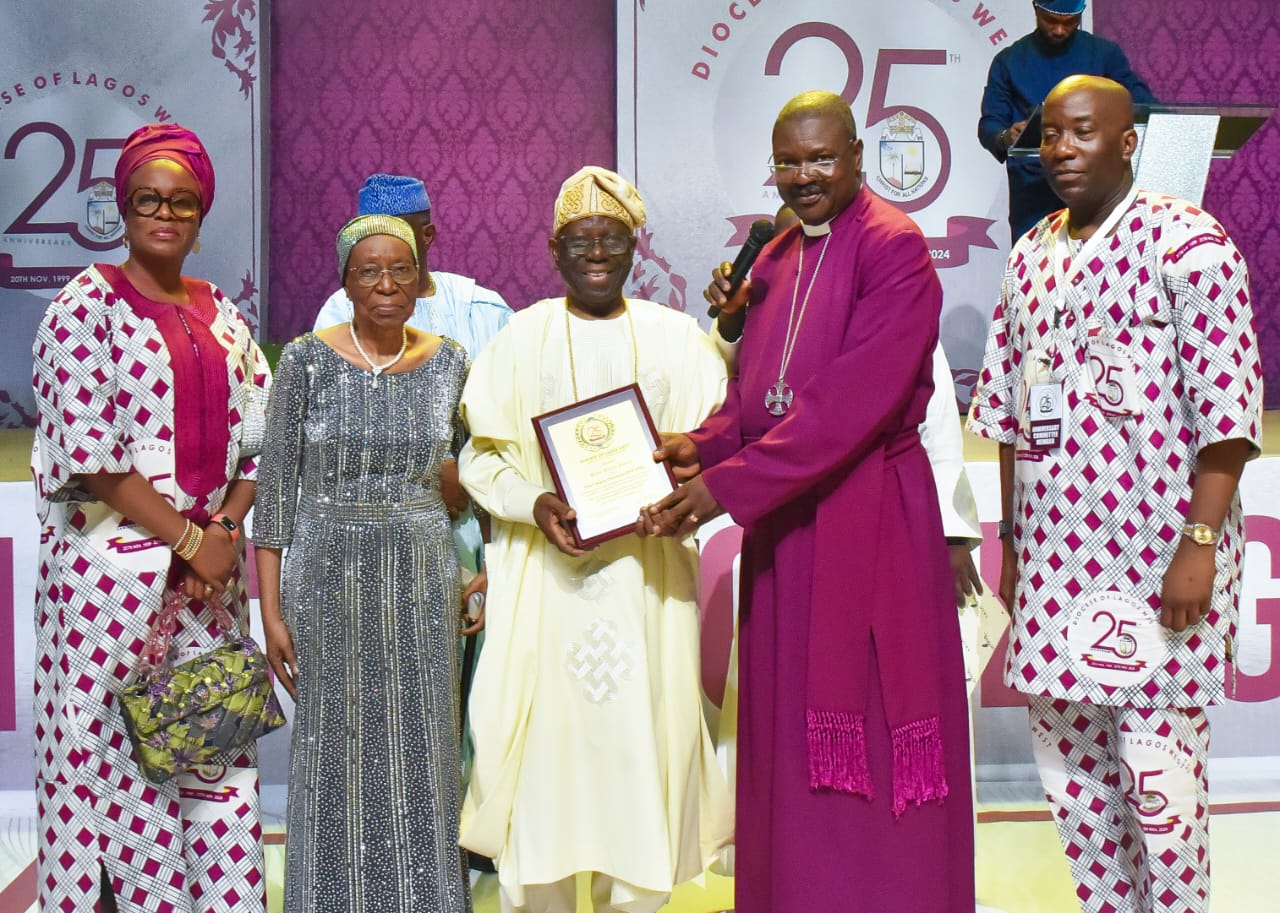
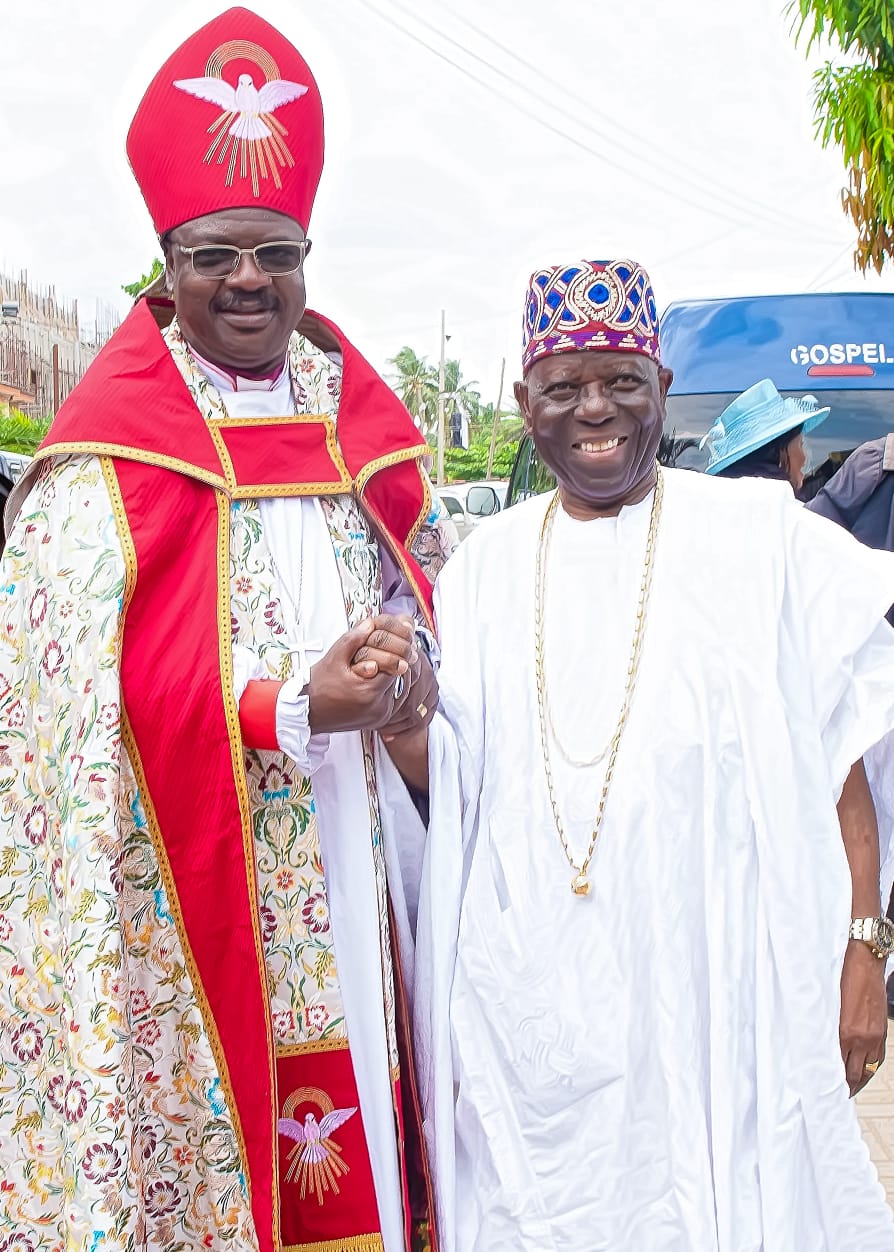
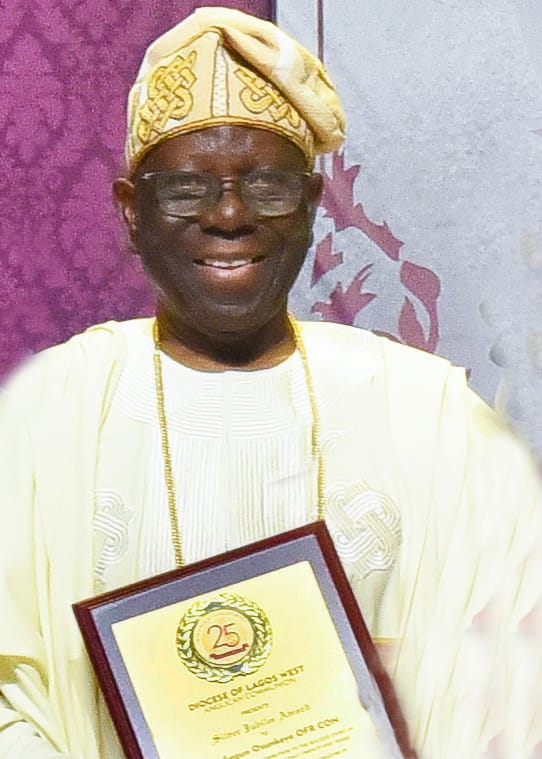
An active member of the Anglican Church, Osunkeye has been practically involved in the Anglican Diocese of Lagos West. Even as MD/CEO, he was an altar server at the Archbishop Vining Memorial Church. He has also been a lay reader at some point and is currently the father of the diocese of the Anglican Diocese of Lagos West. He says, “I get a lot of fulfilment in serving God. It gives me joy.”
Ironically, the idea of becoming a pastor never once crossed his mind. He believes one can serve God in many capacities. “The prelates are our spiritual fathers. They are to lead, guide and pray for us. When they lead us well, we will follow in their footsteps and serve God accordingly.”
Lessons in life
As he celebrates another milestone on Sunday, September 7, Osunkeye says, “I have learnt that life is full of ups and downs. I call it the principle of a moving escalator. You experience ups and downs. We are all on a moving escalator. When you are tempted to be proud, pompous, arrogant, or you are carried away by your possessions, position or power, etc., pause, look up and you will find people who are higher, better, richer than you. This teaches you humility.
“On the other hand, if you are feeling despondent about your seemingly bad or poor situation in life, pause, look down and you will find people not as fortunate as you are. Then pause and give glory to God. Count yourself as blessed.”
Do not borrow
While stating that it is good to borrow for business, he frowns at borrowing for personal use and borrowing from friends. “It is not good to borrow, and it is not good to lend people money. It often destroys relationships. I would rather support my friend than lend them money. If you need N10000, if I can afford N5000, I will give you.
“But then, if it is for business, you can borrow as much as you can and preferably from banks because they thrive by lending out money to people to do business. What is important is to have integrity in ensuring that the money is repaid.”
He recalled that at a point in Nestle, the organisation borrowed N54 million from the then Barclays Bank during the building of its factory at Agbara, Ogun State. The media called it the: “jumbo loan”. Even Barclays Bank, which lent Nestlé the money, displayed the amount at the entrance of its bank. “We borrowed for five years, but we paid back in three years. And that was good for us,” says Osunkeye
He decries laziness, adding that knowledge without character can lead to self-destruction.
One of the key things for robust growth in life, according to him, is for young people to maintain a work-life balance. “Work-life balance means prioritising what is key in life. If you lose your work, you can get another one. But you may not be able to get your family and health back if you lose them. Health is wealth; if you are not healthy, you are not living.
Married for over 60 years, Osunkeye has devoted his life to giving back to society and voluntary service in the corporate world as well as God’s vineyard since his retirement.