𝑩𝒚: ‘𝒅𝒂𝒚𝒐 𝑨𝒅𝒆𝒅𝒂𝒚𝒐
There are people you’ve “met” a million times without ever setting eyes on them, because their work has visited you first.
Their ideas have greeted you in your quiet moments. Their impact has introduced them long before a handshake ever could. One of such men is 𝐔𝐧𝐜𝐥𝐞 𝐓𝐮𝐧𝐝𝐞 𝐊𝐞𝐥𝐚𝐧𝐢, our beloved Uncle TK.
I met Uncle TK for the first time on Wednesday, 3rd of December, at EbonyLife Place, during the launch of the new Nikon camera, an event that brought together not just creatives, but living chapters of Nigeria’s cultural history. I came for a launch. I left with a memory that will never leave me.
That day, I was in the company of Olusegun Patrick Odegbami, MON, one of the greatest Nigerians that ever lived. And yet, as fate would have it, it was Uncle TK that my eyes found first.
As an omo Yoruba rere, I did what the spirit and culture in me demanded: I went on my fours and prostrated, not just to an elder, but to a legend whose life has been poured into the preservation of our stories.
We hardly give honour to whom honour is due in this part of the world. Too often we wait until the drums of celebration become funeral drums before we remember how to dance. But that day, I chose honour while breath was still in the body. I chose flowers while the garden was still alive.
And while I was still on the floor, I heard a voice I could recognise inside the roar of a billion, Chief Olusegun Odegbami mentioned my name. Immediately, I went on my fours again, this time to greet not just an egbon, but someone I admire deeply; a man whose excellence, discipline, and patriotism have inspired generations.
If Nigeria were a society where things truly worked as they should, men like these would not be hidden treasures known only by a few. Their names would be taught with pride in classrooms. Their stories would be preserved in libraries. Their faces would be familiar to both the old and the young. These are men who gave their youth so the rest of us could be proud to call ourselves Nigerians.
Before I met them, I had been with another great Nigerian visual creative, 𝐊𝐞𝐥𝐞𝐜𝐡𝐢 𝐀𝐦𝐚𝐝𝐢-𝐎𝐛𝐢, and I truly thought I had found my gist partner for the event. I had been invited as a special guest by Nikon, and I was deep in conversation with Kelechi and 𝐃𝐚𝐯𝐢𝐝 𝐅𝐚𝐭𝐮𝐦𝐛𝐢 of 𝐍𝐢𝐤𝐨𝐧 when my eyes caught Uncle TK. In that moment, the conversation in front of me became less important than the history calling me from across the room. I left my friends and moved toward the elders.
From the very first minute, it became question after question. Uncle TK, too, had met me through my works. When Chief Odegbami asked him if we had ever met, he said no. And Chief, shocked, responded with that kind of disbelief only a sincere admirer can carry: how could you not have met ‘dayo Adedayo?
Then Uncle TK suddenly said it, “𝒕𝒉𝒆 𝒎𝒂𝒏 𝒘𝒊𝒕𝒉 𝒕𝒉𝒆 𝒃𝒐𝒐𝒌𝒔.” And just like that, a door opened. A long conversation started. And I knew immediately: this was not an ordinary day. This was a day the universe highlighted with a special marker.
We went into the hall for the presentation. We both ended up on stage. Uncle TK spoke on the camera. I gave the vote of thanks. The turnout was massive, young people everywhere, energy in abundance, creativity in motion. And there I was, watching what is really happening in our creative industry: the hunger, the talent, the hope. I learned a few things that day, things no classroom can teach.
But the real surprise came later, as the day rolled on. I sat with Uncle TK again, and he delved into photography with me, like a professor who is also your friend, and also your elder, and also your mirror. Then he asked me one question that shook my entire week:
“𝑾𝒊𝒍𝒍 𝒚𝒐𝒖 𝒃𝒆 𝒇𝒓𝒆𝒆 𝒐𝒏 𝑺𝒖𝒏𝒅𝒂𝒚?”
In my mind, I laughed, because if only he knew. Free? For Uncle TK? I would create freedom. Promptly I answered yes.
He said he would come and spend the day with me. I should get all my camera gear ready, books, equipment, everything, because it would be a long day.
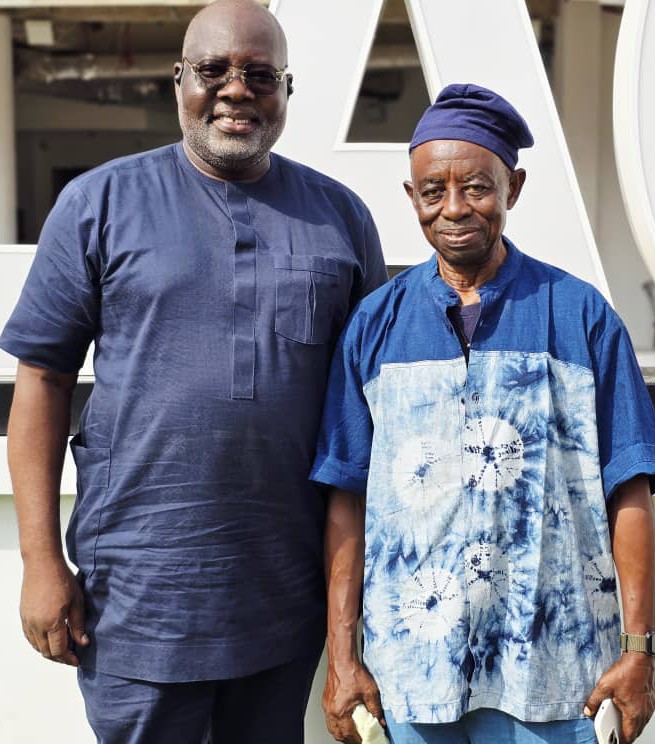
The visit
And indeed, on the dot of 12 noon, as promised, security called from the gate: “One Tunde is here.”
For a few seconds, I could not believe it.
A legend. In my house.
A mind that has helped define Nigerian cinema and culture, coming to sit with me, to share time, to share thought, to share memory. Some people travel to museums to see history. That day, history walked into my living room.
I was at the door with my wife. She went on her knees, omo Yoruba atata. And I went on my fours again to greet a legend, a man of intellect, and a giant in my chosen field. It felt like meeting a Nobel Prize winner in one’s own discipline, except this Nobel Prize winner speaks your language, understands your soil, and has carried your people’s stories in his hands.
We went straight into my study where I had laid out my cameras dating back to 1989. With the exception of my 𝐂𝐚𝐧𝐨𝐧 𝟓𝐃, every other camera was still working. He was glad, genuinely glad, to see the living archive: my 𝐇𝐚𝐬𝐬𝐞𝐥𝐛𝐥𝐚𝐝, 𝐌𝐚𝐦𝐢𝐲𝐚 𝟔𝐱𝟕, 𝐅𝐮𝐣𝐢 𝟔𝐱𝟏𝟕, 𝐂𝐚𝐧𝐨𝐧 𝐄𝐎𝐒 𝟏𝐕, my 𝐂𝐚𝐧𝐨𝐧 𝐄𝐎𝐒 𝟏, Canon’s first professional-grade autofocus 35mm SLR camera, which I bought in 1989, still standing strong; my baby 𝐒𝐨𝐧𝐲 𝐀𝟕 𝐈𝐕 gifted by my son, Olaniran Ademola, in 2021; and my everyday companion, the 𝐂𝐚𝐧𝐨𝐧 𝟓𝐃𝐒𝐑, purchased in 2015.
Then the conversation began, properly.
We started with my story: how I began, the obstacles, the stubborn faith it takes to keep creating when the world does not understand what you are building. But because I wanted to learn, I handed the steering wheel to Uncle TK. I turned the whole conversation into a classroom.
If you have ever watched the interview between David Attenborough and Barack Obama, you would understand the kind of atmosphere we created, calm, deep, reflective, full of gentle laughter and serious truth. Uncle TK insisted we record the moment. And we did.
One hour and forty minutes.
A treasure.
He spoke about how the love of the visual began for him in primary school, when a friend brought a Brownie camera to school. That small object was not just a camera; it was a prophecy. He also spoke about being part of the early generation touched by Chief Obafemi Awolowo’s free primary education in the old Western Region, a vision that built minds and shaped destinies.
By secondary school, he already knew what he wanted from life.
He spoke of scholarships, of discipline, of how tough education was when schools were fewer and competition was fierce. He spoke of writing letters, real letters, to four major photographers of his time: 𝐁𝐢𝐥𝐥𝐢𝐞 𝐑𝐨𝐬𝐞, 𝐏𝐞𝐭𝐞𝐫 𝐎𝐛𝐞, 𝐉𝐚𝐜𝐤𝐢𝐞 𝐏𝐡𝐢𝐥𝐥𝐢𝐩𝐬, and 𝐃𝐨𝐭𝐮𝐧 𝐎𝐤𝐮𝐛𝐚𝐧𝐣𝐨. Only Dotun Okubanjo replied, after one year, and the condition was hard: no pay for three to four years as an apprentice.
He stayed one year with Okubanjo, and then chose a new path, he decided filming was the future, and he never looked back.
Then came the moment that sounded like destiny wearing a uniform: when 𝐖𝐍𝐓𝐕/𝐖𝐍𝐁𝐒, 𝐖𝐞𝐬𝐭𝐞𝐫𝐧 𝐍𝐢𝐠𝐞𝐫𝐢𝐚 𝐓𝐞𝐥𝐞𝐯𝐢𝐬𝐢𝐨𝐧 and 𝐖𝐞𝐬𝐭𝐞𝐫𝐧 𝐍𝐢𝐠𝐞𝐫𝐢𝐚 𝐁𝐫𝐨𝐚𝐝𝐜𝐚𝐬𝐭𝐢𝐧𝐠 𝐒𝐭𝐚𝐭𝐢𝐨𝐧, the first television station in Africa, advertised for camera crews. He applied. He was the only one chosen. And the love of film truly began.
He remembered names like a man who respects history: 𝐄𝐧𝐠𝐢𝐧𝐞𝐞𝐫 𝐓𝐞𝐣𝐮 𝐎𝐲𝐞𝐥𝐞𝐲𝐞, 𝐂𝐡𝐢𝐞𝐟 𝐀𝐲𝐨 𝐎𝐠𝐮𝐧𝐥𝐚𝐝𝐞, 𝐒𝐚𝐦 𝐀𝐝𝐞𝐠𝐛𝐢𝐲𝐞, 𝐓𝐮𝐧𝐣𝐢 𝐀𝐝𝐞𝐧𝐢𝐲𝐢. He later went to the London Film School in 1976, to learn properly, to sharpen skill with structure.
He spoke of the old days of celluloid, how news items were filmed, rushed back to the studio, processed, and prepared for broadcast. The generation of today does not know what God has done for them.
But throughout our conversation, there was one moment that brought sadness to his face: when he spoke of the day the military announced they had taken over the station, how it became NTA Ibadan, and how, to worsen the pain, the place remained untouched, frozen like a forgotten shrine. The last time they broadcast from there, he said, it was almost as if the station never moved forward after that.
I felt the weight of that history.
And I remembered my own connection, how I had once been there in the 1970s as a student, part of my school’s dramatic society at 𝐈𝐣𝐞𝐛𝐮 𝐈𝐟𝐞 𝐂𝐨𝐦𝐦𝐮𝐧𝐢𝐭𝐲 𝐆𝐫𝐚𝐦𝐦𝐚𝐫 𝐒𝐜𝐡𝐨𝐨𝐥, from Form One to Five; and in Form Four, I became the secretary and lead singer of the dramatic society. That station is not just a building. For many of us, it is memory.
Uncle TK spoke of the industry, of films made, of people met, of the mixed ache of joy and pain that sits in the eyes of those who have lived long enough to see nations rise and wobble. He showed me old pictures, him as a boy, with full hair; pictures on set; pictures that carry time like perfume.
And my takeaways were not small.
One: the joy of doing what you love, and doing it with integrity.
Two: the importance of a bond, especially between a father and a son.
Three: his deep respect for 𝐏𝐫𝐨𝐟𝐞𝐬𝐬𝐨𝐫 𝐖𝐨𝐥𝐞 𝐒𝐨𝐲𝐢𝐧𝐤𝐚, a reverence that reminded me again that great minds recognise greatness.
And then the statement that landed like a commandment:
“𝐘𝐨𝐮𝐫 𝐛𝐫𝐚𝐢𝐧 𝐢𝐬 𝐰𝐡𝐚𝐭 𝐲𝐨𝐮 𝐬𝐞𝐥𝐥. 𝐈𝐭 𝐢𝐬 𝐲𝐨𝐮𝐫 𝐛𝐫𝐚𝐢𝐧 𝐭𝐡𝐚𝐭 𝐰𝐢𝐥𝐥 𝐦𝐚𝐤𝐞 𝐰𝐚𝐲 𝐟𝐨𝐫 𝐲𝐨𝐮, 𝐧𝐨𝐭 𝐦𝐚𝐭𝐞𝐫𝐢𝐚𝐥 𝐭𝐡𝐢𝐧𝐠𝐬.”
𝐼 𝑑𝑟𝑎𝑛𝑘 𝑓𝑟𝑜𝑚 𝑡ℎ𝑒 𝑓𝑜𝑢𝑛𝑡𝑎𝑖𝑛 𝑜𝑓 ℎ𝑖𝑠 𝑘𝑛𝑜𝑤𝑙𝑒𝑑𝑔𝑒. 𝑁𝑜𝑡 𝑓𝑟𝑜𝑚 𝑎 𝑐𝑢𝑝, 𝑛𝑜, 𝑠𝑡𝑟𝑎𝑖𝑔ℎ𝑡 𝑓𝑟𝑜𝑚 𝑡ℎ𝑒 𝑠𝑜𝑢𝑟𝑐𝑒.
After brunch prepared by my wife, we ended up in my gallery. Uncle TK became emotional. He prayed and prayed. In that moment, I did not just feel honoured, I felt responsible. Because when a man like that prays over your space, it is not just blessing; it is commissioning.
I promised him: we will celebrate him for a week. I told him he must be a special guest on the day of commissioning. I offered to give him some books, and he made it clear, he would not leave without them.
Before he departed, we took photographs together. As he drove away toward Abeokuta, I stood there watching, whispering a small prayer for his safe journey home. And I said to myself:
“𝑑𝑎𝑦𝑜, 𝑦𝑜𝑢 ℎ𝑎𝑣𝑒 𝑡𝑜 𝑤𝑜𝑟𝑘 𝑜𝑛 𝑠𝑜𝑚𝑒𝑡ℎ𝑖𝑛𝑔 𝑤𝑖𝑡ℎ 𝑡ℎ𝑖𝑠 𝑔𝑟𝑒𝑎𝑡 𝑚𝑖𝑛𝑑.”
Because time is not a joke. At 77, and me at 61, we must be quick. We must create something that generations yet unborn will look at and say: this is who they were… this is how they lived… this is what they valued.
The generations before us failed in preserving enough of our civilisations with intention. But we must not fail those coming behind us.
That is why the DAP Experience Centre must stand. That is why great minds like Uncle TK must be honoured while they can still walk into our homes and pray with their own mouths.
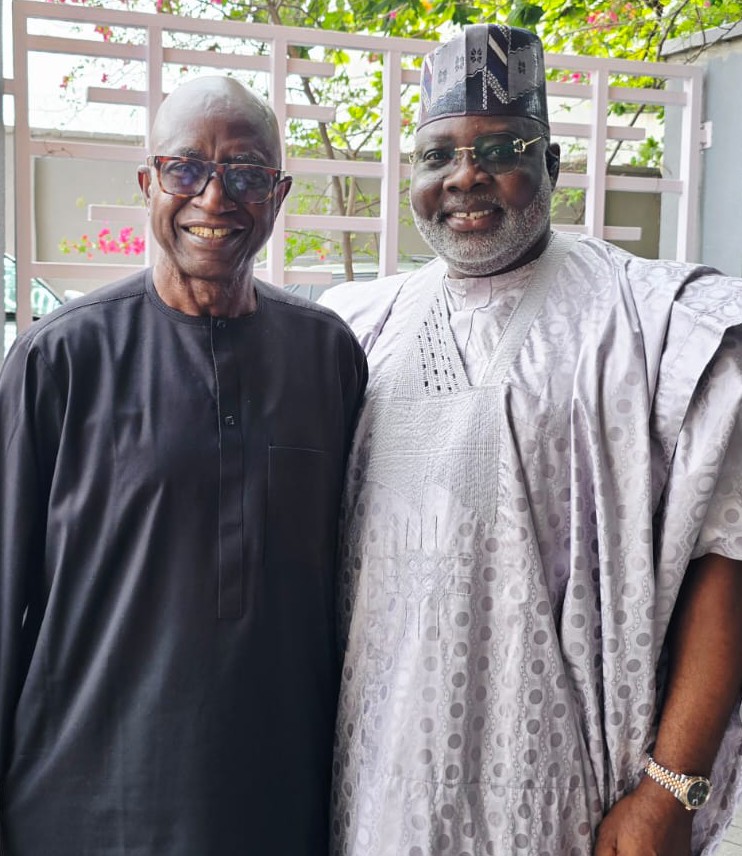
Segun Odegbami
And on that same table of honour sits Chief Segun Odegbami, MON, Nigeria’s pride, the disciplined symbol of excellence. On the football field, he gave Nigeria not just goals but identity; not just victories but confidence; not just fame but example. Where Uncle TK preserved our cultural memory through film, Chief Odegbami carried our national spirit through sport, each of them, in different arenas, offering Nigeria a reason to stand tall.
One preserved our stories.
One lifted our flag.
And I, by God’s grace, stood between both men in one season, one week, one unforgettable blessing.
That is why I call that day the best day for me in 2025.
Because some days are not ordinary.
Some days are destiny, dressed like an event invitation.
May the Almighty God strengthen you, Uncle TK.
May He preserve your health, renew your energy, and lengthen your days in peace.
May your mind remain sharp, your vision remain clear, and your voice remain loud enough to keep shaping generations.
May every seed you have planted, in film, in culture, in education, in mentoring, grow into forests that will shelter our children and our children’s children.
And for Nigeria, Lord, we pray: Heal our land.
Restore our dignity.
Give us leaders with wisdom and conscience.
Give us citizens with love for one another.
Let excellence rise again, and let the works of our great minds be honoured, protected, and preserved.
May Nigeria succeed.
May Nigeria become good.
May Nigeria become whole.
Amen.